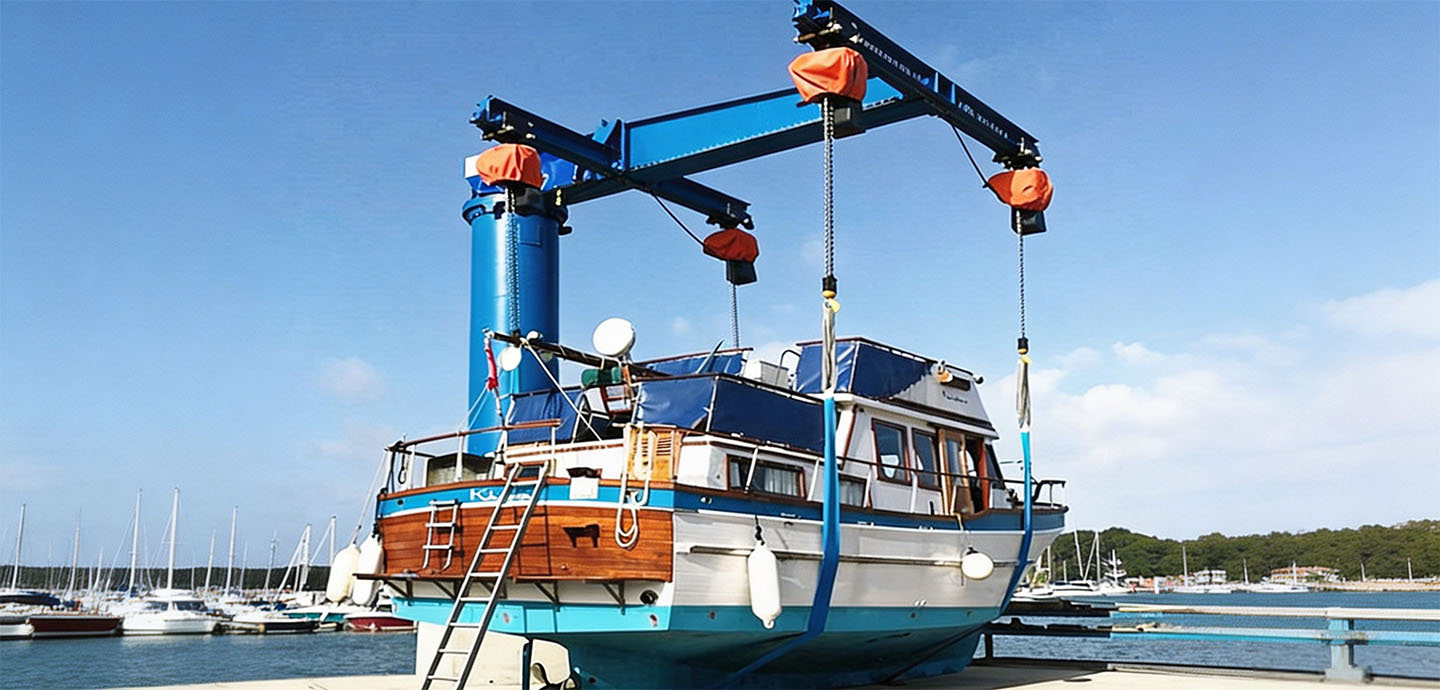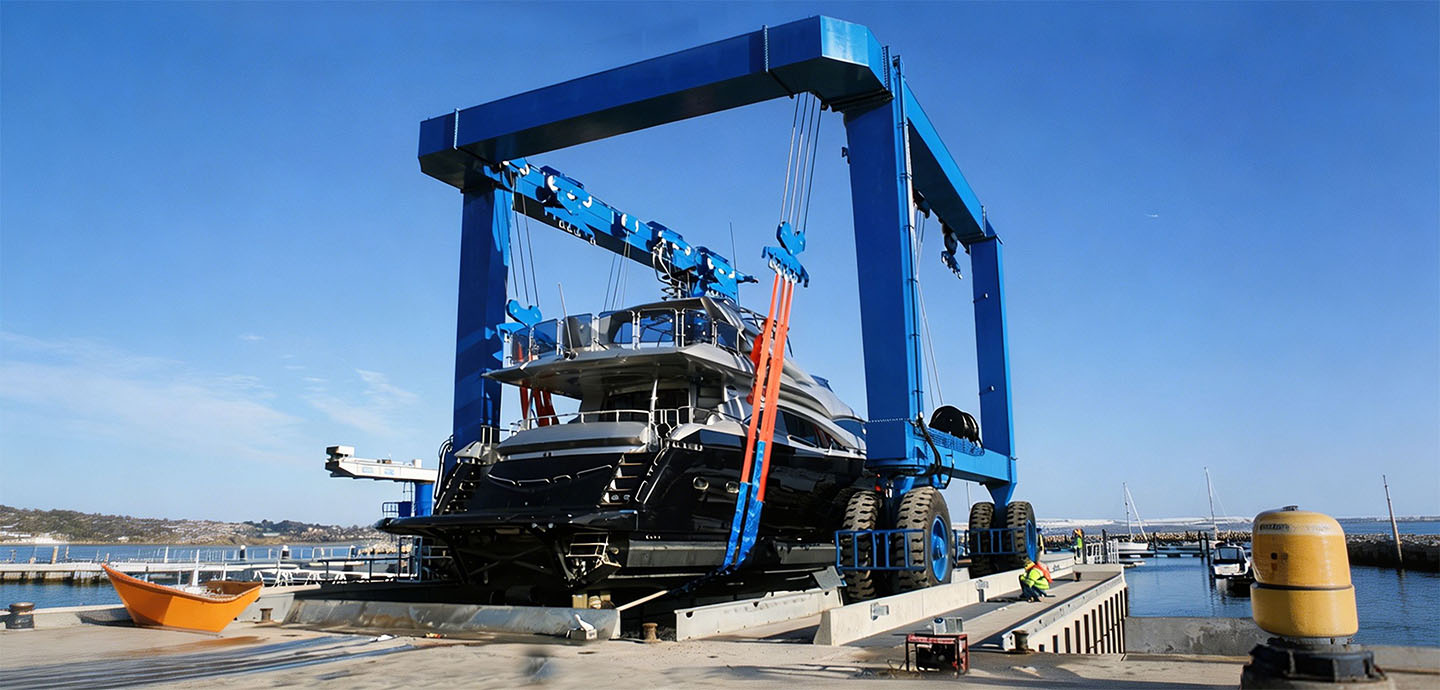
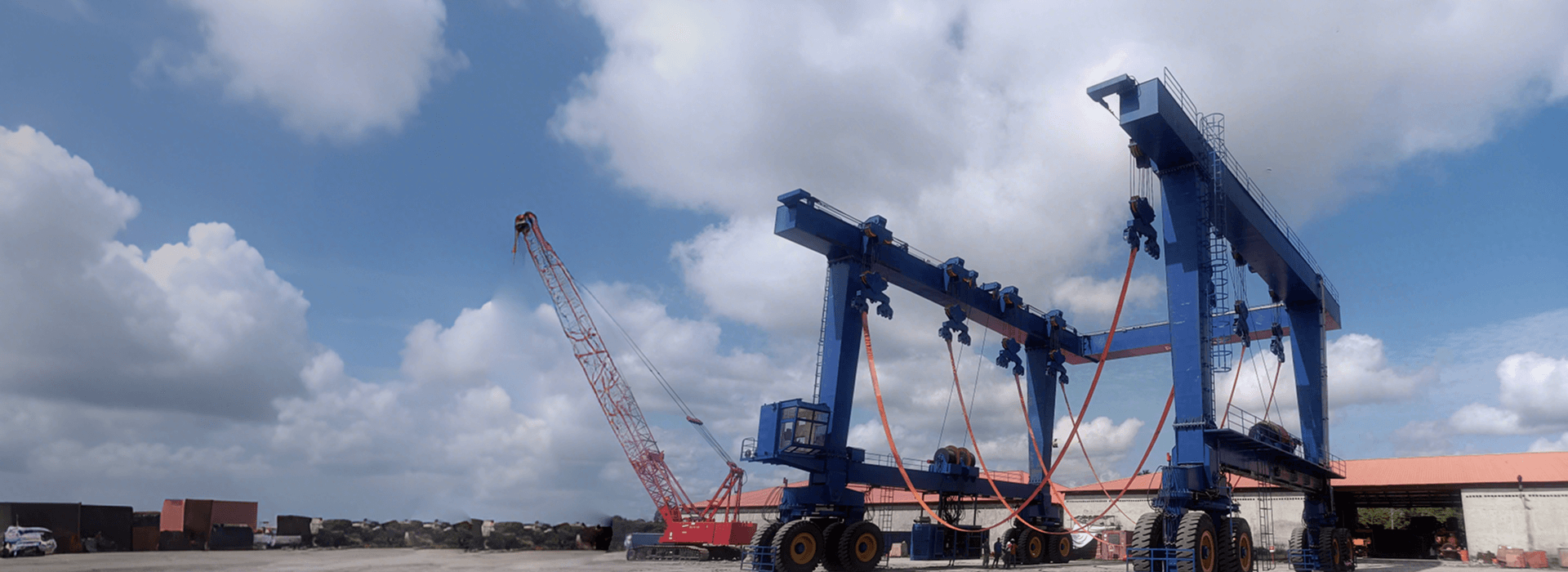
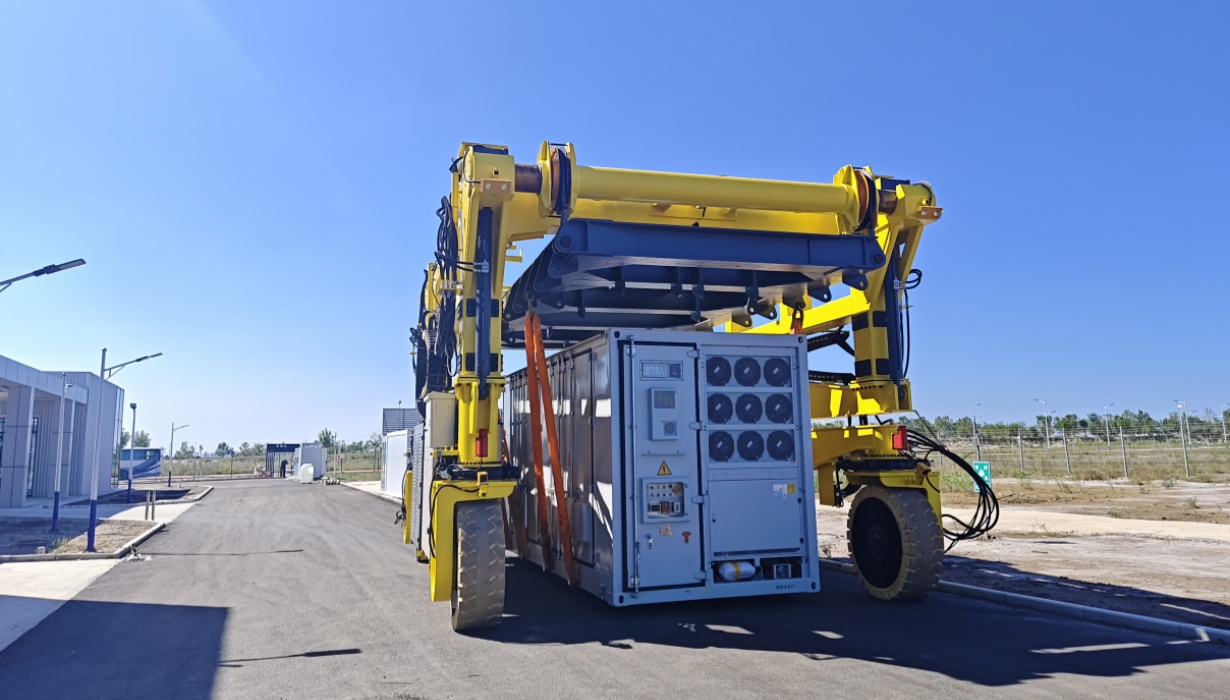
As industrial logistics operations continue to grow, storage and handling yards require equipment with greater load capacity and maneuverability for handling heavy containers. To meet the handling requirements of an industrial logistics company in Malaysia, Haitai Crane supplied a 60ton straddle carrier equipped with a self-propelled rubber-tyred travel system and a hydraulic lifting system. The equipment is designed for lifting, loading and unloading, and short-distance transport of heavy cargo within the yard.
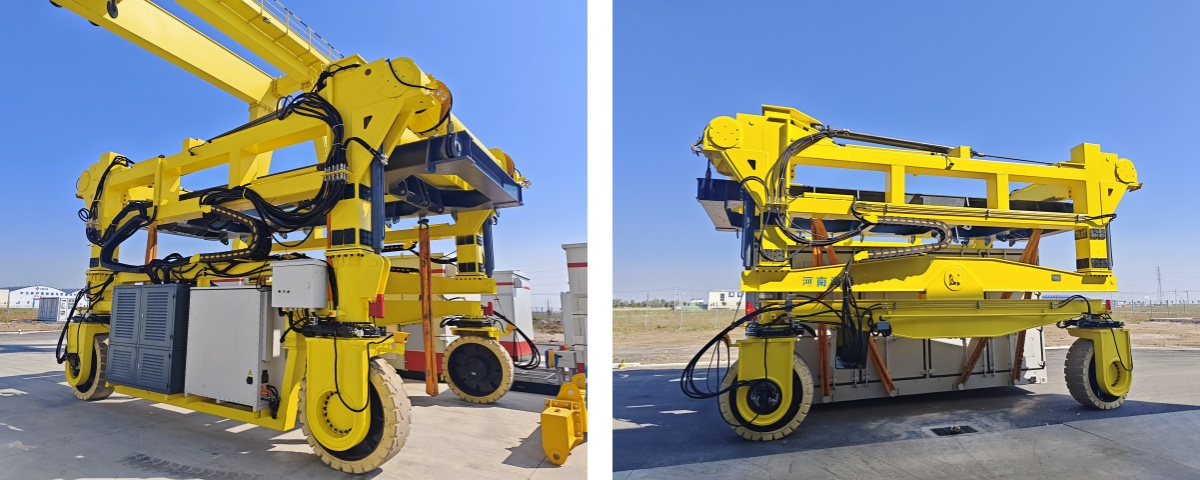
Rated lifting capacity is one of the key factors to consider when selecting a straddle carrier. To meet the customer’s heavy-load handling requirements, this unit is configured with a rated lifting capacity of 60 tons. It can handle containers and other heavy cargo within the equipment’s design specifications.
When selecting a straddle carrier, the total cargo weight, overall dimensions, center of gravity, lifting interfaces, and required lifting height must also be considered. For different container sizes and special cargo, Haitai Crane can further assess the required frame dimensions, lifting attachment configuration, and operating space based on the actual working conditions, ensuring that the equipment configuration matches the handling requirements.
The straddle carrier uses a hydraulic lifting system to raise and lower cargo through hydraulic actuators. Working in conjunction with the travel and steering systems, the hydraulic lifting system supports container handling, short-distance transport, and cargo positioning within the yard.
During operation, lifting and lowering movements must be controlled according to the cargo weight and lifting requirements. Before transport, the operator must ensure that the cargo has been raised to the required safe clearance height. The actual lifting speed, lifting height, and control method depend on the final equipment configuration.
Unlike equipment that relies on fixed rails or stationary lifting structures, a rubber-tyred straddle carrier can move independently around a site where ground load capacity and access conditions are suitable.
This design allows the equipment to move between different working areas and adjust its position according to operational needs. For industrial yards requiring loading and unloading at multiple locations and short-distance cargo transport, the self-propelled design provides greater flexibility in planning handling routes.
During actual operation, travel routes must be planned with due consideration for ground load capacity, surface flatness, gradients, and available turning space.
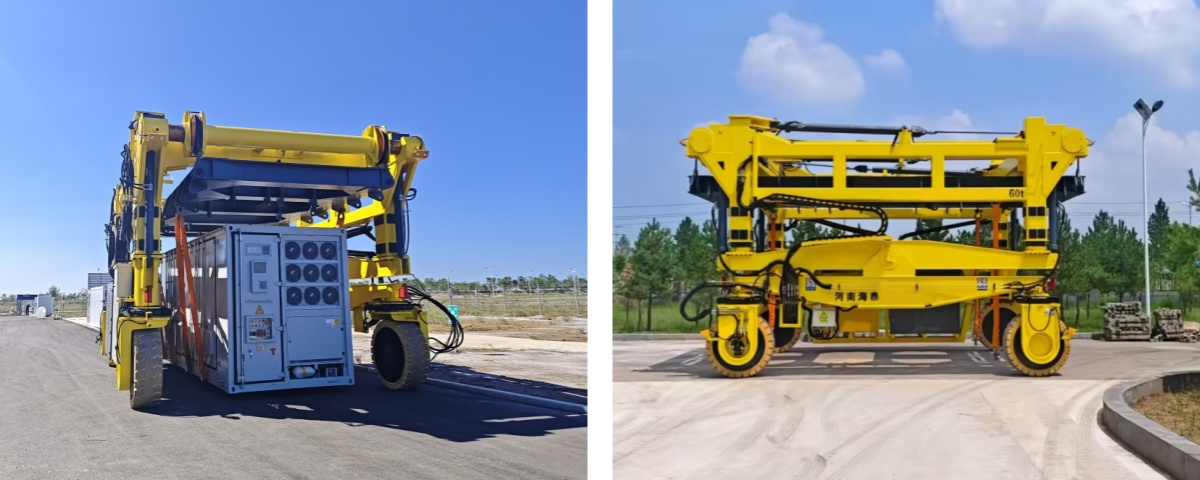
Industrial yards can vary in aisle width, cargo placement, and loading and unloading arrangements. The steering capability of a straddle carrier directly affects its maneuverability in confined spaces.
Depending on its specific steering configuration, the carrier can use the available steering modes to change direction and adapt to handling and positioning requirements in different areas. An appropriate steering configuration helps the equipment move between loading and unloading points, temporary storage areas, and transport routes while reducing unnecessary repositioning.
The performance of a straddle carrier depends not only on its rated lifting capacity but also on frame dimensions, lifting height, lifting attachment design, and site conditions.
During project planning, cargo dimensions and weight, aisle width, ground conditions, required lifting height, and transport routes should all be checked. For customers handling cargo with special dimensions or non-standard loads, the frame structure, lifting attachments, and other functional configurations can be further discussed and customized.
Selecting equipment according to actual operating conditions helps prevent mismatches between equipment capabilities and on-site requirements.
The main advantage of this 60ton straddle carrier lies in combining heavy-load lifting capacity with self-propelled mobility, providing industrial logistics yards with an equipment solution suitable for a range of handling operations.
Heavy-load handling: The rated lifting capacity of 60 tons supports the handling of heavy cargo within the equipment’s design specifications.
Self-propelled travel: The rubber-tyred design allows the equipment to move around suitable sites without relying on fixed rails.
Hydraulic lifting: Lifting and lowering operations are integrated into a single machine to support heavy-cargo loading, unloading, and transport.
Flexible site layout: Travel routes can be adjusted according to the steering configuration and available space, allowing the equipment to serve different working areas.
Customizable configuration: Equipment structure and functions can be tailored to cargo specifications, lifting requirements, and site conditions.
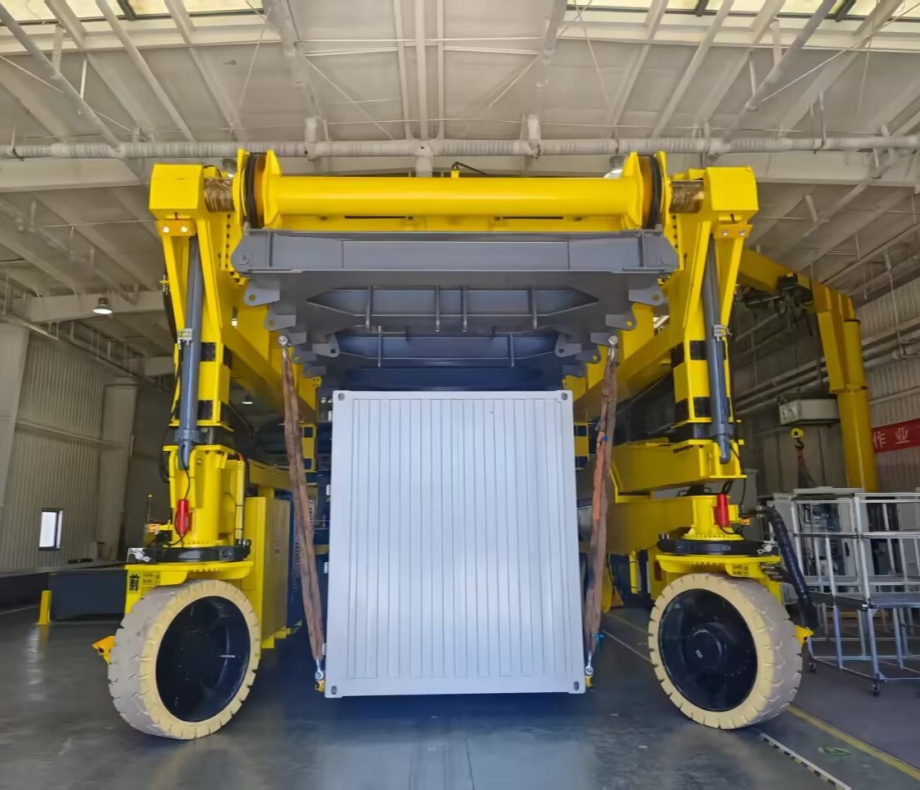
For industrial logistics companies handling heavy containers and other large cargo, equipment selection has a direct impact on how yard operations are organized. Handling equipment must meet the required lifting capacity while also accommodating cargo movement, positioning, and loading and unloading across different areas.
By combining hydraulic lifting with self-propelled rubber-tyred travel, this 60ton straddle carrier provides an integrated solution for lifting and short-distance transport of heavy cargo within its design specifications. With appropriate planning of travel routes and loading and unloading positions, operators can arrange internal cargo movements more flexibly and reduce their dependence on fixed lifting infrastructure.
Haitai Crane provides straddle carrier selection and customization solutions based on customers’ cargo specifications, yard layouts, and operational requirements. For projects involving special load requirements, dimensional constraints, or site limitations, confirming the equipment parameters and actual working conditions in advance helps determine a more suitable handling solution.
If you are looking for straddle carriers or other equipment for heavy-cargo handling, contact Haitai Crane with your cargo weight, dimensions, and site operating conditions to discuss an equipment configuration suited to your project.