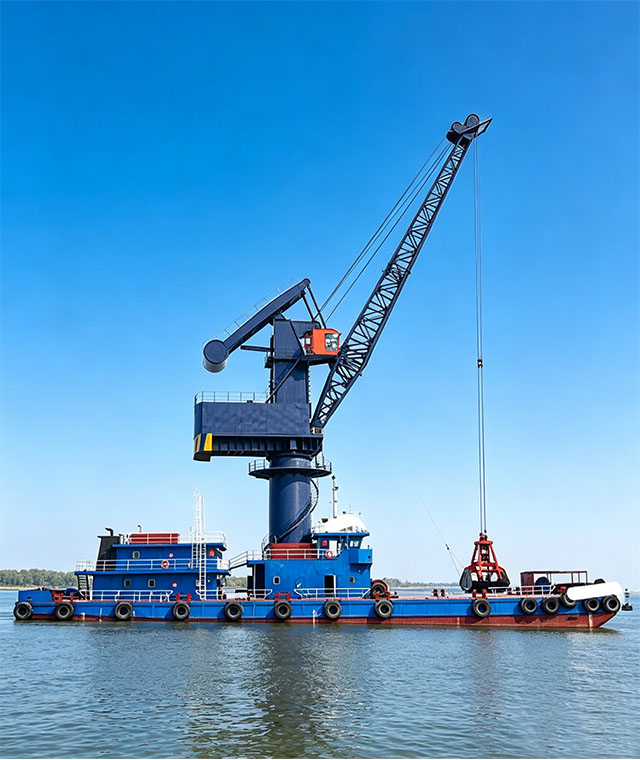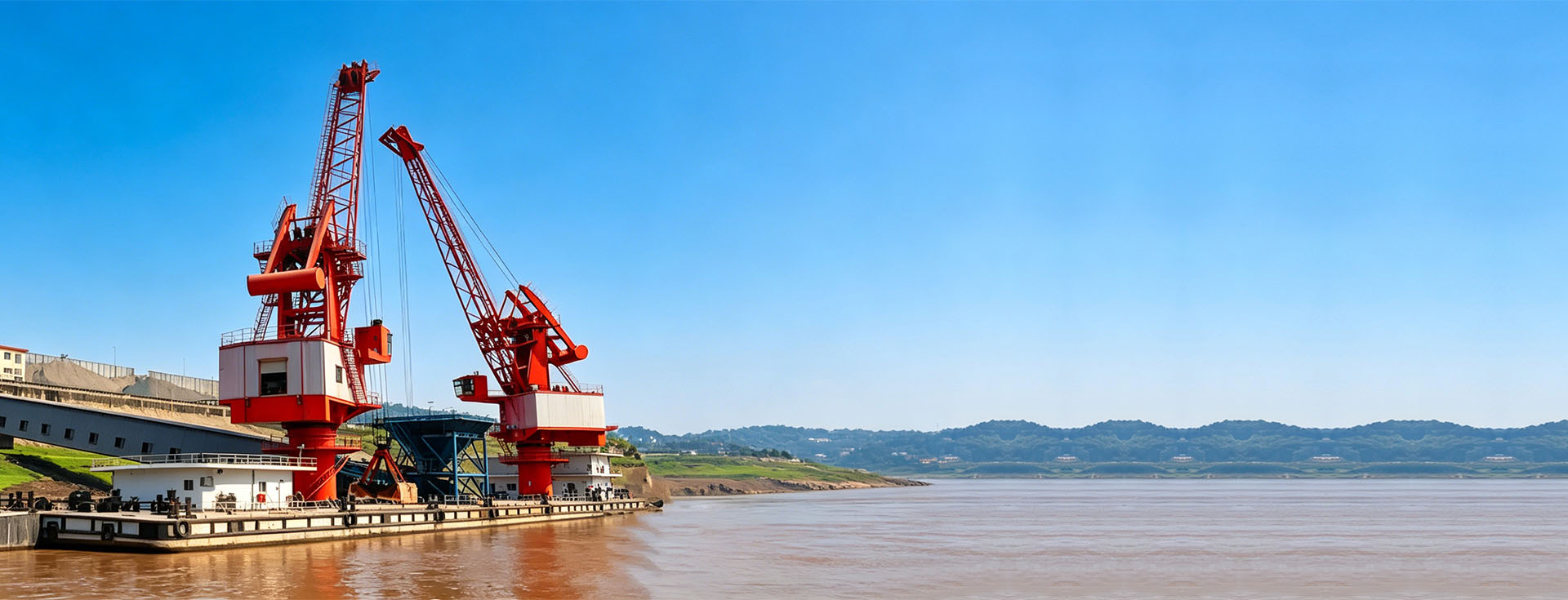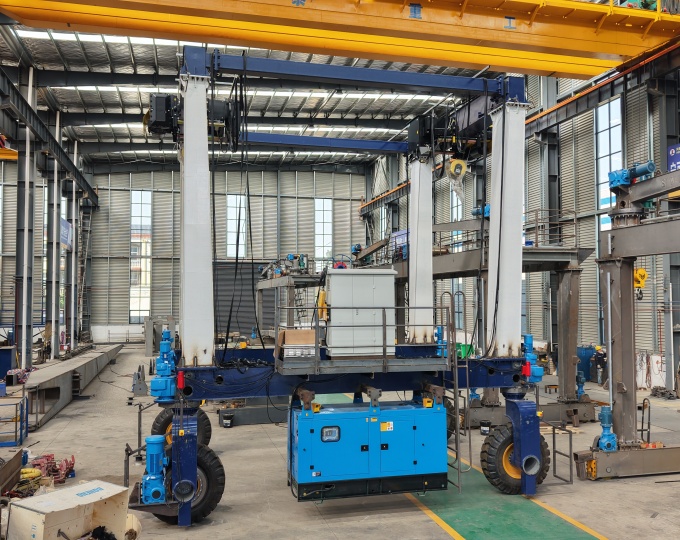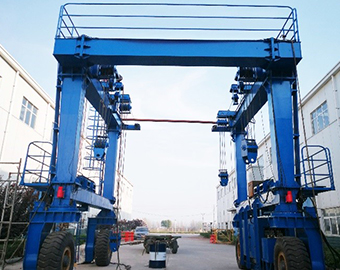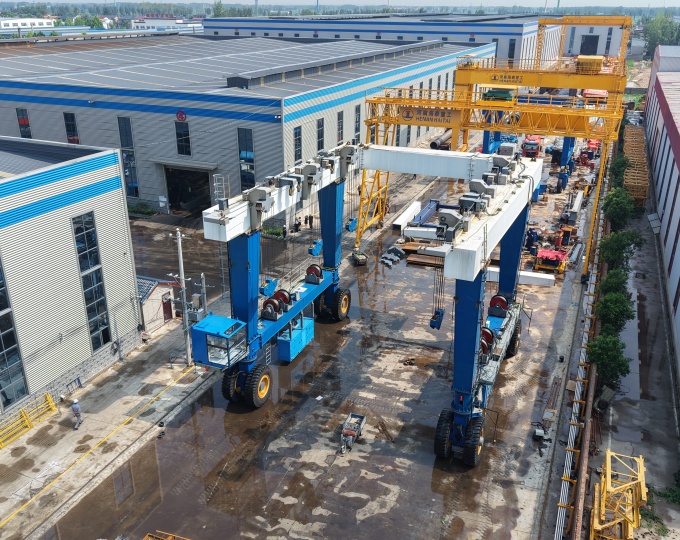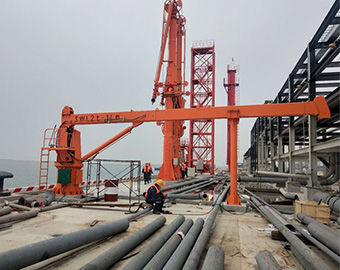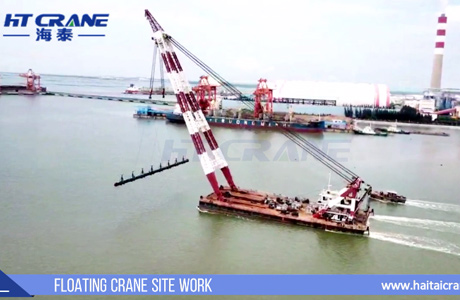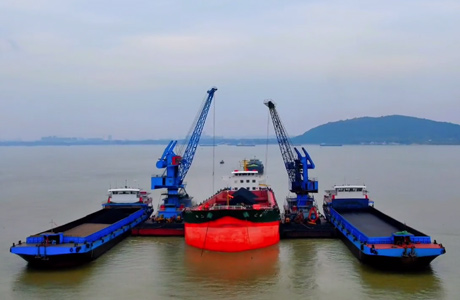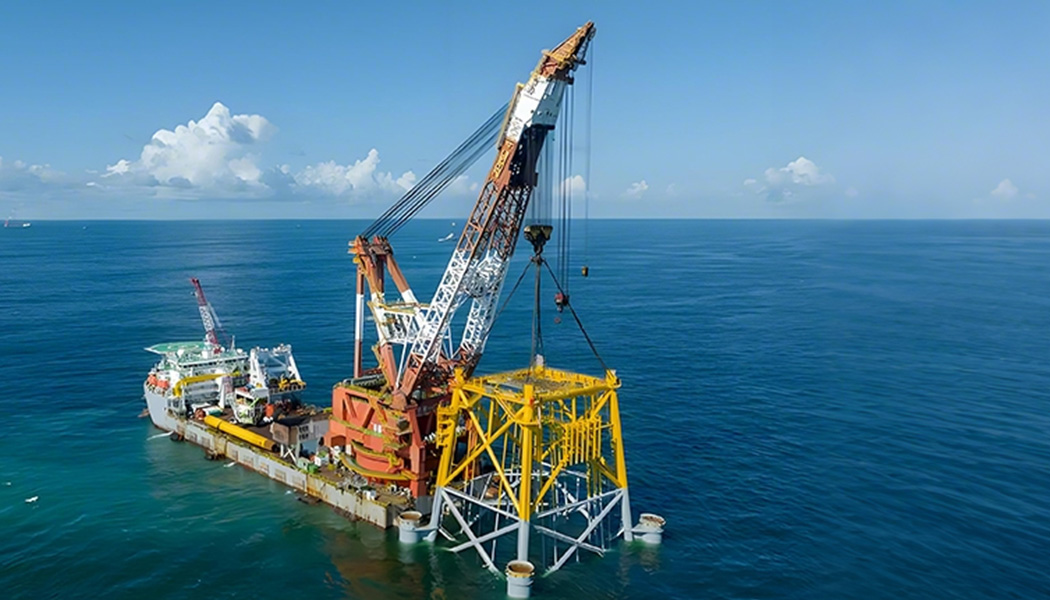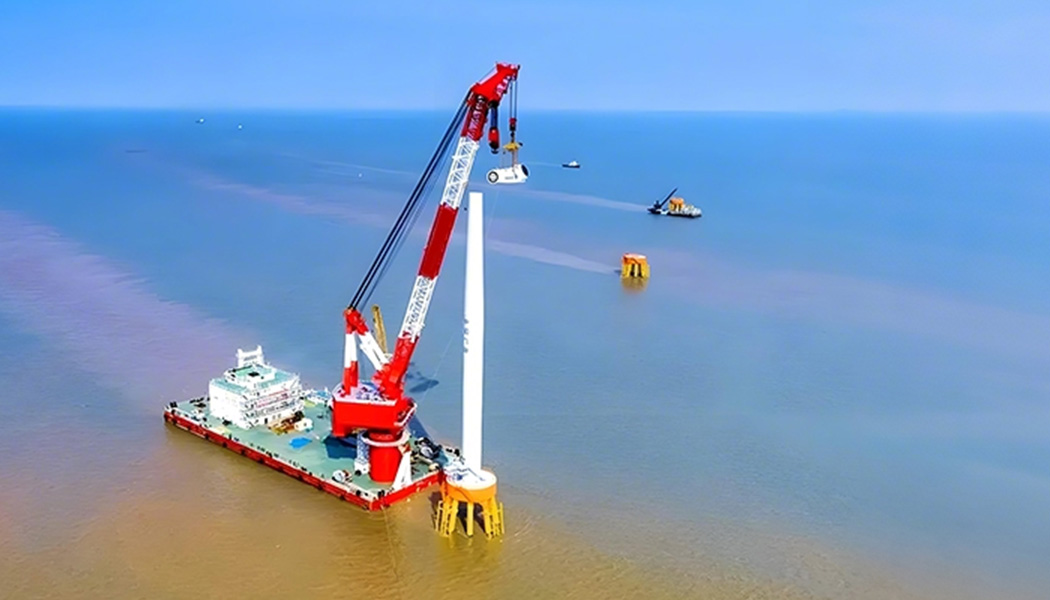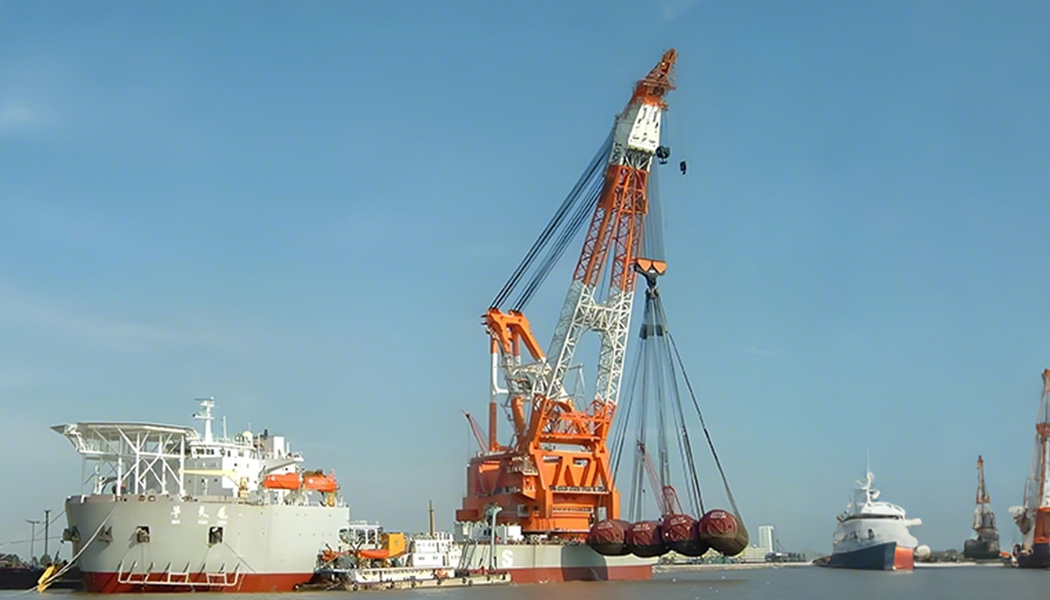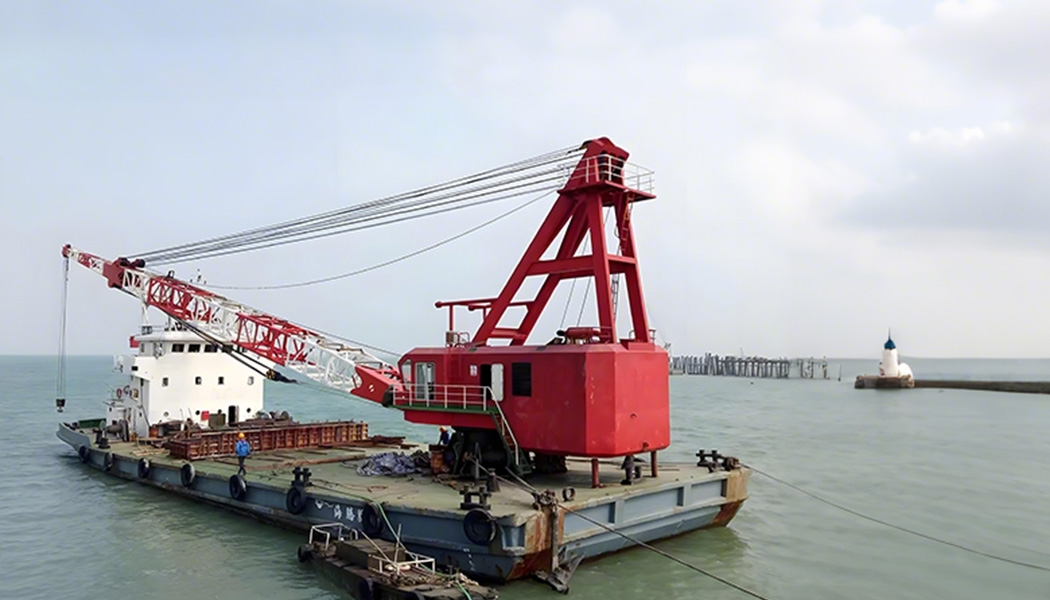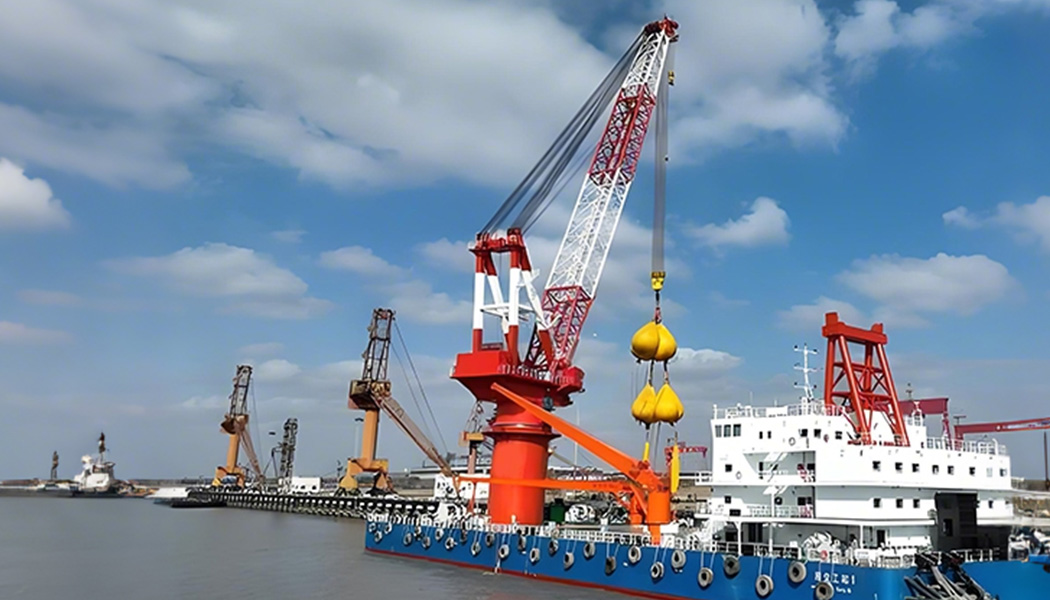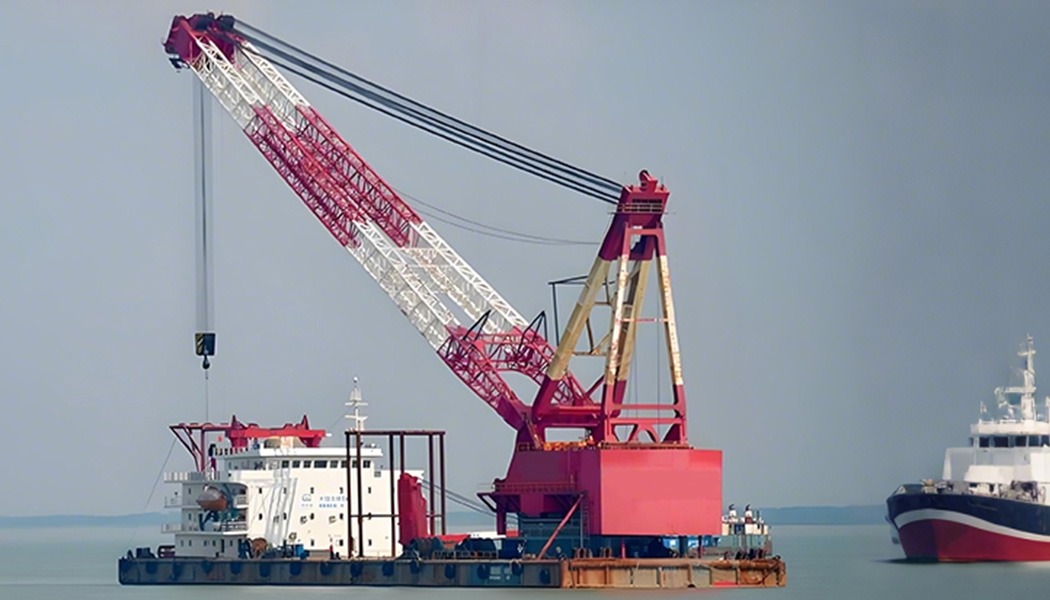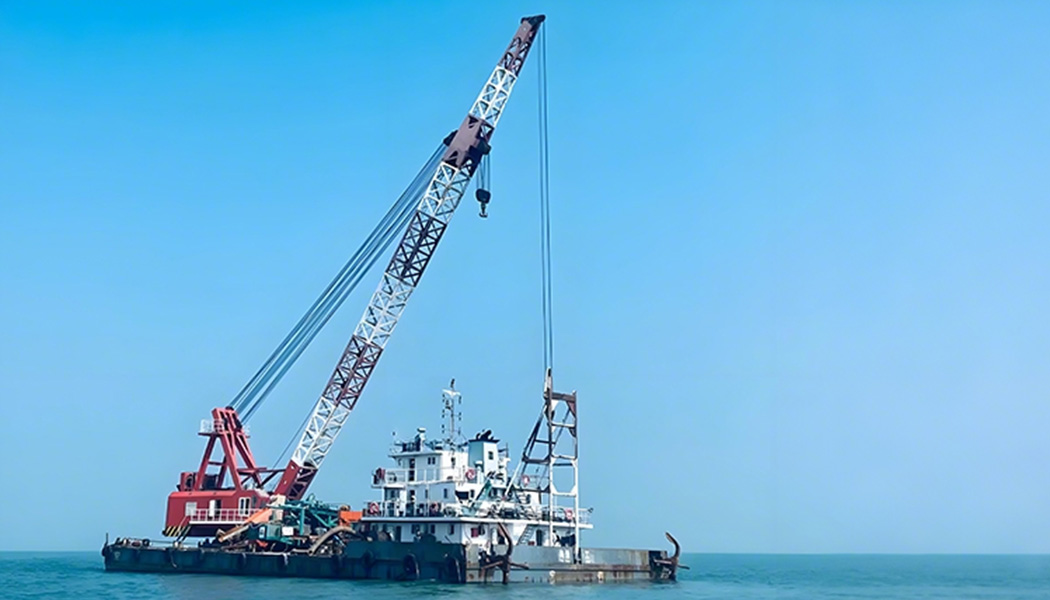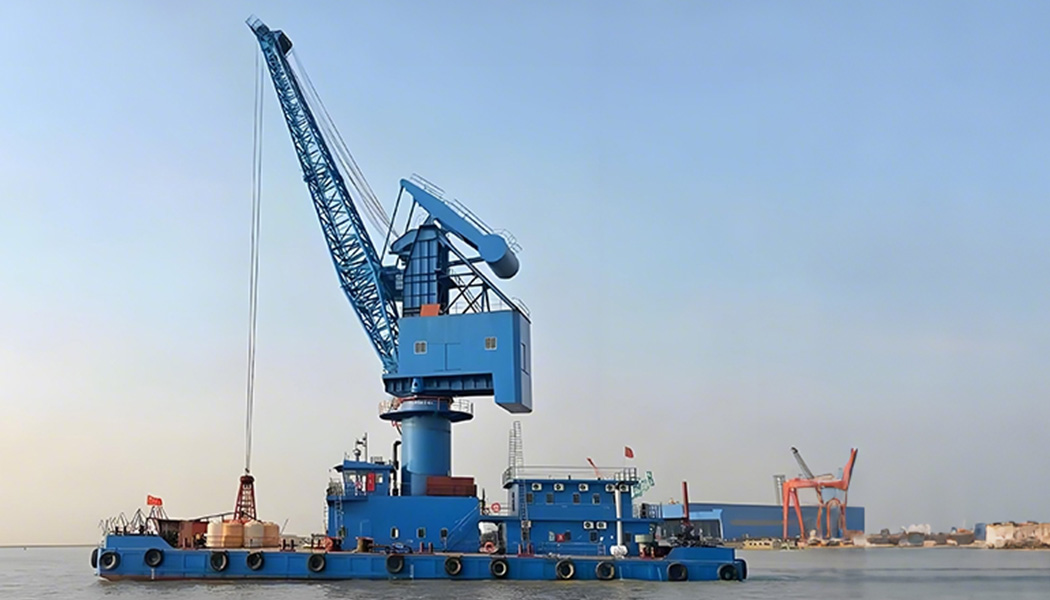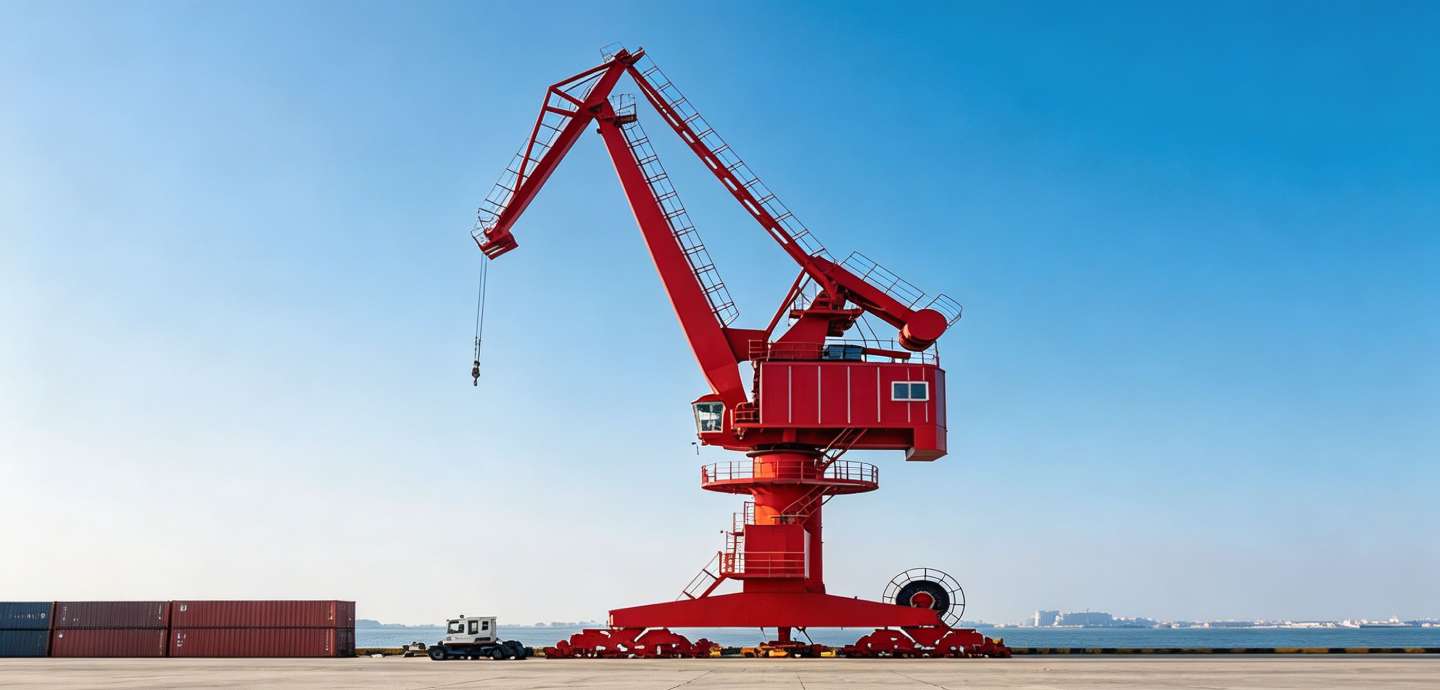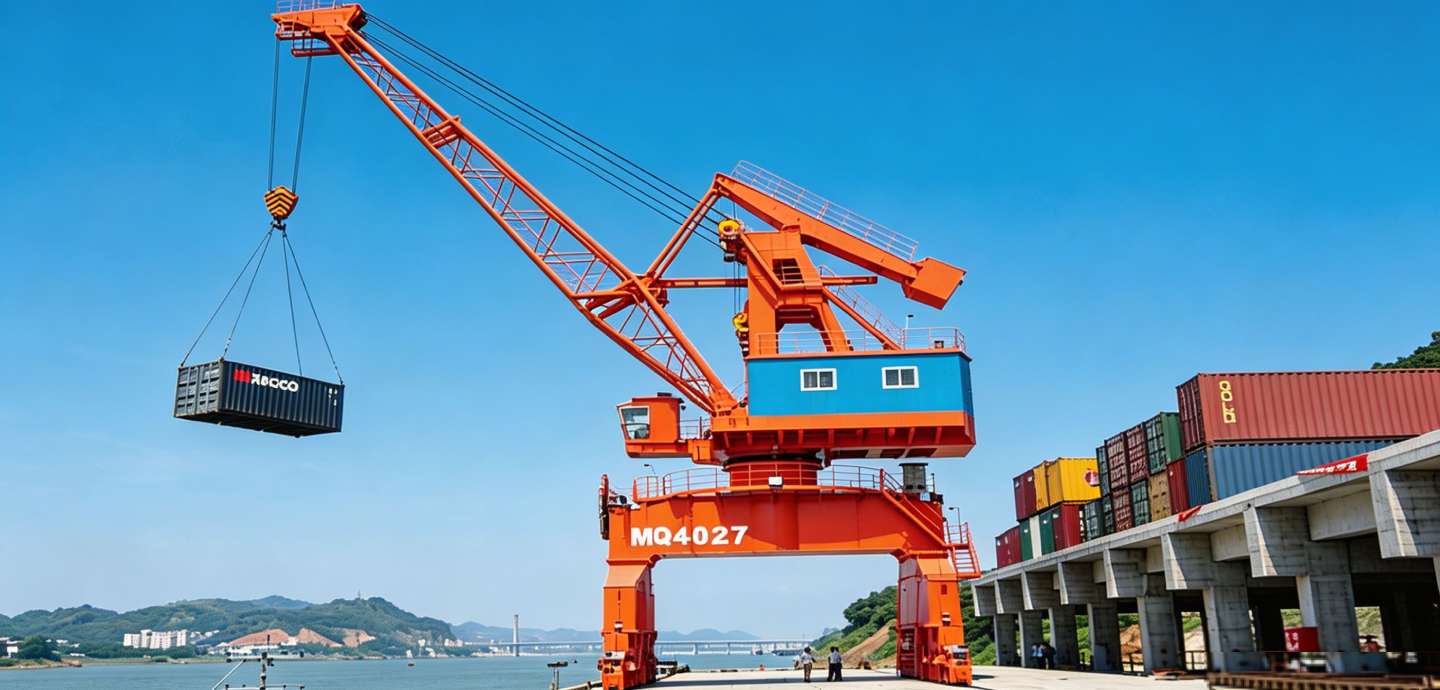
Floating Crane is a large lifting equipment installed on the water surface, mainly used for offshore lifting operations. The ship mounted crane is unique in that it can float freely on the water surface, adapt to the special needs of marine operations. The shipyard cranes are widely used in marine engineering, port construction, ship repair and other water operations requiring heavy lifting.
The floating crane works similar to an ordinary crane, but it resists the force generated when heavy objects are lifted by the support of a floating platform. The float crane uses components such as boom, wire rope and hook, combined with a precise control system, to lift and move heavy objects to the designated position. With the support of the floating platform, the floating crane can withstand very large gravity and still maintain high stability under the action of waves.

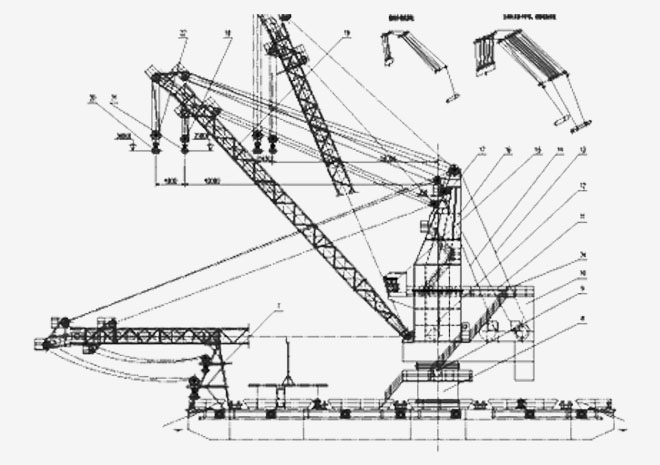
| Floating Crane Basic Technical Parameters | ||||||
| Rated Lifting Capacity | 150T | 450T | 600T | 1000T | 2000T | |
| Working Radius | Max | 30m | 40m | 50m | 60m | 70m |
| Min | 8m | 10m | 12m | 15m | 18m | |
| Boom Length | 40m | 50m | 60m | 70m | 80m | |
| Max Lifting Height | 45m | 55m | 65m | 75m | 85m | |
| Max Water Depth | 30m | 40m | 50m | 60m | 70m | |
| Dead Weight | 500T | 800T | 1000T | 1500T | 2500T | |
| Lifting Speed | 3m/min | 4m/min | 4.5m/min | 5m/min | 5.5m/min | |
| Max Wind Speed Limit | 15m/s | 18m/s | 20m/s | 22m/s | 25m/s | |
| Power System | 2000kW | 3000kW | 3500kW | 4000kW | 5000kW | |
| Rotation Angle | 360° | |||||
| Maximum Load Size | 6x6m | 8x8m | 10x10m | 12x12m | 15x15m | |
Note: The above data is only for refence. The float crane can be customized based on client request, such as lifting capacity, working radius and lifting height, etc.
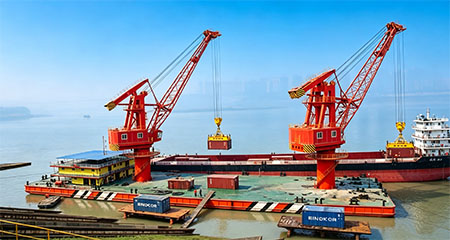
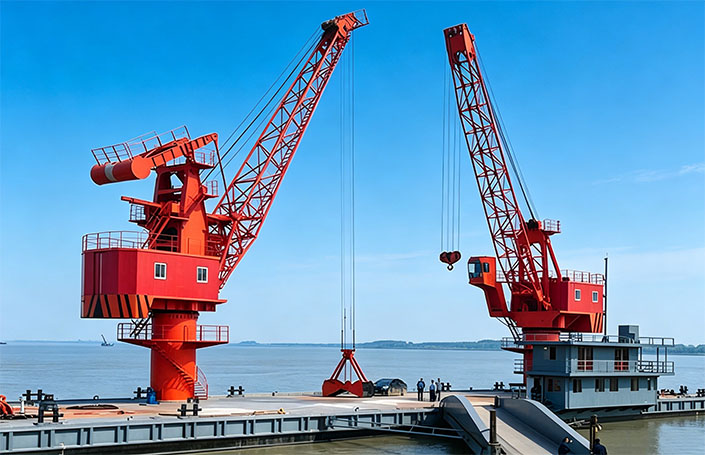
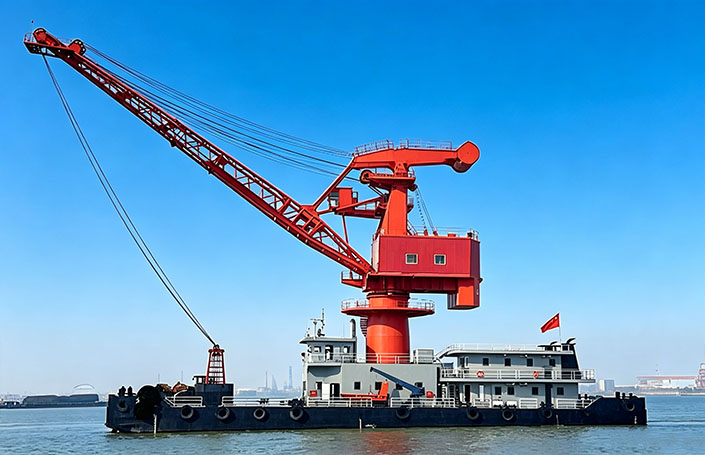
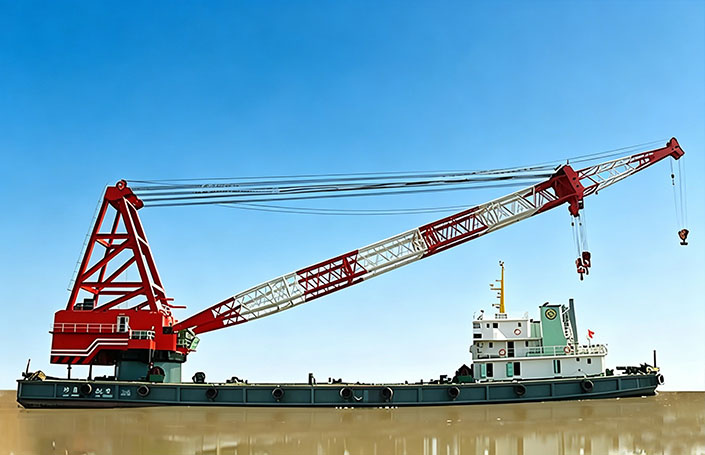
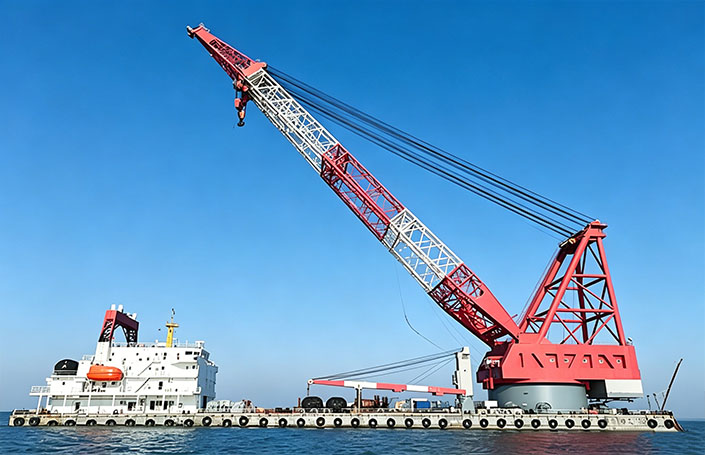
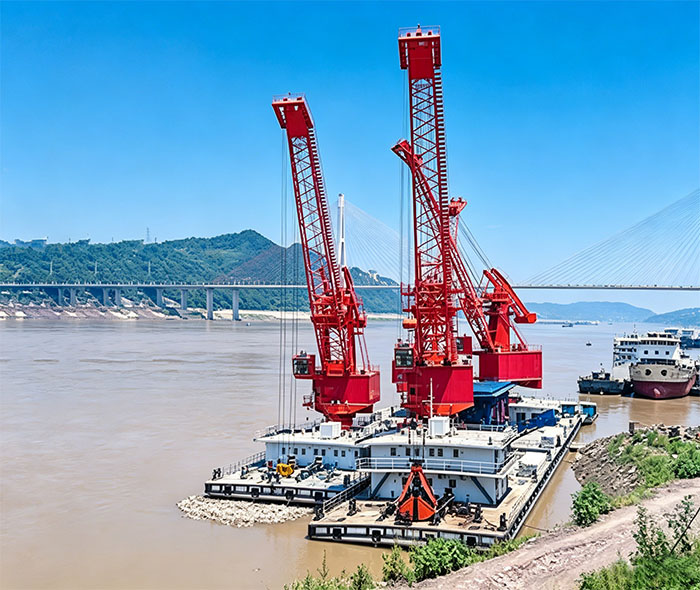









The floating crane can use the principle of hull buoyancy to float on the water and are equipped with powerful lifting devices for heavy lifting operations on the water or in marine environments. Through its mast and hook, the float crane is able to lift heavy objects from the ship or the sea floor and move them precisely to the designated position.
Yes, the float cranes usually require professional operators and relevant operating permits. Operators must undergo strict training and hold relevant crane operation certificates to ensure the safety of lifting operations. In addition, the operation and maintenance of the floating crane is required to comply with local marine engineering safety regulations and standards.
The float cranes require regular inspection, maintenance and repair, including inspection of mechanical systems, electrical systems, lifting systems and hull components. The maintenance period is determined according to the frequency of the floating crane, the working environment, and the technical requirements of the equipment itself. In general, routine maintenance is carried out once a year, focusing on checking the hoisting system and structural safety.
The installation requirements of the float crane are more flexible, but usually require a relatively calm, deep water sea or port. When performing installation operations, it is also necessary to consider the current, tide, wind and other factors. In order to ensure the stability of the floating crane on the water, the water depth, bottom conditions and weather conditions in the operating area need to be evaluated in detail.
Yes, the float cranes are often able to collaborate with other offshore equipment such as offshore platforms, drilling equipment, ships, etc. The floating crane can lift and move large equipment at sea, helping other equipment to complete installation, maintenance or disassembly tasks. Multiple floating cranes can also collaborate to complete large-scale lifting operations.
When getting a floating crane, customers are usually required to provide the following information:
a. Location and depth of water.
b. The weight and dimensions of the lifting item.
c. Estimated operation cycle and schedule.
d. Special operating requirements (such as wind and wave resistance, working environment requirements, etc.)
c. Specifications of the floating crane required (e.g. load capacity, lifting height, etc.).
The floating cranes are designed to follow strict safety standards and are equipped with a variety of safety devices, such as limit device, automatic alarm system, wind and wave protection device. In addition, operators need to be trained to ensure that safe operating procedures are followed during the operation. Before the operation, risk assessment is usually carried out and necessary safety measures are taken, such as safety protection for marine operations, weather monitoring, equipment inspection, etc.
The floating cranes are primarily designed for use in marine environments and are therefore suitable for deep and open water. When used in inland waters (such as rivers, lakes), factors such as current, wave and depth may need to be considered. If the water is shallow or wavy, other types of lifting equipment may need to be used.
Yes, we can provide ISO 9001, CE and other certificates.
Yes, we can. If your side needs us to do the installation, we could send our professional engineers to do the work.