With the continuous growth of the global yachting economy, more marinas and shipbuilding companies are seeking more efficient and safer methods for vessel handling. Traditional fixed cranes and manual operations are no longer able to meet the high-frequency, high-safety, and high-efficiency demands of modern marinas.
Against this backdrop, boat travel lift (also known as boat lift crane, marine travel lift, or mobile boat hoist) has gradually become core equipment for upgrading marina facilities. They enable flexible and safe launching, moving, and maintenance of vessels, significantly improving marina operational efficiency and service levels. This article will delve into why marinas should choose boat travel lift cranes and the long-term value this equipment brings to marinas.
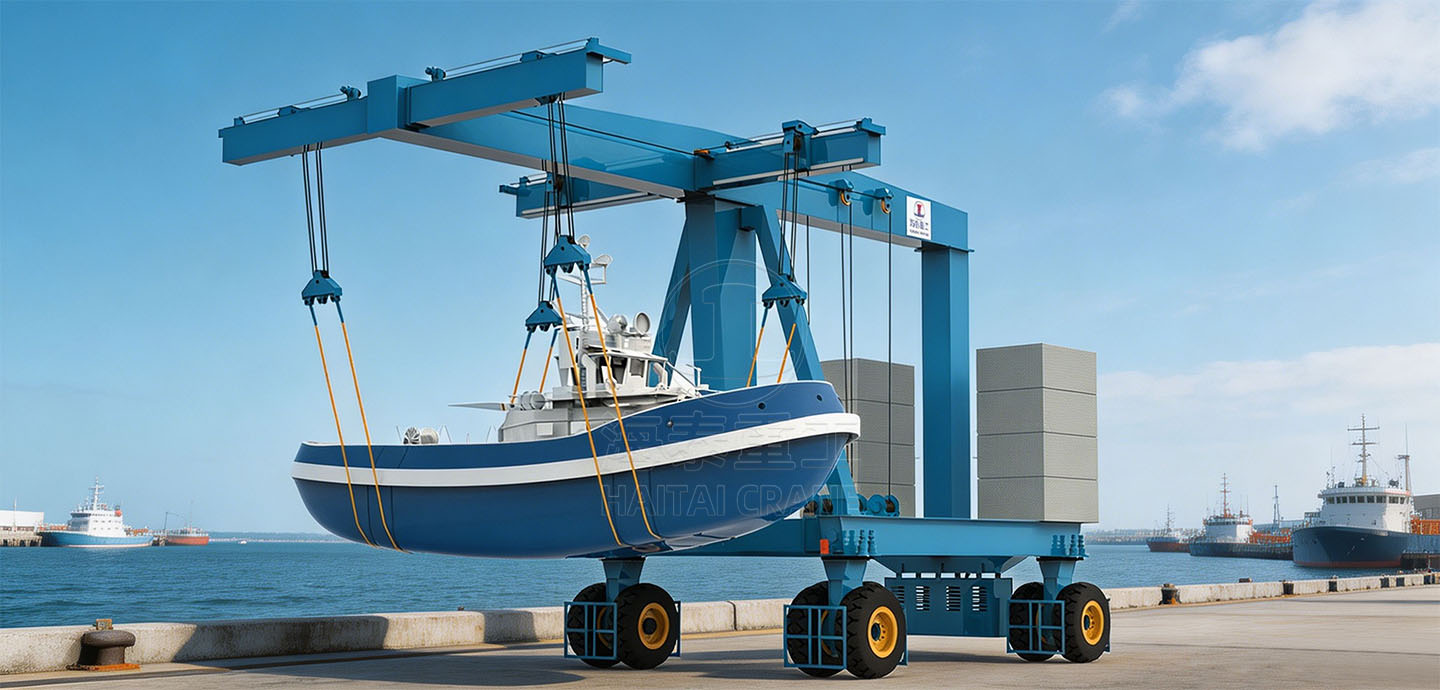
A boat travel lift is a mobile lifting device designed specifically for vessel handling. Unlike traditional fixed cranes, boat travel lift can utilize a tire-supported structure, enabling them to move freely within the marina. Its main structure includes:
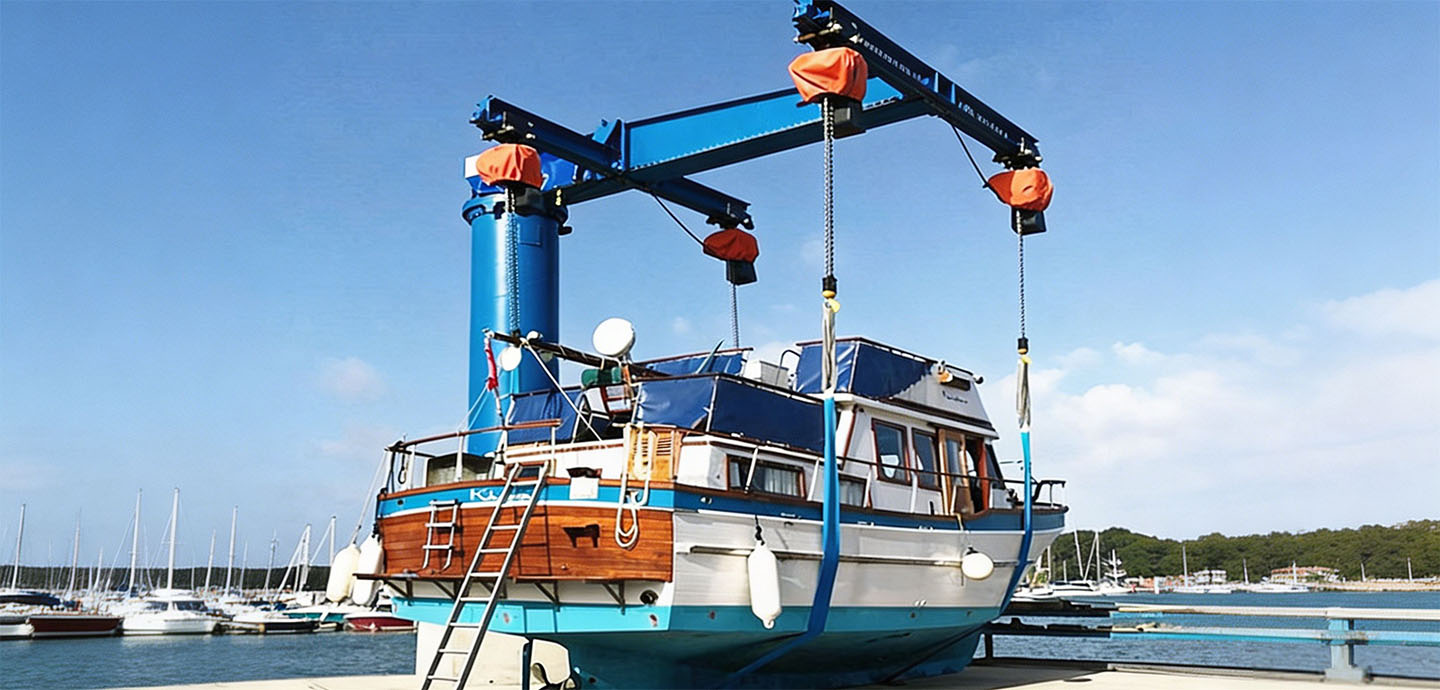
In terms of operation, a boat travel lift typically begins by lowering the slings into the water. Divers or staff members then secure them to the appropriate position on the bottom of the vessel. The hydraulic system then slowly lifts the vessel out of the water and moves it to a designated area for cleaning, repair, or storage. The entire process is efficient, safe, and causes minimal damage to the vessel.
Compared to fixed cranes, boat travel lift cranes are not restricted to fixed locations and can cover a wider operating area. They are also safer and more efficient than manual methods.
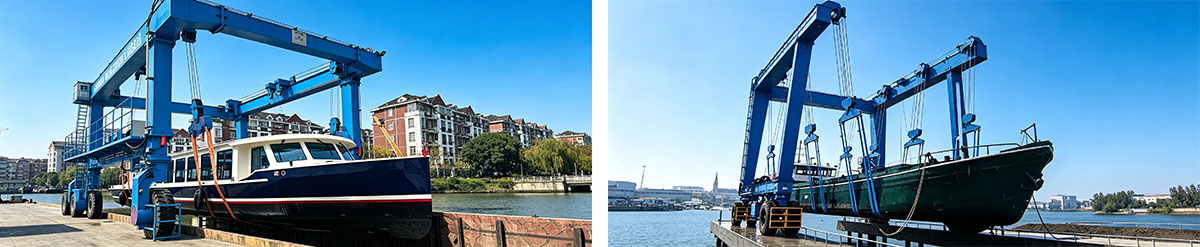
In modern terminal operations, boat travel lift has evolved from optional equipment to core infrastructure. It not only solves the efficiency bottlenecks of traditional ship handling but also offers unique advantages in cost control, service upgrades, and safety assurance, making it a must-have for small and medium-sized marinas and yacht harbors.
The core value of a marina lies in maximizing revenue through efficient turnover, and vessel launching and disembarking operations are often a key constraint to turnover efficiency. Traditional marinas rely on fixed cranes, requiring multiple, complex processes for each operation, which is time-consuming. Furthermore, due to limitations in crane positioning, only a single vessel can be handled at a time, leading to frequent berth queues.
The Boat Travel Lift revolutionizes this situation with its “mobile design + integrated operation.” Its adjustable boom and load-bearing platform enable rapid vessel positioning and securing, significantly reducing the time required for a single launch and disembarkation operation and significantly improving efficiency. For example, at small and medium-sized yacht harbors, marinas equipped with Boat Travel Lift can handle significantly more yacht launches and disembarkations daily than traditional crane-based terminals.
Furthermore, Boat Travel Lift Cranes don’t require fixed operating locations and can be flexibly dispatched based on berth usage, significantly reducing vessel waiting times and significantly improving berth turnover and daily terminal capacity, thereby enhancing customer satisfaction. This is especially true for shipowners requiring urgent repairs or catching up on sailings, where rapid operation efficiency is a key consideration in selecting a terminal.
Although the initial purchase cost of a Boat Travel Lift is higher than that of a traditional fixed crane, its cost advantages over a traditional fixed crane over its entire lifecycle are significant, primarily reflected in three key areas:
Amidst increasingly fierce competition in the terminal industry, service quality has become a key factor in attracting long-term customers. Boat Travel Lift helps terminals establish a competitive advantage through its multi-functional integration and customized services.
On one hand, Boat Travel Lift not only facilitates vessel launching and disembarking, but also directly transports vessels to maintenance stations, providing an integrated “lifting-transfer-repair” service. For example, during hull cleaning, Boat Travel Lift secures the vessel in a designated area while high-pressure cleaning equipment is used to remove scale from the bottom. During antifouling coating applications, its stable load-bearing platform ensures uniform coating thickness, avoiding the shaky coating caused by traditional lifting. This one-stop service reduces vessel transfer time between stations, significantly saving shipowners significant maintenance cycles and significantly improving the customer experience.
On the other hand, for high-value yacht owners, the flexible lifting design of Boat Travel Lift is a key selling point. Traditional cable hoists are prone to scratching the hull surface, while Boat Travel Lift utilizes high-strength nylon slings with adjustable cushions to evenly distribute pressure on the hull, preventing damage to the paint during lifting. For high-value luxury yachts, this “zero-damage” service has become a crucial criterion for selecting a marina, helping it attracts high-end clients and enhance its brand value.
Marine vessels often have diverse types, ranging from small yachts and fishing boats to medium-to-large workboats and law enforcement vessels, with widely varying requirements for the load capacity and size of their handling equipment. The modular design of Boat Travel Lift enables comprehensive adaptability:
Shipbuilding is a high-value asset, and the safety risks associated with its lifting process directly impact the marina’s operational risk and brand reputation. The Boat Travel Lift minimizes lifting accidents through multiple safety features:
The terminal environment is characterized by high humidity and salinity, placing stringent demands on the equipment’s corrosion resistance and durability. The Boat Travel Lift’s specialized design ensures long-term, stable operation in these harsh environments:
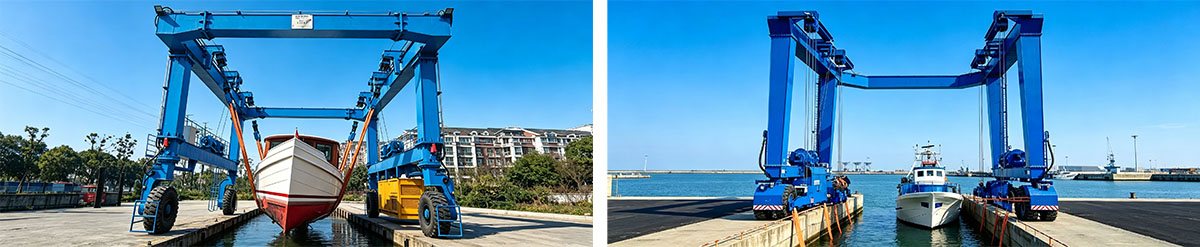
Compared to Fixed Cranes: Fixed cranes require significant capital investment and have a limited operating range. Once fixed in position, they cannot be moved. In contrast, boat travel lift can be flexibly moved throughout the entire terminal, offering greater efficiency and the ability to handle vessels at different berths.
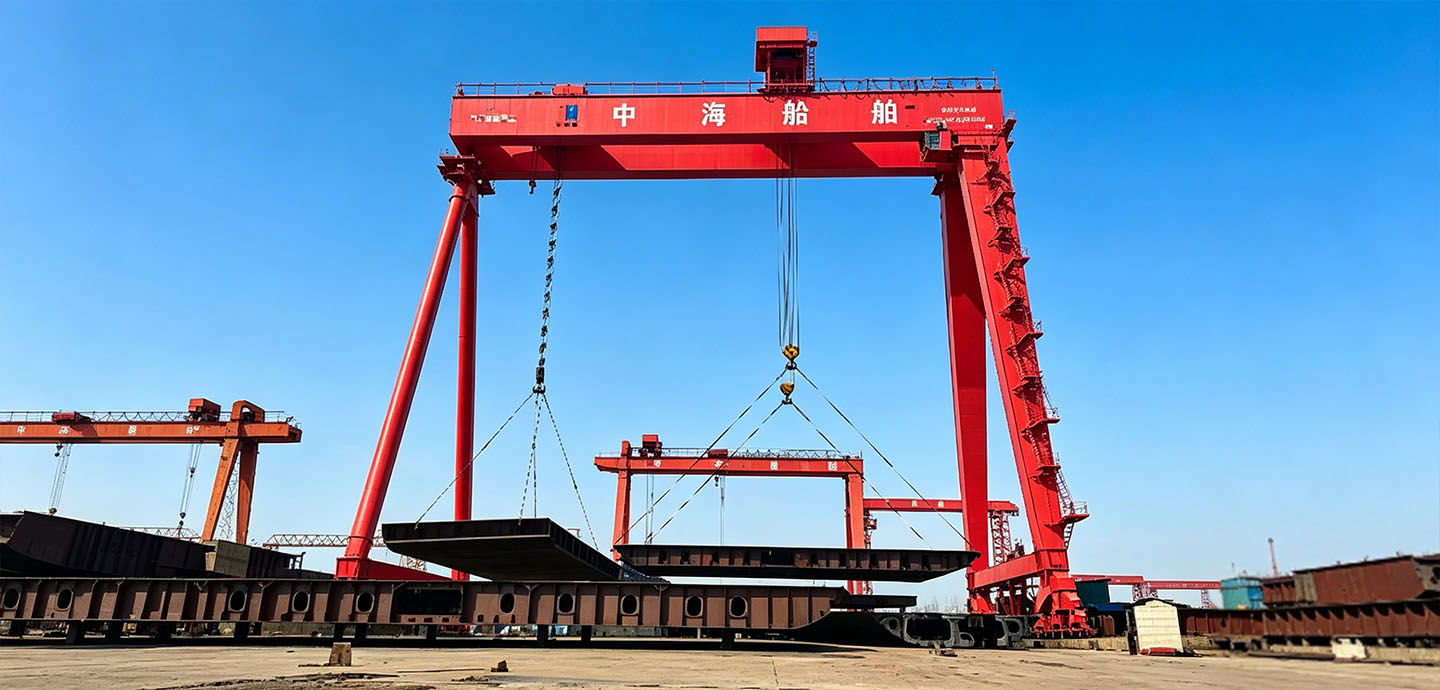
Compared to Gantry Cranes: Although gantry cranes can also lift large vessels, they are primarily used to handle cargo containers. The gantry cranes are bulky and expensive, making them unsuitable for routine vessel maintenance at the terminal. Boat Travel Lift Cranes are designed specifically for ship handling and better meet the terminal’s practical needs.
Compared to Manual Methods: Manual methods are only suitable for very small vessels and are virtually impossible for medium to large yachts or fishing boats. Mechanized operation significantly reduces manual risk and operational errors, improving safety.
Different terminals have different customer groups; some primarily serve small yachts, while others serve large fishing vessels or workboats. When purchasing a boat travel lift, it’s important to clarify the maximum vessel size and weight to select the appropriate tonnage.
Boat Travel Lift Cranes require a certain road width and ground load capacity to operate. If the terminal site is narrow, a model with a smaller turning radius may be desirable. Water depth and shoreline design also affect the efficiency of a boat travel lift.
If a terminal performs a high number of lifts daily, it’s important to select a model with more stable performance and durability to avoid increased failure rates due to frequent operation.
Boat Travel Lift Cranes are medium to long-term investments. While the initial investment is significant, the long-term savings in labor, maintenance, and berth operating costs can pay for themselves within a few years.
When selecting a boat travel lift, the supplier’s after-sales service and spare parts supply are crucial. Excellent technical support ensures long-term stable operation of the equipment and avoids terminal downtime due to failures.
Due to their flexibility, efficiency and safety, boat travel lift has become a core device for various terminals and ship service facilities, serving diverse scenarios. Their application value is particularly prominent in the following scenarios:
Yacht marinas place high demands on the timeliness, safety, and meticulousness of vessel launching and disembarking, making boat travel lift a near-standard feature. Before the peak tourist season, it can quickly transfer yachts from land to water. After the season ends, it can lift yachts ashore for winter maintenance, avoiding revenue losses due to equipment shortages. During daily operations, its adjustable cushions and flexible slings protect the hull paint for frequent cleaning and maintenance needs. It also allows for direct transfer of yachts to workstations, streamlining processes and playing a key role in maintaining customer loyalty at the terminal.
Shipyards require rapid completion of ship repair, painting, and overhaul operations. Boat Travel Lift overcomes the operational limitations of traditional rail-mounted cranes. It can freely navigate various areas, lifting vessels awaiting repair directly from shore to the workshop, and then transferring them to the launch area after repair, achieving a “one-stop” process. For batch repairs, it allows for flexible scheduling to reduce vessel waiting times. For specialized repairs, the boom height and angle can be adjusted, simplifying the work process and increasing the yard’s capacity.
Fishing and cargo vessels operate frequently and spend minimal time in port at these ports. Boat Travel Lift Cranes are highly responsive, enabling easy lifting and transfer of fishing vessels upon docking without complex adjustments. This facilitates rapid repairs and reduces financial losses for fishermen. Compared to traditional, simpler equipment, they offer greater stability and smooth lifting in rough seas, preventing damage to the vessel or fishing gear. Furthermore, they are adaptable to cargo vessels of varying sizes, reducing port equipment investment and ensuring efficient cargo turnover.
Private yacht clubs cater to high-net-worth individuals. Boat Travel Lift Cranes are not only functional equipment but also a symbol of quality. Members own high-value yachts and demand refined, personalized service. Clubs can leverage Boat Travel Lift to provide customized services. Members can schedule launches and disembarkations at any time, eliminating the need for waiting for dispatch. The equipment can also be adjusted to suit the yacht’s characteristics to protect the hull. During maintenance, yachts can be transported to a dedicated repair area, ensuring privacy and professionalism, enhancing customer loyalty and establishing a competitive advantage in the high-end market.
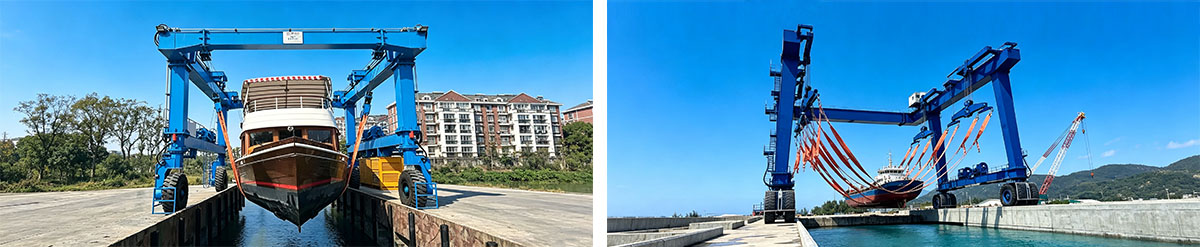
Having a state-of-the-art boat travel lift signifies a marina’s modern facilities and high-quality service, which is crucial for attracting high-end boat owners.
Boat travel lift cranes are not only facilitate launching and disembarking, but also assist with cleaning, repairs, antifouling coating, and winter storage, open-up new profit models for marinas.
With the growth of the yacht market, boat owners are increasingly choosing marinas that offer comprehensive services. The inclusion of a boat travel lift undoubtedly enhances a marina’s competitiveness.
From the above analysis, we can see that boat travel lift crane has become an indispensable core piece of equipment for modern marinas. They not only improve operational efficiency and reduce costs, but also provide customers with a higher quality experience.
If you are interested or have any needs, please contact Haitai Crane directly. We will provide you with professional answers or customize a boat travel lift that meets your needs.