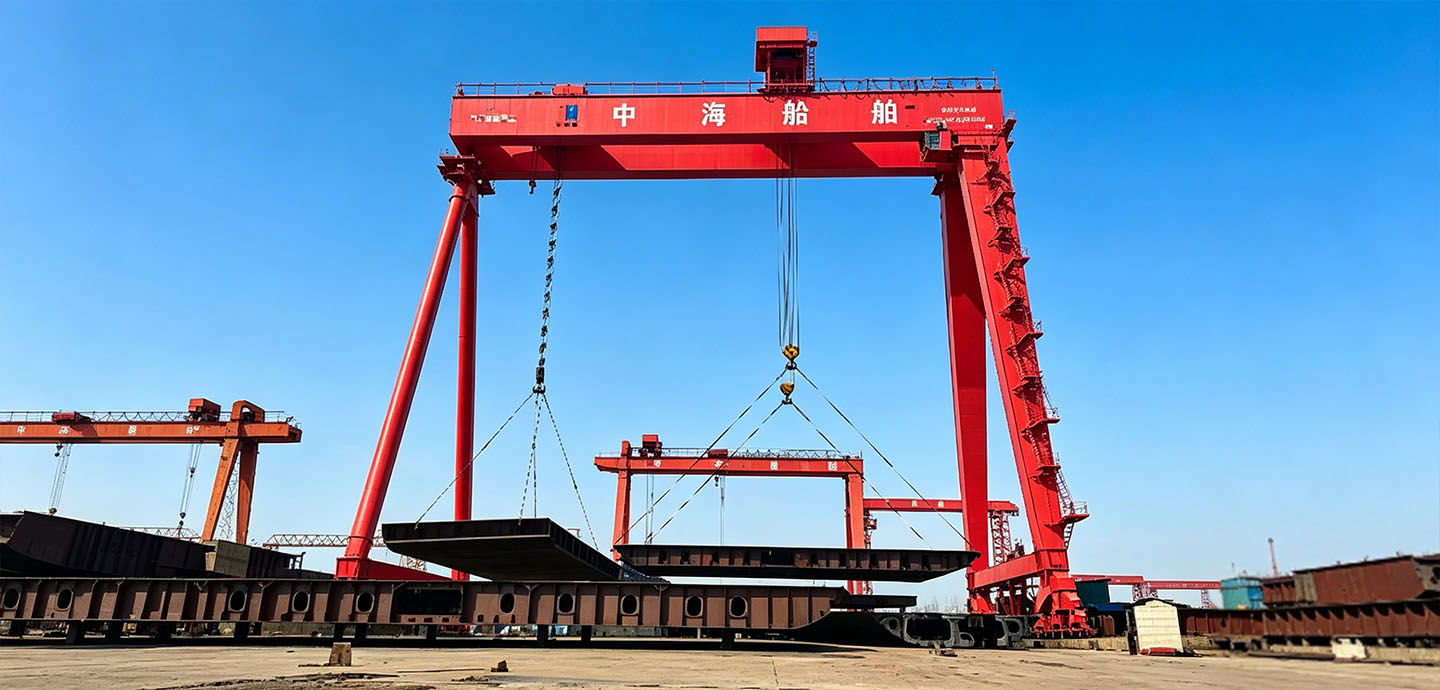
Shipbuilding is a complex process involving multiple stages, including steel plate processing, hull block fabrication, structural assembly, and hull erection. As ships become larger and their structures more complex, shipyards must handle increasingly large steel components. This places higher demands on lifting equipment in terms of lifting capacity, working coverage, and operational stability.
In actual production, the transfer of hull blocks, positioning of heavy components, and coordination between different work stages can all affect the overall production schedule. If lifting equipment cannot cover key working areas or its lifting capacity does not match the weight of the components, the shipyard may need additional handling equipment, temporary changes to its lifting plans, or even wait for other equipment to finish its assigned tasks.
Shipbuilding gantry cranes are essential equipment for lifting large components and assembling hull structures in shipyards. A properly configured crane can handle heavy lifting tasks while reducing unnecessary material handling and waiting time, allowing different stages of production to connect more smoothly. Therefore, selecting the right shipbuilding gantry crane is an important step in improving production planning, controlling operation time, and increasing overall shipyard productivity.
A ship’s hull is usually assembled step by step from multiple blocks. After fabrication, each block must be transferred, positioned, and assembled to form a more complete hull structure. For large hull blocks, every additional handling operation may require equipment scheduling, lifting preparations, on-site coordination, and safety checks.
Shipbuilding gantry cranes can cover large working areas and handle the lifting, transfer, and positioning of hull blocks according to the shipyard layout. When the crane’s span, lifting height, and travel range meet the requirements of the site, some components can be lifted and positioned with fewer intermediate handling operations.
Reducing unnecessary handling not only helps shorten the turnaround time for individual components but also lowers the organizational costs associated with repeated lifting operations. Adequate crane coverage is particularly important for the assembly of large hull blocks and the erection of hull structures.
Shipyard production typically involves multiple processes that must work together. Components completed in one stage can only move forward when the next assembly area is ready to receive them and the necessary equipment is available. If there are not enough cranes, lifting coverage is limited, or equipment tasks are poorly coordinated, delays between production stages can easily occur.
Shipbuilding gantry cranes can handle the lifting of hull blocks, steel structural components, and other heavy parts. Arranging crane travel routes and lifting sequences in line with the production schedule helps reduce waiting time between different operations.
For shipyards that require several cranes to work in coordination, their working areas and operating schedules should also be planned carefully. This helps prevent too many tasks from being assigned to a single crane and avoids interference between overlapping travel routes. Only when equipment capabilities are aligned with the production schedule can cranes better support the overall production rhythm.
Hull blocks are not only heavy but also often have large overall dimensions. During assembly, each component must be moved into its designated position according to the design requirements and aligned with adjacent structures. Swinging during lifting, positioning deviations, and repeated adjustments can all affect assembly progress.
The hoisting, travel, and control systems of a shipbuilding gantry crane directly affect how components are moved and positioned. Selecting appropriate travel speeds, speed control methods, and control systems for the actual working conditions can help operators move components more smoothly and reduce unnecessary adjustments.
For specialized lifting tasks that require two trolleys or multiple hoisting mechanisms to operate together, a suitable solution can also be designed according to the component weight, lifting point arrangement, and synchronization control requirements. However, such configurations require dedicated engineering calculations and safety assessments and are not necessary for every shipyard.
It is worth noting that crane control performance is only one factor affecting positioning efficiency. Proper lifting point design, a well-planned lifting procedure, on-site coordination, and cooperation between operators are equally important. Smooth assembly operations depend on all these elements working together.
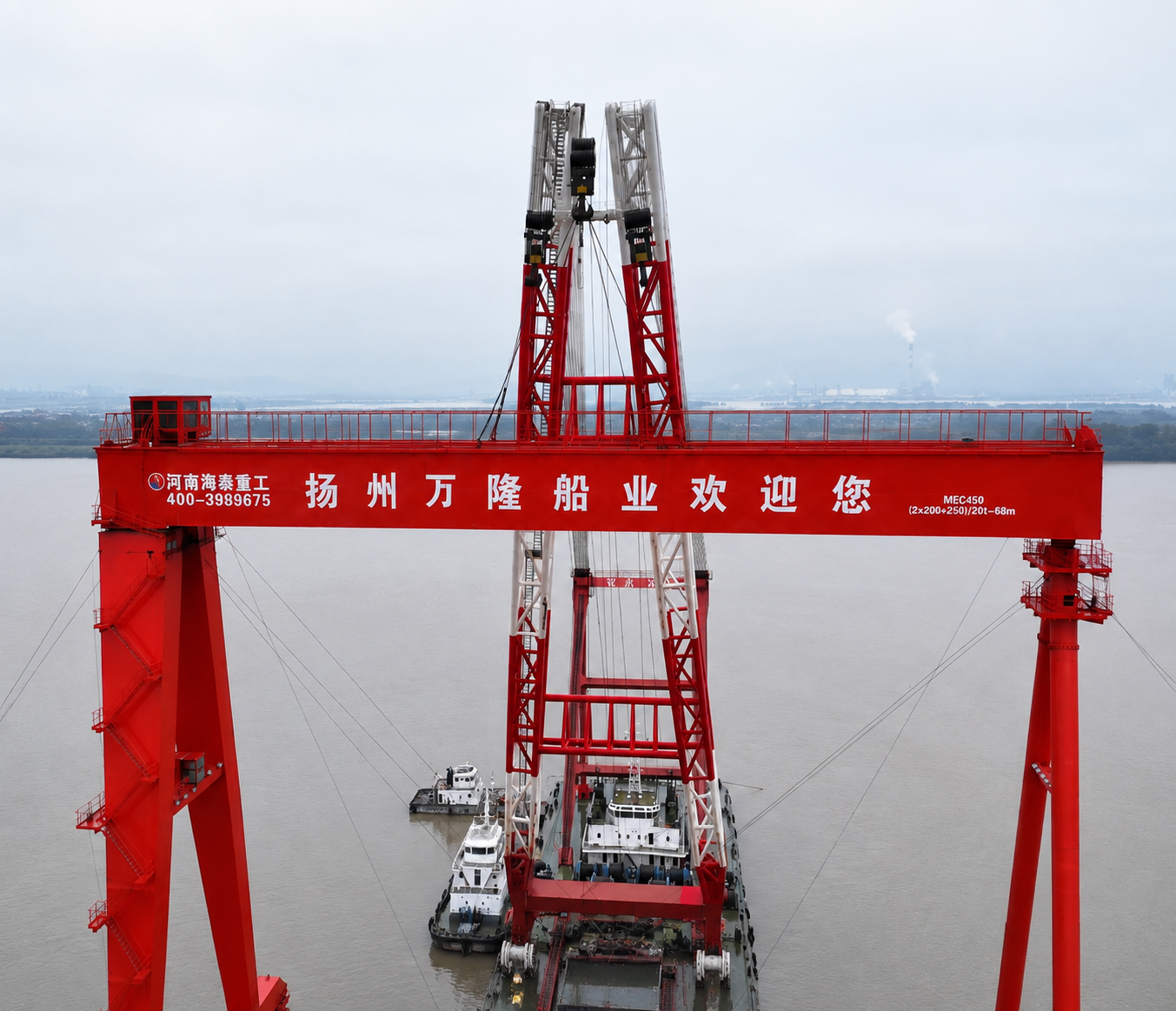
Shipyards frequently carry out heavy lifting operations in outdoor shipbuilding berths, dry docks, and large assembly areas. In addition to meeting the rated lifting capacity, equipment must also be suitable for the actual operating frequency, duty cycles, and site conditions. If the crane’s mechanical configuration does not match the intensity of the work, equipment downtime and maintenance frequency may increase, disrupting production schedules.
The design of a shipbuilding gantry crane should take into account the actual load spectrum, duty cycle, operating frequency, and expected service life. These factors help determine the appropriate configuration of the hoisting mechanism, travel mechanisms, braking system, and related electrical control systems. For shipyards in coastal areas, environmental conditions such as salt spray, humidity, wind loads, and temperature variations must also be considered, with suitable protective measures selected according to project requirements.
A thorough assessment of working conditions during the selection stage can help prevent mismatches between equipment capabilities and actual operating requirements after installation. This provides reliable support for long-term, stable heavy lifting operations in shipyards.
Shipyards often need to accommodate hull block fabrication, component storage, block assembly, and other production activities within limited space. The crane’s operating range, rail layout, and lifting paths all influence how the site can be organized.
Shipbuilding gantry cranes can be designed to suit the specific layout of a shipbuilding berth, dry dock, or assembly area. Properly determining the crane span, lifting height, rail positions, and clear height beneath the main girder helps the crane cover the intended working area while preserving the necessary space for ground transportation, component storage, and personnel access.
When the crane’s coverage matches the shipyard’s production workflow, some components can be lifted and assembled within designated areas, reducing repeated movement caused by space constraints. For new shipyard construction or production line renovation projects, considering crane positioning as part of the overall production layout is generally more practical than adjusting the site layout after the equipment has been installed.
Whether a shipbuilding gantry crane can meet a shipyard’s production requirements depends on more than its rated lifting capacity. Other important factors include span, lifting height, hoisting and travel speeds, control systems, duty classification, and safety features. These parameters should be determined together based on the specific lifting tasks and site conditions.
Rated lifting capacity determines the maximum load a shipbuilding gantry crane is designed to lift safely and is one of the first parameters to check during equipment selection. Shipyards should determine the required capacity based on the maximum weight of individual components, typical lifting loads, lifting gear weight, lifting point arrangements, and actual lifting frequency. The decision should not be based solely on the vessel’s tonnage or the nominal weight of a single component.
For extra-large hull blocks or components supported by multiple lifting points, load distribution, structural strength, and changes in forces during lifting must also be checked. If two trolleys or multiple hoisting mechanisms are used for synchronized lifting, dedicated engineering is required for synchronization control, load distribution, and the associated safety measures.
The span determines the width of the working area the crane can cover. A span that is too small may not meet the lifting and assembly requirements for hull blocks, while increasing the span also affects main girder design, overall stability, wheel loads, and rail foundation requirements. The span should therefore be determined according to the actual dimensions of the shipbuilding berth, dry dock, and assembly area, rather than simply aiming for the widest possible coverage.
Lifting height determines how high the crane can raise a component. It also affects whether the component can clear obstacles, reach its assembly position, and undergo turning or repositioning operations when required.
When determining the required lifting height, shipyards should consider not only the dimensions of the component itself but also the length of the lifting gear, lifting point arrangements, clear height beneath the main girder, and the space required to raise the component from the ground or its support position. For large hull blocks, the actual vertical clearance required should also be assessed in line with the assembly process.
Lifting height and the crane’s working range should be considered together with the site layout. If the design only meets static dimensional requirements without adequately assessing component travel paths and surrounding obstacles, the equipment may still face operational limitations after installation.
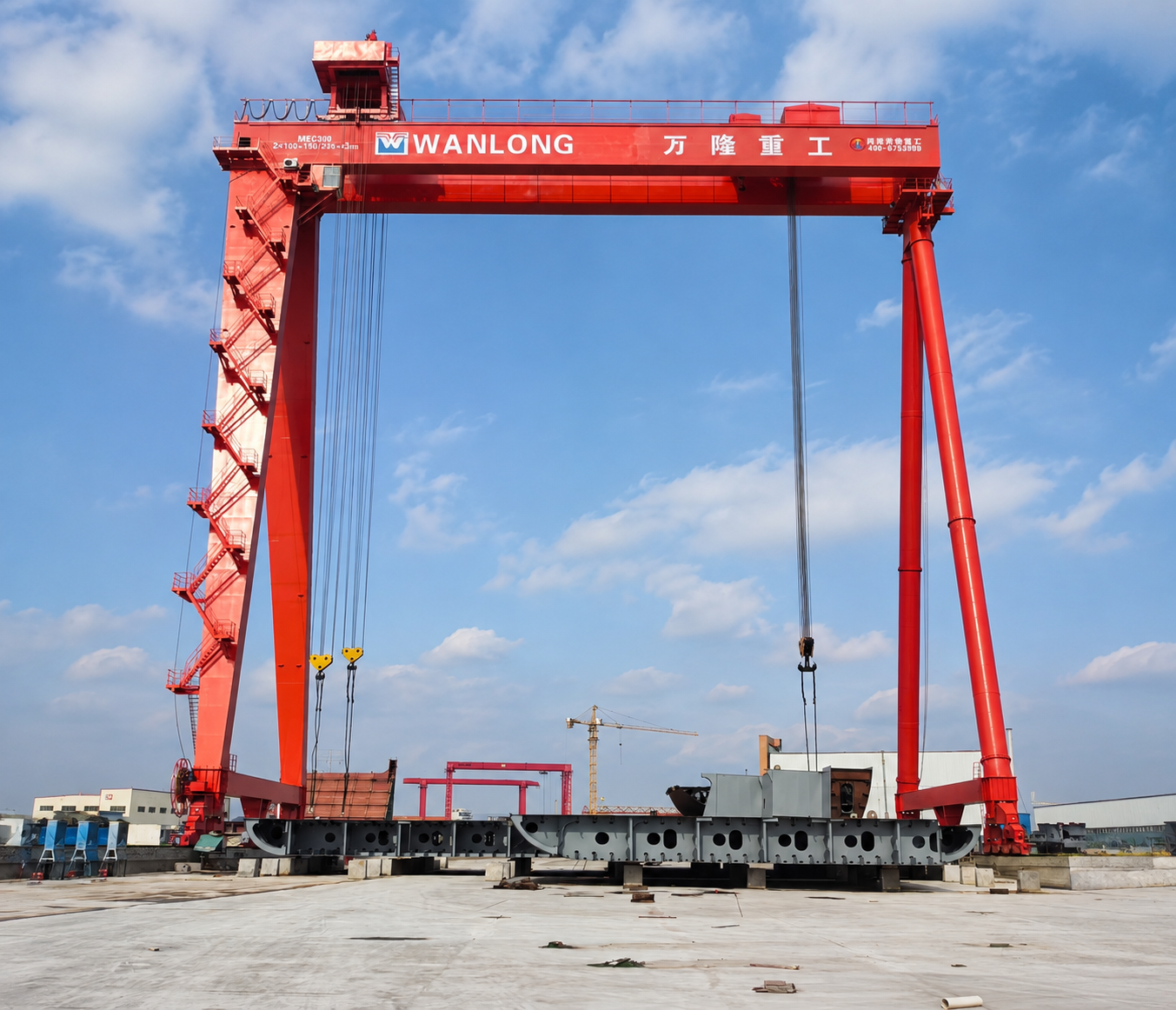
Hoisting speed, crane travel speed, and trolley travel speed all affect the time required to complete lifting tasks. However, faster speeds are not always better. The actual configuration must also take load weight, component stability, positioning accuracy, and on-site safety requirements into account.
For shipyards that frequently handle heavy loads, suitable operating speeds and speed control methods should be selected according to typical loads and production workflows. During component transfer, appropriate travel speeds help reduce unnecessary waiting. During hull block alignment and precision positioning, smooth, controllable low-speed operation is more important.
The control system should be compatible with the configuration of the hoisting and travel mechanisms. For projects with special synchronized lifting requirements, the need for coordinated control of multiple mechanisms should also be assessed according to the actual technical solution. With an appropriate combination of operating speeds and control methods, shipyards can balance production efficiency with lifting stability.
Shipbuilding gantry cranes typically handle large steel structures and hull blocks. Their main girders, legs, connecting structures, and travel mechanisms must meet the load requirements and operating conditions specified for the project. Structural design must account not only for rated loads but also for operating states, working conditions, wind loads, and applicable design standards.
Equipment usage frequency, load spectra, and duty cycles vary from one shipyard to another. The duty classification should therefore be determined according to actual operating conditions, rather than based solely on the number of operating hours per day. Appropriate mechanism configurations and structural design help the equipment meet long-term operating requirements and reduce maintenance demands caused by unsuitable configurations.
Safety systems are another essential part of the equipment configuration. Depending on project requirements, the crane can be equipped with load limiters, travel limit switches, travel braking systems, wind protection devices, and the necessary audible and visual warning devices. For outdoor shipbuilding berths and coastal sites, suitable wind protection measures should also be developed based on local wind conditions, rail arrangements, and equipment parking requirements.
The specific safety configuration should be determined according to the equipment design, applicable standards, and project operating conditions to ensure that the crane operates within its specified limits.
Work requirements vary across different areas of a shipyard. Hull block assembly places greater emphasis on lifting accuracy, positioning, and coordinated operations. Work in dry docks and on shipbuilding berths requires careful consideration of crane coverage and available space, while lifting extra-large steel structures places greater demands on lifting capacity, lifting point design, and structural load distribution.
Hull block assembly is an important stage of shipbuilding. Different blocks must be lifted, moved, and aligned according to the design requirements, gradually forming larger hull structures. Throughout this process, the crane must cover the required assembly area and accommodate the weight, dimensions, and positioning requirements of the blocks.
A properly configured shipbuilding gantry crane can handle block lifting and positional adjustments, reducing the need for additional handling caused by insufficient crane coverage. For large block assembly projects, the component weight, lifting point locations, lifting sequence, and available working space should be checked in advance to ensure that the crane’s capabilities match the assembly process.
If the project involves coordinated operations between multiple cranes or synchronized lifting at multiple points, the lifting plan should clearly define load distribution, coordination between equipment, and safety control requirements.
Dry docks and shipbuilding berths are commonly used for lifting and installing large hull structures, as well as carrying out related auxiliary operations. Since working conditions may be constrained by vessel dimensions, dock walls, rail arrangements, and other equipment, the crane’s span, lifting height, and operating range must suit the working area.
During the planning of a dry dock or shipbuilding berth, the crane’s rail and foundation conditions, clear height beneath the main girder, lifting paths, and required component positioning locations should all be checked. The crane’s operating requirements at different stages of production must also be considered. This helps avoid situations where the crane can reach a particular area but cannot complete the movements required to bring components into or out of that area.
For shipbuilding gantry cranes used outdoors, appropriate protective measures and wind protection devices should also be selected according to local weather conditions and project requirements to ensure compliance with the specified operating and parking conditions.
Large hull blocks, heavy steel structures, and other oversized components often have substantial weight, complex shapes, and specialized lifting point arrangements. These operations place high demands on the crane’s rated lifting capacity, structural design, lifting gear configuration, and lifting plan.
During equipment selection, the maximum lifting weight, component center of gravity, lifting point locations, and potential load variations throughout the lifting process must be checked. For oversized components, the available space during initial lifting, movement, turning, and final positioning should also be assessed. Equipment specifications should not be determined by weight alone.
When a project requires two trolleys or multiple hoisting mechanisms to work together, dedicated engineering calculations and verification should be carried out based on the actual operating conditions. The plan should clearly define synchronization control, load distribution, and safety procedures for abnormal situations. By evaluating equipment capabilities and lifting conditions in advance, shipyards can reduce the need for on-site adjustments and provide more reliable support for the assembly of large components.
The right shipbuilding gantry crane must do more than meet current lifting requirements. It should also match the shipyard layout, production schedule, and future project plans. When purchasing equipment, four key aspects deserve particular attention.
Check Actual Lifting Requirements. Determine the rated lifting capacity based on the maximum weight of individual components, typical lifting loads, component dimensions, and lifting frequency. Allow a reasonable capacity margin for future projects to avoid both insufficient capacity and unnecessary over-specification.
Assess the Shipyard Layout. Check the dimensions of dry docks, shipbuilding berths, and assembly areas, along with rail conditions, lifting height, clear height beneath the main girder, and the crane’s operating range. Obstacles along lifting paths should also be identified to ensure the equipment can cover the planned working areas.
Match the Actual Production Cycle. Determine the appropriate duty classification, mechanism configuration, and control system based on the load spectrum, duty cycles, operating frequency, and daily operating hours. Providing the crane manufacturer with accurate information about the working conditions helps ensure that the proposed technical solution meets actual production requirements.
Consider Long-Term Maintenance and Customization Needs. Beyond the initial purchase price, evaluate the ease of maintaining key components, spare parts availability, environmental adaptability, and future production expansion plans. Coastal conditions, specialized dry dock layouts, and the lifting requirements of large components can all affect equipment design and configuration. Considering these factors together helps control long-term operating costs.
Shipbuilding gantry cranes are large-scale industrial equipment that require careful consideration of shipyard layouts, lifting tasks, structural design, mechanism configuration, and actual operating conditions during selection and manufacturing. For shipyard projects with specialized requirements, the equipment solution should be based on specific technical parameters and actual operating needs rather than simply adopting standard specifications.
Shipyards differ in shipbuilding berth dimensions, dry dock layouts, component weights, and production workflows. Haitai Crane can develop equipment solutions based on project-specific technical requirements, covering rated lifting capacity, span, lifting height, operating range, and the configuration of relevant mechanisms to better suit the lifting tasks at each site.
For requirements involving large hull blocks, specialized lifting points, or coordinated lifting with multiple mechanisms, a targeted assessment is necessary based on component specifications and operating conditions. The corresponding design requirements should be clearly defined in the technical proposal. Thoroughly reviewing working conditions during the design stage helps reduce the risk of a mismatch between the equipment and actual site requirements.
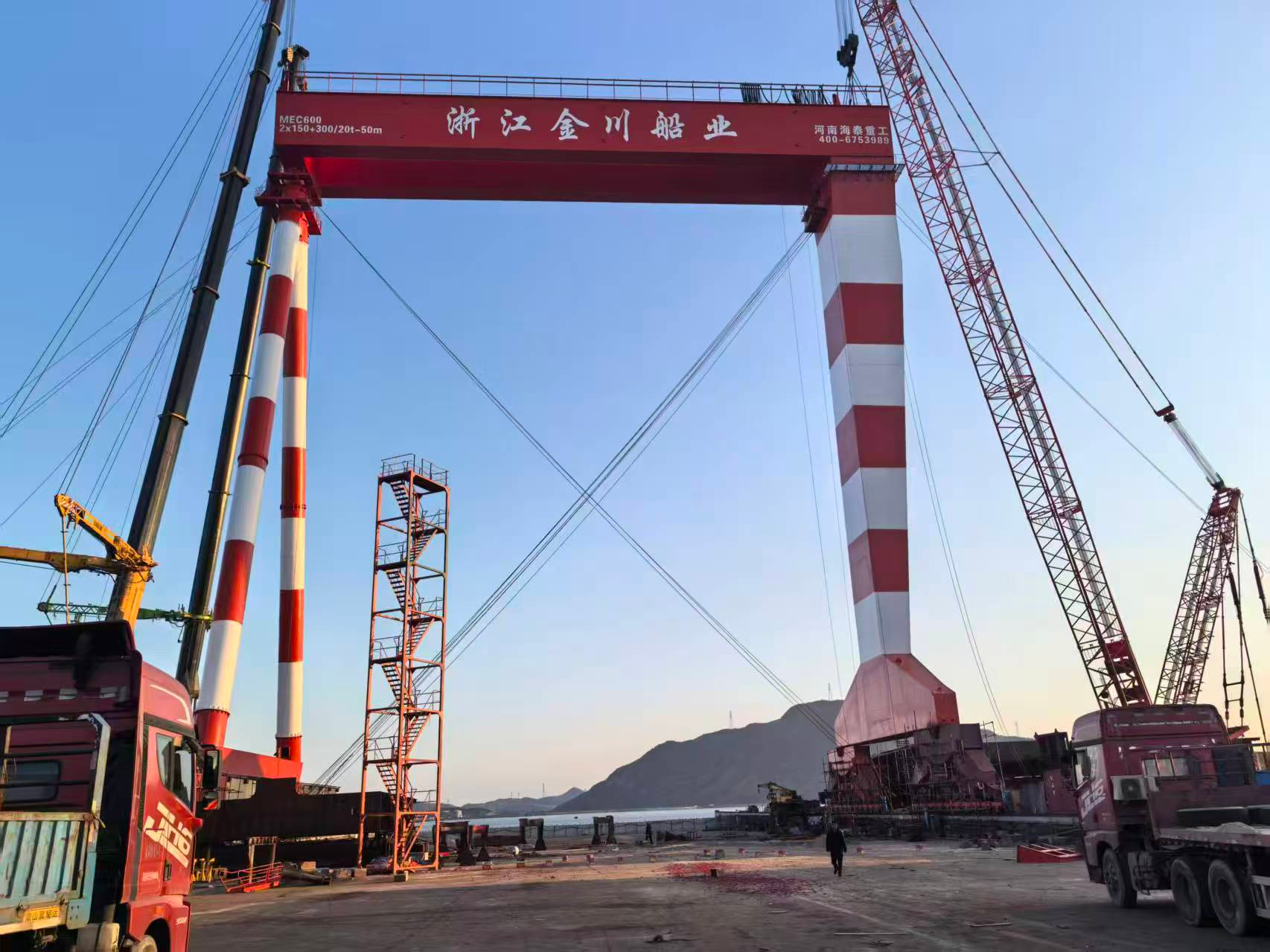
The structural design and mechanism configuration of a shipbuilding gantry crane directly affect its load-bearing capacity and operating performance. During manufacturing, quality control must be applied to steel structure processing, welding, assembly, and related components in accordance with the design requirements. Necessary inspections and tests should also be carried out in line with project technical documentation and applicable requirements.
For large lifting equipment, manufacturing quality is reflected not only in individual components but also in structural dimensions, connection quality, mechanism assembly, and the coordination of the complete machine. Following the relevant manufacturing and inspection requirements provides a sound basis for equipment delivery and subsequent operation.
Shipbuilding gantry crane projects typically involve several stages, including technical specification confirmation, solution design, manufacturing, inspection, and delivery. Confirming the lifting capacity, span, lifting height, operating environment, and on-site installation conditions in a timely manner helps reduce repeated communication caused by incomplete technical information.
For projects with specialized lifting requirements, the lifting conditions, control methods, safety configuration, and acceptance criteria should also be clarified in advance. Technical communication focused on the specific project helps keep the equipment solution, manufacturing requirements, and actual site conditions aligned.
Shipbuilding gantry cranes can help improve shipyard production efficiency by reducing intermediate handling of large hull blocks, improving coordination between production stages, supporting accurate assembly positioning, and meeting heavy lifting requirements. However, the crane itself does not determine production efficiency on its own. Actual results also depend on how well the equipment configuration, site layout, lifting plans, and production management work together.
Selecting a shipbuilding gantry crane that matches the actual working conditions, while accounting for both current lifting requirements and long-term operating needs during the design stage, helps the equipment perform its intended role in hull assembly and heavy lifting. This provides reliable support for stable, ongoing shipyard production.