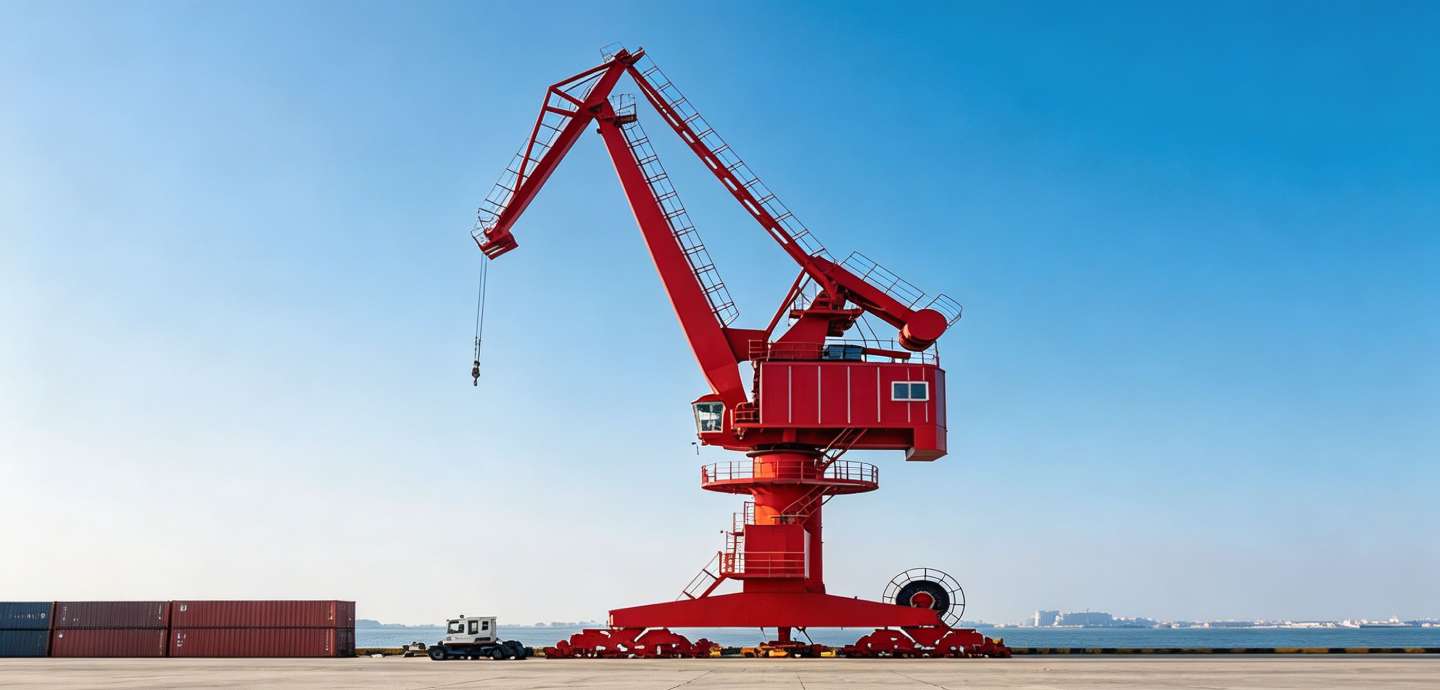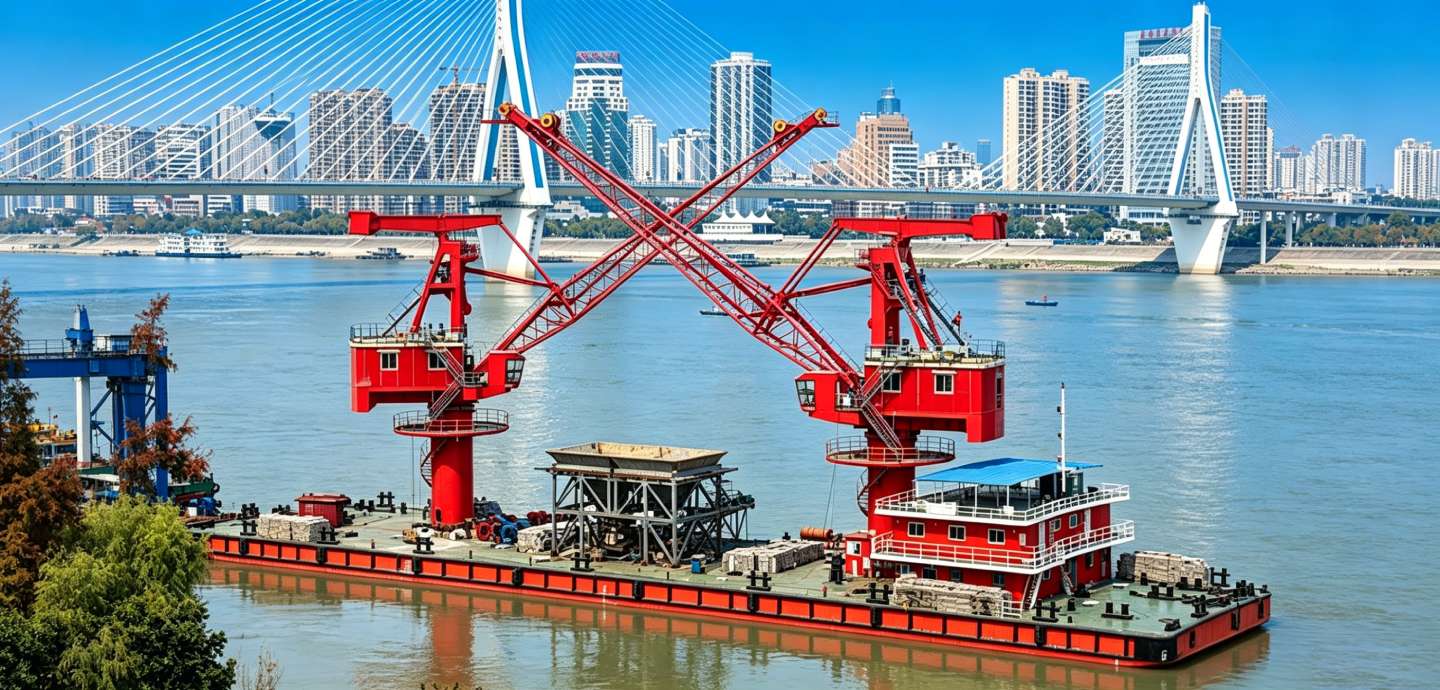
Choosing the right shipbuilding gantry crane is a critical step in determining a shipyard’s production efficiency, operational safety, and long-term operating costs. When purchasing equipment, many shipyards focus only on lifting capacity while overlooking factors such as site layout, operating frequency, outdoor weather resistance, and the compatibility of safety features. This can easily result in over-specified equipment and unnecessary costs, or insufficient performance that slows down the shipbuilding process.
Based on real-world shipyard working conditions, this article breaks down the key considerations for selecting a shipbuilding crane, including technical specifications, customized solutions, and criteria for evaluating manufacturers. The goal is to help shipyards choose lifting equipment that matches their specific operating conditions while offering better overall cost-effectiveness.
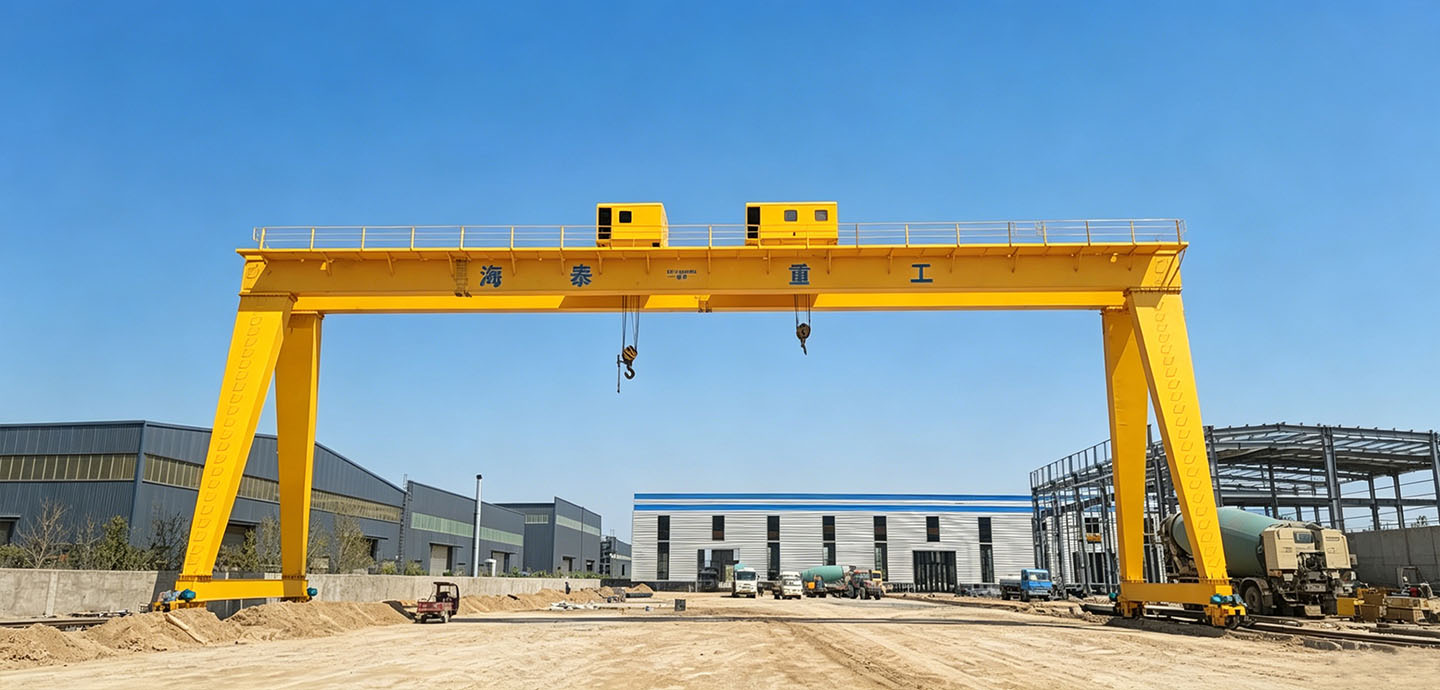
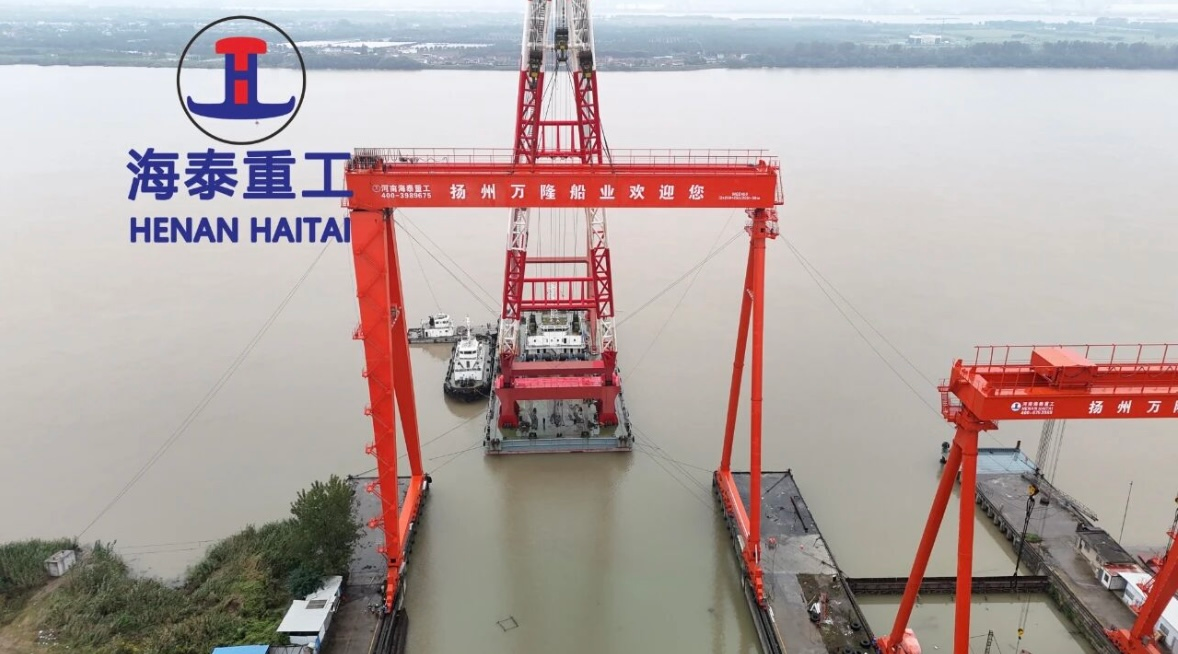
A shipbuilding gantry crane is a large outdoor gantry lifting system specifically designed for shipyards. Its primary purpose is to handle heavy lifting and material transfer throughout the shipbuilding process, including ship construction, block assembly, and equipment maintenance. It is an essential piece of equipment for modern modular shipbuilding operations.
It is fundamentally different from the small gantry cranes commonly used in industrial workshops. Most shipbuilding gantry cranes feature a rail-mounted traveling design, running along fixed rails installed in shipyard assembly areas, slipways, and dry docks. This allows the crane to cover the entire ship construction area with virtually no dead zones in its working range.
Whether handling prefabricated hull blocks, heavy marine steel plates, large marine power equipment, or structural steel components, the crane can lift and position them accurately at designated locations. In large-scale hull assembly and heavy component handling operations, its role cannot be replaced by ordinary lifting equipment. It is a fundamental piece of equipment for standardized production in small, medium-sized, and large shipyards.
One of the most common purchasing misconceptions is treating a shipbuilding gantry crane as simply another type of standard industrial gantry crane. In reality, their design philosophies, performance requirements, and operating conditions are fundamentally different. Every aspect of a shipbuilding gantry crane is optimized around the specific demands of heavy-duty, outdoor, and continuous shipyard operations.
The difference is particularly significant in terms of span and lifting capacity. Standard gantry cranes are commonly used in indoor workshops, with spans generally ranging from several meters to more than ten meters and lifting capacities of several tons to several dozen tons. Shipyards, however, may need to handle complete hull blocks weighing hundreds of tons. As a result, shipbuilding gantry cranes can have spans of several dozen meters, with lifting capacities ranging from tens of tons to more than 1,000 tons, making them fully capable of meeting the heavy lifting requirements of shipbuilding operations.
The lifting height is also specially upgraded for shipbuilding applications. Ship construction involves the vertical alignment and assembly of multiple hull blocks, as well as three-dimensional module integration. The lifting height of a standard crane is often insufficient for high-level assembly and the installation of large equipment. Shipbuilding gantry cranes are therefore designed with sufficient lifting travel to accommodate the positioning of large hull sections and the installation of heavy equipment at considerable heights.
Synchronized lifting accuracy is another key differentiating feature. Most hull blocks have irregular shapes and offset centers of gravity. Even a slight deviation during lifting can cause block deformation or interface misalignment, potentially resulting in assembly failure. Shipbuilding gantry cranes are equipped with dedicated synchronized control systems to ensure that the lifting mechanisms on both sides operate consistently, allowing heavy components to remain evenly loaded and be positioned smoothly and accurately.
Shipbuilding gantry cranes also offer stronger weather resistance and continuous operating capabilities. During peak production periods, shipyards may operate around the clock, while their lifting equipment remains exposed to sea winds, humidity, and significant temperature variations for extended periods. Standard gantry cranes are generally designed for intermittent indoor operations and cannot withstand intensive, long-duration outdoor heavy-duty working conditions. Shipbuilding-specific models are engineered with optimized structural rigidity, wear resistance, and corrosion protection to support the year-round production schedules of modern shipyards.
Most modern shipyards now use modular shipbuilding methods. Independent hull blocks are first prefabricated in workshops and then transferred to outdoor assembly areas, where they are joined together to form the complete hull. This core stage of the shipbuilding process relies heavily on shipbuilding gantry cranes.
Hull blocks are large, heavy, and often irregularly shaped, making them impossible to handle with small lifting equipment. A shipbuilding gantry crane can steadily lift an entire prefabricated block, adjust its orientation in real time, and accurately align the assembly interfaces between the upper and lower hull blocks.
The accuracy of lifting and positioning directly affects the watertightness and overall structural strength of the hull. If the positioning deviation is too large, excessive gaps may occur at the joints, affecting subsequent welding quality and the overall shipbuilding schedule. Professional shipbuilding gantry cranes can effectively prevent these problems through smooth lifting performance and precise positioning capabilities, helping ensure the quality of hull assembly.
In addition to complete hull blocks, shipyards also need to lift and handle various large hull components, deck modules, and superstructure sections during daily operations. These components have large wind-exposed areas and unstable centers of gravity, placing extremely high demands on lifting stability and positioning accuracy.
A shipbuilding gantry crane can perform long-distance transportation and fine positioning of large components throughout outdoor shipyard areas. During secondary block assembly, it can work together with on-site fixtures and auxiliary equipment to precisely adjust the horizontal and vertical positions of components, ensuring that all modules are installed according to the dimensions and specifications shown in the drawings.
For extra-long and extra-wide deck modules, the crane’s large-span design can cover the entire working area, eliminating the need for repeated transfers and repositioning. This significantly improves the overall assembly efficiency of hull blocks.
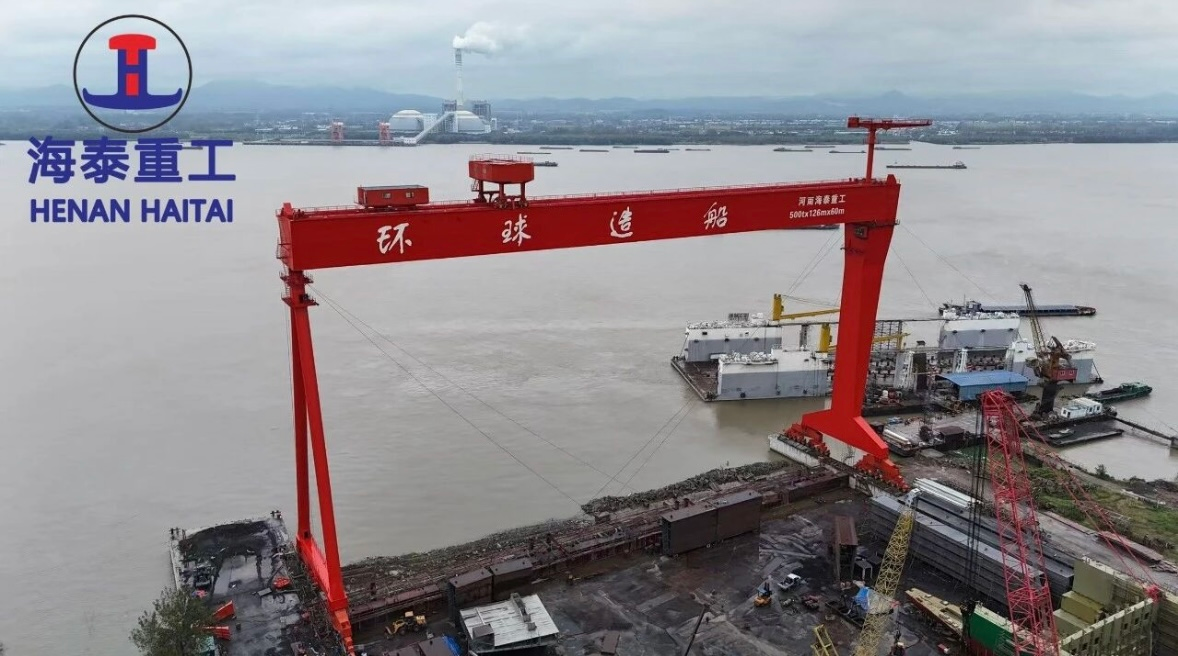
Shipbuilding consumes large quantities of steel structures, profiles, fittings, and mechanical components. Marine-grade steel plates can be more than ten meters long, with individual plates weighing dozens of tons, making manual handling or the use of small lifting equipment completely impractical.
Shipbuilding gantry cranes handle the movement of materials throughout the shipyard. They can lift raw steel plates from storage areas to cutting and processing stations, and once the components have been processed, transfer them to the block prefabrication area. Stable lifting throughout the process helps prevent steel plate deformation and component damage, reducing material waste.
For smaller mechanical components and auxiliary marine equipment, the crane’s auxiliary hoisting mechanism can provide more flexible handling for lighter loads. The main and auxiliary hooks can be used together to achieve multiple lifting functions with a single crane, simplifying the equipment layout of the shipyard while reducing equipment investment costs.
Shipbuilding gantry cranes are not only used for new ship construction. They are also indispensable for major ship overhauls, modifications, and the replacement of large equipment. When a vessel enters a dry dock for maintenance, critical components such as the main engine, propeller, and large transmission equipment often need to be removed for inspection, maintenance, or replacement.
These marine components are extremely heavy and require highly precise installation. A shipbuilding gantry crane can lift and position them smoothly and accurately, helping prevent equipment collisions and structural deformation while ensuring the safety of maintenance operations.
During ship modification and upgrading projects, the crane can also lift newly added steel structures and supporting equipment for hull modifications and assembly work. Its flexible operating capabilities allow it to adapt to complex spaces such as dry docks and slipways, meeting a wide range of lifting requirements for ship maintenance, repair, and modification projects.
Rated lifting capacity is the most important parameter when selecting a shipbuilding gantry crane. It should be determined based on the maximum lifting load required by the shipyard, rather than simply choosing the crane with the highest tonnage. During the selection process, the maximum weight of oversized hull blocks, marine equipment, and large steel structures should be assessed, with a recommended safety margin of 10%–20% above the maximum actual load. For oversized blocks that require two cranes to perform synchronized lifting, the lifting capacities and synchronization control accuracy of the two cranes should also be properly matched.
The span determines the effective working coverage of a shipbuilding gantry crane and should be determined based on the overall layout of the slipway, dry dock, assembly areas, and crane rails within the shipyard. An insufficient span can create dead zones and increase the number of times the equipment needs to be repositioned. A properly selected span can cover the main construction areas while also taking existing obstacles and available operating space into consideration to prevent interference during crane travel.
The effective lifting height directly affects hull block assembly, stacking, and the installation of large equipment. When selecting the crane, it is necessary to consider the maximum hull height, block stacking height, existing site obstacles, as well as the height of the hook and lifting accessories. This ensures that the equipment provides sufficient actual vertical working space and prevents insufficient lifting height from becoming an issue after installation.
The hoisting speed, trolley traveling speed, and overall crane traveling speed should be properly matched to different operating scenarios. Heavy hull block lifting places greater emphasis on smooth low-speed operation and precise positioning, while the traveling speed can be increased appropriately for lighter material handling tasks. A well-balanced speed configuration can improve the shipyard’s overall production efficiency while maintaining safe lifting operations.
The required duty class mainly depends on the shipyard’s operating frequency, load variations, and annual operating hours. Large shipyards with long-term continuous production and frequent lifting operations should select a crane with a high duty class suitable for continuous heavy-duty service. Shipyards with relatively low operating frequencies do not need to over-specify the equipment. Matching the duty class to actual operating conditions can reduce equipment fatigue and failures while keeping procurement and maintenance costs under control.
The core principle of crane selection is to ensure that the equipment’s working range fully matches the shipyard’s production areas. By adjusting the crane span, total rail length, and effective working range, the crane can cover all key operating locations, including slipways, dry docks, prefabrication areas, and material storage zones.
A customized site-adaptation design can eliminate working dead zones and provide full-area coverage for material handling, hull block lifting, and equipment installation. This eliminates the need to rely on multiple small pieces of auxiliary lifting equipment and helps simplify the overall equipment layout of the shipyard.
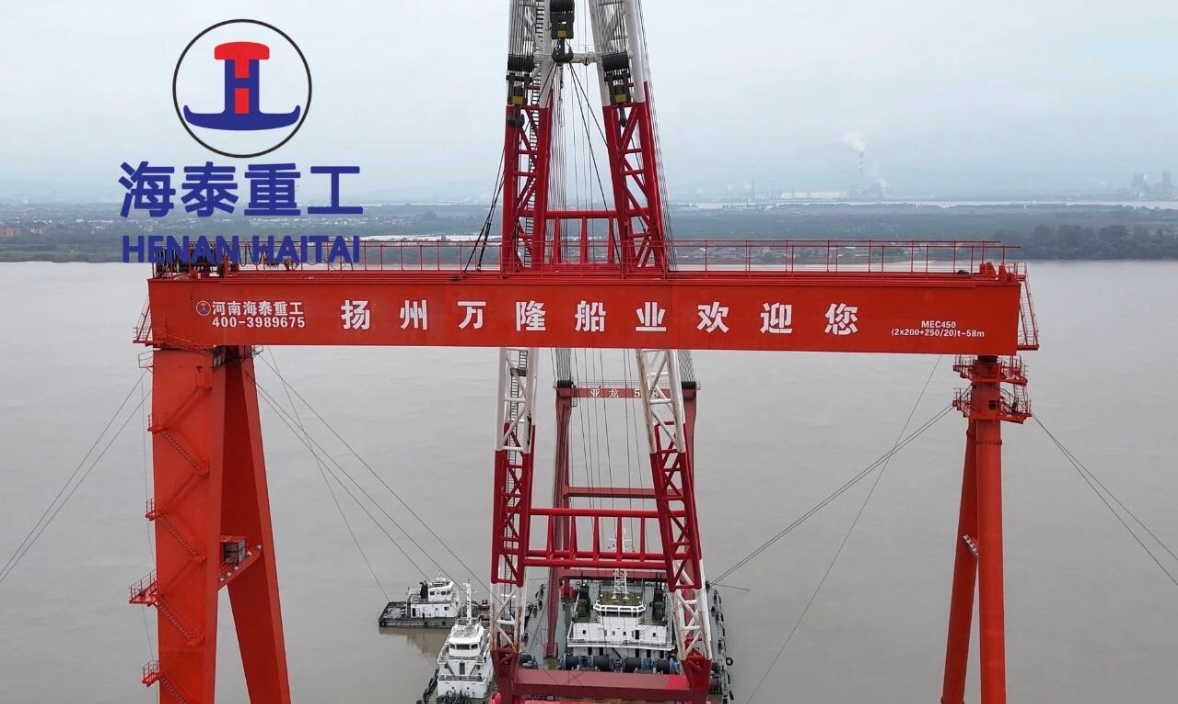
Shipbuilding gantry cranes are typically equipped with a rail-mounted traveling system to meet the requirements for long-distance and high-frequency movement within fixed shipyard working areas. Crane rails can run through the main operating zones and, in some cases, extend into material storage areas to enable efficient transportation across the entire site.
Rail specifications, wheel loads, and traveling mechanism configurations can be customized and optimized according to the crane’s lifting capacity, span, and traveling distance. This helps ensure smooth crane operation while reducing rail wear and equipment deviation caused by long-term operation.
The crane design must take into full consideration existing buildings, fixed facilities, maximum hull height, and other physical limitations within the shipyard. The available overhead clearance and the locations of lateral obstacles should be assessed in advance so that the crane’s lifting height, main girder installation height, and leg structure can be optimized accordingly.
For areas with limited space, such as the edges of dry docks and small assembly zones, a semi-gantry crane design can be adopted. By using existing walls and structural columns within the shipyard to provide additional support, this configuration makes better use of limited available space.
Shipyard cranes operate outdoors throughout the year and are regularly exposed to harsh conditions such as strong sea winds, heavy rain, dust, and salt-spray corrosion. Wind resistance, corrosion protection, and waterproofing are therefore critical to stable equipment operation.
Professional shipbuilding gantry cranes can be equipped with rail clamps, anchoring devices, and other wind protection systems. During strong winds, these devices securely hold the crane in position, preventing the structure from swaying or moving unexpectedly and eliminating potential safety hazards. Wind speed monitoring and alarm systems can also be installed to provide automatic warnings and stop the crane when wind speeds exceed safe operating limits, reducing the risks associated with lifting operations at height.
For coastal shipyards exposed to high levels of salt spray and corrosion, the equipment can be treated with specialized anti-corrosion coatings and fitted with sealed electrical components. These measures help slow down corrosion of the steel structure and aging of electrical components, making the crane better suited to long-term outdoor operation.
The overload limiter is a basic safety feature that continuously monitors the lifting load in real time. Once the load exceeds the crane’s rated capacity, the system automatically cuts off power and stops the equipment, preventing structural deformation and load drop accidents caused by overload operation.
The wind anchoring and wind-resistant rail clamp system is specifically designed for strong wind conditions in outdoor shipyards. During storms and severe weather, the system can secure the crane in position along the rails, preventing unintended movement or overturning and ensuring the safety of the equipment while it is out of service.
The crane is equipped with emergency stop switches and an audible-visual warning system. In the event of abnormal operation, mechanism jamming, or personnel entering a hazardous area, the system can quickly stop the equipment and issue an alarm, helping prevent safety incidents at the earliest possible stage.
Limit protection devices are installed to control the lifting height, trolley travel, and overall crane traveling distance. By setting travel limits for each movement, the system helps prevent equipment collisions and structural damage caused by operation beyond the permitted range.
Shipbuilding specifications and site dimensions can vary significantly from one shipyard to another, making standardized equipment unsuitable for every operating condition. Based on the customer’s actual requirements, the crane can be customized with a specific lifting capacity, span, lifting height, and rail traveling distance.
Whether it is a light-duty crane for building small fishing boats and workboats or a heavy-duty, thousand-ton-class crane for large cargo vessels and offshore engineering equipment, the key parameters can be customized according to the application to precisely match the shipyard’s production requirements.
Depending on the type of load being handled, the crane can be configured with a single trolley, twin trolleys, or multi-point lifting systems. A single-trolley configuration has a relatively simple structure and offers good cost-effectiveness, making it suitable for conventional steel plates and the transportation of smaller hull blocks.
Twin-trolley and multi-point lifting configurations are designed for handling large and irregularly shaped hull blocks. Through coordinated operation of multiple lifting mechanisms, they can balance the center of gravity of the load, improving lifting stability and positioning accuracy to meet the requirements of high-precision hull grand assembly. The crane can also be equipped with specialized lifting beams, vacuum lifters, clamps, and other attachments to handle different types of materials.
The control system supports multiple customized operating modes, including cabin operation, wireless remote control, and operator-assisted control. The operator’s cabin provides a wide field of view and is suitable for precise heavy-duty lifting operations, while wireless remote control offers greater flexibility and convenience for close-range positioning and auxiliary operations.
The crane can be equipped with a PLC-based intelligent control system, real-time monitoring system, and safety interlocking devices. These systems continuously monitor the equipment’s operating status, load data, and fault information, enabling precise crane control and automatic protection against abnormal conditions while reducing the likelihood of operator errors.
Specialized optimization can be carried out for different applications, including dry docks, outdoor slipways, large assembly areas, and coastal shipyards with highly corrosive environments. The crane can be enhanced with improved corrosion protection, outdoor waterproofing, wind resistance, high-temperature resistance, and low-temperature resistance, allowing it to operate reliably in a wide range of demanding working environments.
There is no fixed standard for the purchase price of a shipbuilding gantry crane. The final cost is mainly determined by its core parameters and configuration. As the lifting capacity increases, the span becomes wider, and the lifting height becomes greater, more steel is required for the main structure and higher specifications are needed for key components, resulting in a higher overall equipment cost.
The trolley configuration, number of hoisting mechanisms, duty class, and control system configuration can also directly affect the price. Advanced configurations such as high-duty-class designs, synchronized twin-trolley control, and intelligent monitoring systems may moderately increase the initial equipment cost, but they can significantly improve operating efficiency and stability.
In addition, site installation conditions, supporting rail foundations, corrosion protection requirements, and installation, commissioning, and after-sales services are all included in the overall cost calculation and form important parts of the equipment quotation.
Many shipyards focus only on the initial purchase price and choose low-cost equipment without considering the long-term operating cost. Low-cost, lower-specification equipment often comes with higher energy consumption, higher failure rates, faster wear, and more frequent maintenance requirements.
Over the long term, high repair costs, production losses caused by downtime, frequent replacement of spare parts, and excessive energy consumption can make the total operating cost far higher than that of a higher-specification crane. Although customized, high-specification equipment may require a slightly higher initial investment, its stable operation, lower energy consumption, lower failure rate, and longer service life can continuously reduce production costs and help shipyards maintain their production schedules.
Shipbuilding gantry cranes are heavy-duty, non-standard special equipment that place significant demands on a manufacturer’s engineering design and manufacturing capabilities. Priority should be given to manufacturers with extensive experience in shipyard projects and a strong track record in the production of large-capacity and long-span lifting equipment.
Experienced manufacturers have extensive expertise in non-standard customization and can optimize structural designs according to the specific operating conditions of different shipyards. This helps address practical issues related to site compatibility, heavy-load operation, outdoor weather resistance, and other demanding conditions, ensuring that the equipment can be put into operation smoothly and run reliably after installation.
A reliable manufacturer should have complete industry-recognized certifications and qualifications, including international classification society certifications such as CCS, ABS, BV, and DNV, as well as CE certification and the required special equipment manufacturing qualifications. Comprehensive certifications provide important assurance of equipment quality, regulatory compliance, and suitability for export projects.
It is also important to review the manufacturer’s production and quality inspection procedures. From structural steel welding, component selection, and electrical installation to full-crane load testing and final factory inspection, a complete quality control system is essential for ensuring consistent equipment quality.
The installation, commissioning, operation, and maintenance services provided for a heavy-duty crane directly affect its performance and service life. A quality manufacturer can provide one-stop support, including installation guidance, on-site commissioning, and operator training.
A comprehensive after-sales service system is equally important. The manufacturer should be able to respond quickly to equipment failures, spare part replacement, and maintenance requirements, minimizing downtime and preventing equipment-related problems from slowing down the shipyard’s production schedule.
A professional manufacturer will develop a detailed technical solution based on the shipyard’s actual operating conditions. The solution should cover the rated lifting capacity, crane span, lifting height, duty class, rail compatibility parameters, power supply solution, control mode, safety configuration, certification requirements, and other key specifications.
Before purchasing, shipyards should clarify their own requirements and communicate them with the manufacturer to develop a customized technical solution. This can effectively prevent problems such as mismatched parameters, unnecessary configurations, and insufficient performance, enabling precise equipment selection and customization based on actual requirements.
Haitai Crane has been engaged in the field of heavy-duty lifting equipment for shipyards for many years, with a strong focus on the development and manufacturing of large-capacity, long-span shipbuilding gantry cranes. We have accumulated extensive project experience in shipyards both in China and overseas and are familiar with the complex operating conditions found in different slipways, dry docks, and coastal shipyard facilities.
We do not simply offer standardized, off-the-shelf equipment. Instead, we develop dedicated solutions around your shipyard’s site layout, production conditions, and lifting requirements. The goal is to make the equipment fit the shipyard’s production process rather than forcing the shipyard to adapt to fixed equipment parameters, maximizing equipment compatibility and production efficiency.
Our equipment has obtained multiple internationally recognized certifications, including CCS, ABS, BV, DNV, and CE. We strictly follow the manufacturing standards applicable to lifting equipment in the shipbuilding industry. With reliable quality and stable performance, our equipment can meet the requirements of both domestic production and overseas export projects.
From engineering drawing design, structural steel fabrication and welding, and core component assembly to electrical system installation, full-crane load testing, factory quality inspection, and on-site installation and commissioning, every stage is subject to standardized process control. Each crane undergoes strict inspection and testing before leaving the factory to ensure stable performance under heavy loads, safe operation, and long-term durability.
Shipbuilding gantry cranes are mainly used for hull block lifting and grand assembly, the transportation of large marine components, handling of shipbuilding raw materials, marine equipment installation, and ship maintenance and modification. They are essential supporting equipment for modern modular shipbuilding and cover most heavy-duty lifting operations in a shipyard.
There is no single standard lifting capacity. Small shipyards may use equipment in the range of 50–100 tons, while medium-sized shipyards commonly use 100–300 ton cranes. Large shipyards and offshore engineering projects may require cranes rated at 300–1,000 tons or even higher. The key consideration is the maximum weight of the load to be lifted within the shipyard, with an appropriate safety margin reserved during equipment selection.
The span is customized according to the width of the shipyard’s slipway, dry dock, or other main working areas. Typical spans range from 20 to 80 meters, while larger spans can be customized for oversized shipyard facilities to ensure complete coverage of the required working area.
Yes. Full-parameter customization is available, including lifting capacity, span, lifting height, traveling speed, duty class, control system, safety configuration, corrosion protection solution, and other specifications. This allows the equipment to be adapted to shipyards of different sizes and a wide range of shipbuilding processes and operating requirements.
Yes. Shipbuilding-specific models are designed for outdoor working conditions and can be equipped with wind-resistant, waterproof, corrosion-resistant, and lightning protection features. They can operate reliably for extended periods in outdoor environments, including coastal areas with high salt-spray exposure and strong winds.
For equipment with standard parameters, the typical manufacturing period is 3–6 months. Large-capacity, long-span, and highly customized cranes generally require 6–12 months. The actual lead time depends on the final customized configuration and project requirements.
Selecting the right shipbuilding gantry crane requires a comprehensive evaluation of the shipyard’s actual operating conditions, lifting capacity requirements, site span, lifting height, duty class, lifting process, safety standards, and customization requirements. The decision should never be based solely on lifting capacity or purchase price.
Accurate equipment selection can significantly improve shipyard productivity, reduce operation and maintenance costs, and minimize safety risks, providing essential support for stable long-term production. If you need a customized technical solution and accurate quotation based on your shipyard’s specific operating conditions, you can contact Haitai Crane at any time for professional one-to-one customized service.