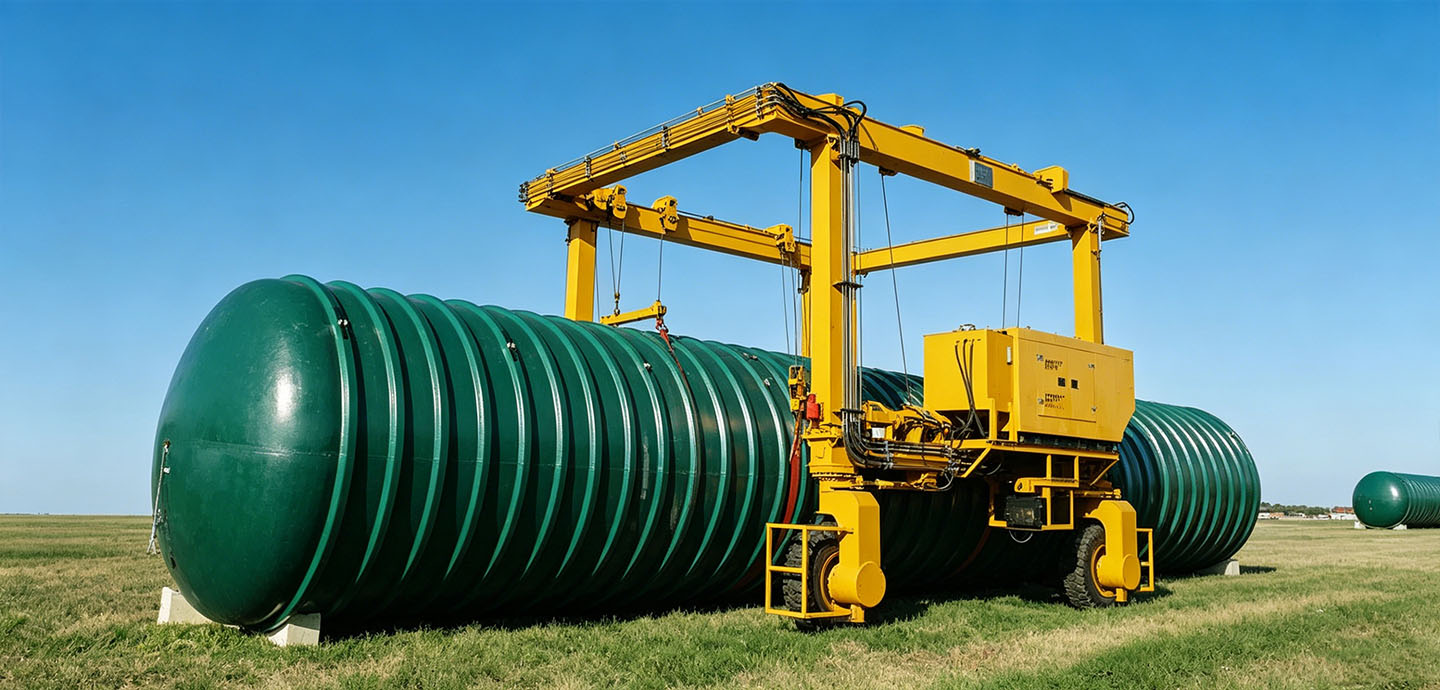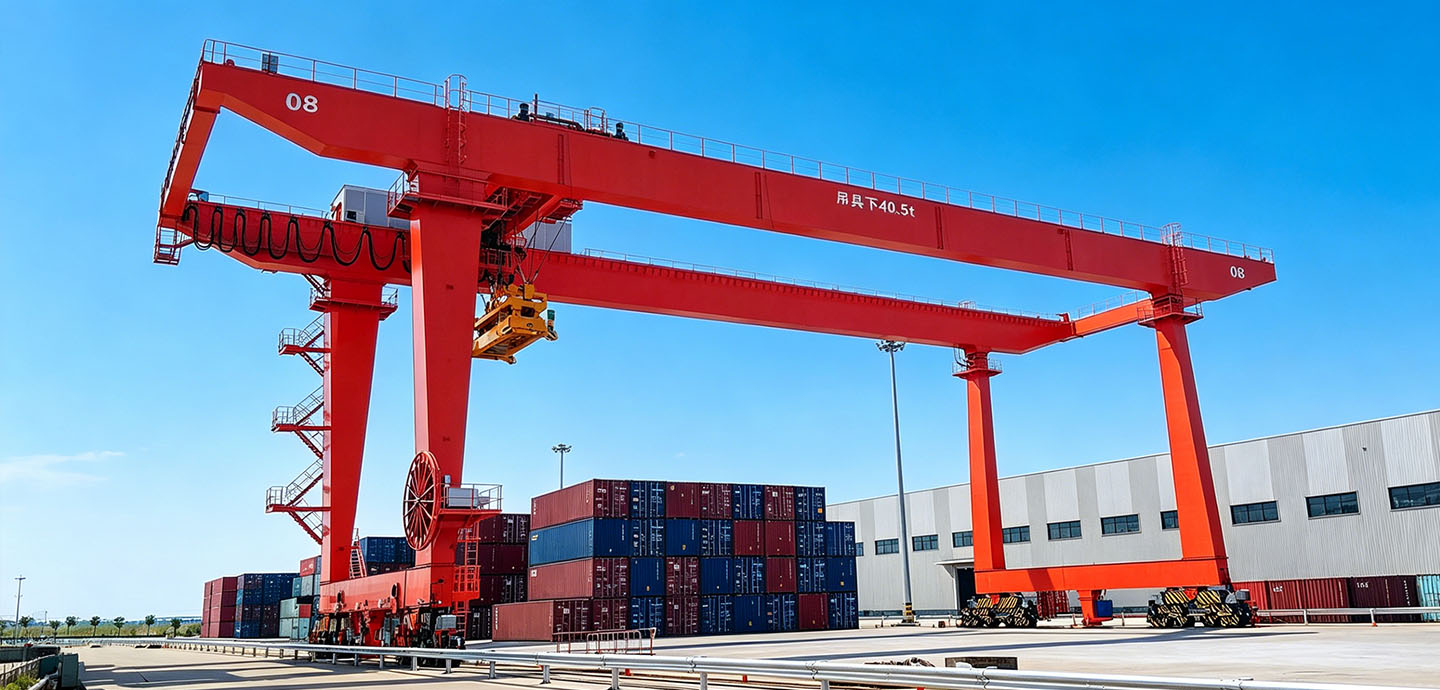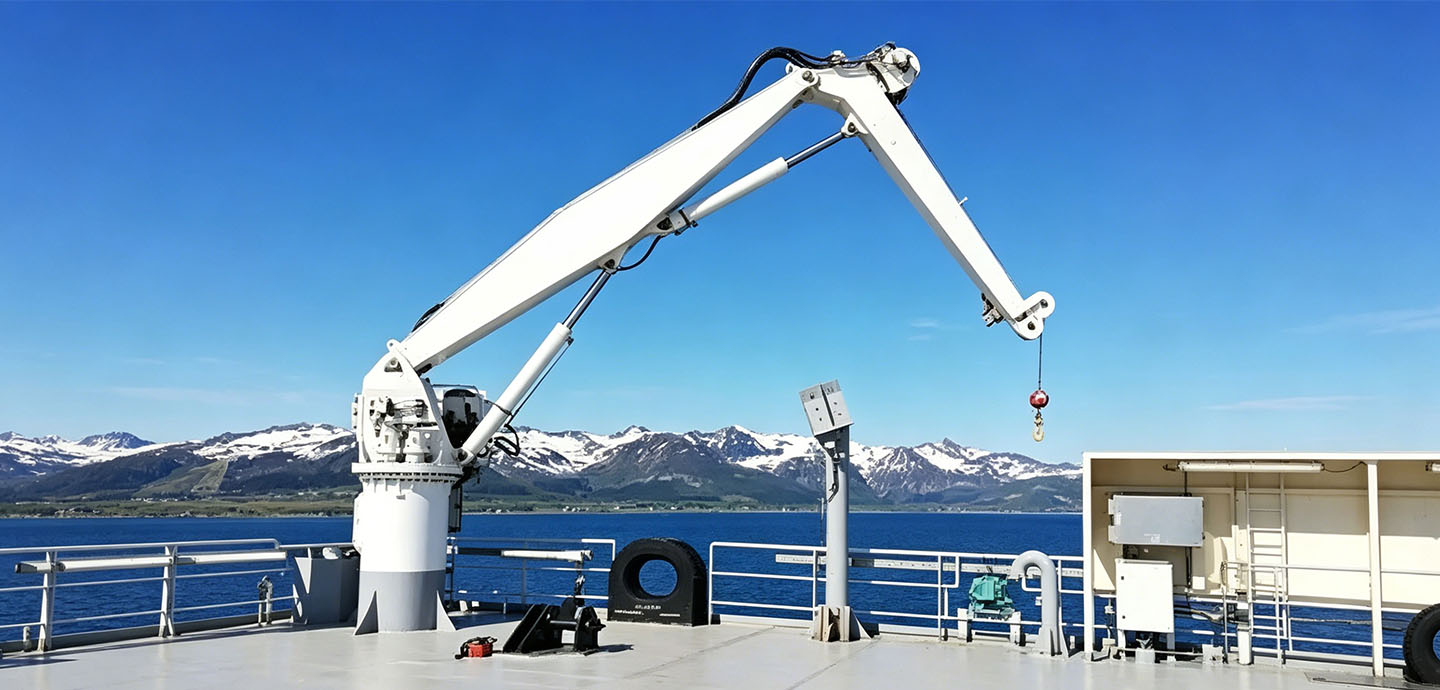
Container straddle carrier is a heavy-duty, rubber-tyred handling machine designed for yard operations. It is mainly used for lifting, short-distance transportation, and internal transfer of containers. Unlike equipment that relies on fixed rails or additional transport vehicles, a straddle carrier can handle container movement independently through its own lifting and travelling systems.
The machine is equipped with a dedicated container spreader. During operation, the spreader connects to the standard corner castings on the top of the container and lifts the container clear of the ground through the hoisting mechanism. Once the container has been raised to a safe height, the machine can travel on its own tyres and move the container to the designated position, where it can be set down or stacked.
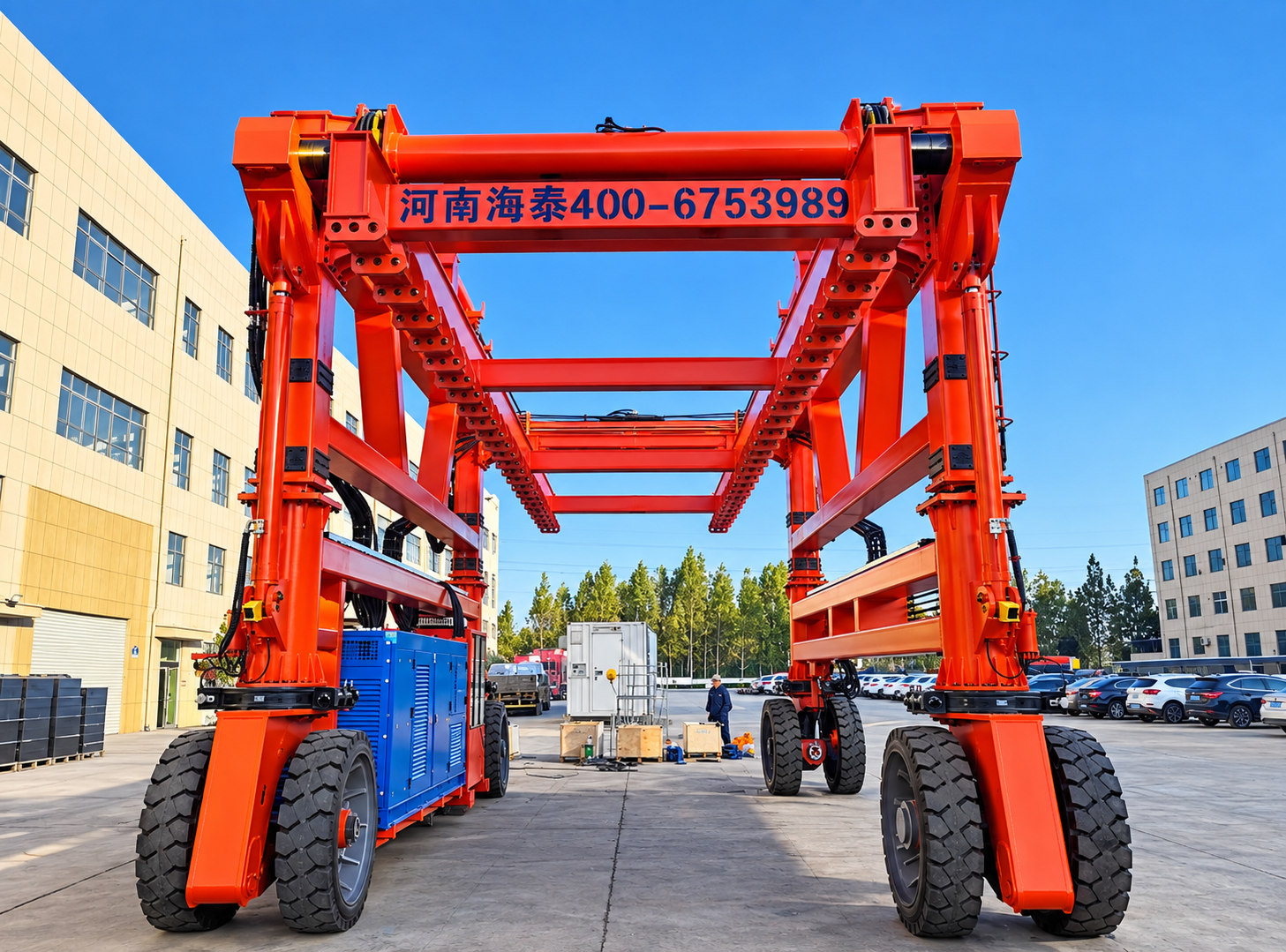
The overall structure of a container straddle carrier is designed around container straddling, lifting, travelling, and safe operation. Each component works together to complete container handling and transfer operations. The main components can be divided into the following nine parts.
The steel structural frame is the main load-bearing structure of the machine and provides the mounting base for functional components such as the lifting mechanism, hydraulic system, and operator’s cab. The frame’s span, height, and overall rigidity affect the machine’s ability to accommodate different container sizes, lifting heights, and operating loads. It must also withstand continuous loads during heavy lifting and outdoor travelling.
The lifting mechanism is responsible for the vertical movement of the container and works together with the container spreader to lift and lower the container. Through mechanical transmission and hydraulic power, the mechanism controls the raising, holding, and lowering of the spreader, allowing the container to move smoothly while reducing swinging and lateral movement during lifting.
The container spreader connects directly to the container and is a key component for lifting the box. It engages with the standard corner castings at the four corners of the container and uses locking pins to secure the connection, keeping the container stable during lifting. Depending on the equipment configuration, the spreader can also accommodate different sizes of standard containers.
The hydraulic system provides power for key operations such as lifting, steering, and spreader adjustment. By controlling the movement of the machine’s various mechanisms through hydraulic power, the system helps maintain smooth lifting and lowering while meeting the power requirements of heavy-duty and continuous operations.
The travel drive system is responsible for moving the machine. Depending on the specific configuration, it can use diesel, electric, or hybrid power. The drive system needs to handle low-speed travelling, frequent starts and stops, and heavy-load transportation within the yard, providing reliable travelling and braking performance.
The steering system determines how the straddle carrier moves through the yard and how accurately it can position itself. Depending on the machine configuration, it can support different travelling modes, including straight travel, transverse travel, crab steering, and carousel turning. This allows the equipment to adapt to different aisle widths, storage layouts, and operating directions.
The operator’s cab provides a dedicated space for machine control and observation. It is typically equipped with operating controls, viewing windows, and a protective seat. A well-designed field of view helps the operator monitor the container, travelling route, and surrounding working environment during operation.
The safety protection system is designed to maintain safe operation during lifting, travelling, and stacking. Depending on the equipment configuration, it can integrate functions such as load monitoring, travel limits, emergency stop, audible and visual alarms, and anti-collision protection. In the event of an abnormal condition, these functions can promptly alert the operator or activate the corresponding protective measures.
The tyres directly support the weight of both the machine and the load while allowing the equipment to operate on different types of outdoor yard surfaces. Solid tyres offer strong load-bearing and wear resistance, with no risk of puncture or blowout, making them suitable for common surfaces such as gravel, asphalt, and concrete. Tyre size and ground contact area need to be matched to the overall machine weight, load, and ground conditions.
The basic operating process of a container straddle carrier includes securing the container, lifting, transferring, positioning, and lowering or stacking. The spreader, lifting system, hydraulic system, travel drive, and steering system work together, allowing the machine to independently handle container lifting and short-distance transfer.
The container straddle carrier travels to a position above the container, with its main frame straddling the box, and aligns the spreader with the standard corner castings at the four corners of the container. After the spreader is lowered, it connects to the container through the locking pin mechanism. The lifting mechanism then raises the container smoothly to the required height.
During lifting, the system keeps the spreader and container stable, reducing tilting and swinging and providing a stable condition for the subsequent transfer operation.
Once the container has been lifted, it is positioned inside the straddle carrier’s gantry frame. The machine then uses its tyre-driven travel system to move independently and transfer the container to the designated position.
This integrated lifting and transfer method reduces reliance on auxiliary equipment such as trailers and forklifts, making it suitable for frequent, short-distance container movements within the yard.
A container straddle carrier is equipped with a dedicated steering system that allows different travelling modes to be selected according to the available space, including straight travel, lateral travel, crab steering, and spot turning.
These different steering modes allow the machine to move and position containers in dense storage areas and confined spaces while adapting to different yard layouts.
After reaching the target position, the straddle carrier moves the container above the designated storage position. The lifting system then controls the spreader to lower the container, allowing it to be placed steadily on the ground or stacked.
Depending on the equipment configuration and actual operating conditions, most conventional straddle carriers can support two-high container stacking. They can also handle container movement between loading and unloading areas, storage areas, and transfer areas.
Container straddle carriers are mainly used in locations where containers need to be moved, repositioned, and stored frequently. In addition to standard container handling, the equipment can also be adapted through modifications to the spreader and lifting structure for handling certain oversized and heavy loads.
Container yards are one of the main application scenarios for container straddle carriers. In daily operations, the equipment can handle container relocation, rearrangement, grouping, and stacking, moving containers from different locations to their designated storage positions.
For yards where container positions need to be adjusted frequently, a container straddle carrier can reduce the need for coordination between different types of handling equipment while making better use of the yard’s vertical space through stacking.
In loading and unloading areas, a container straddle carrier can transfer containers between trucks, trailers, and storage areas. The machine can travel directly to the transport vehicle, use the spreader to load or unload the container, and then transfer it to the designated area.
This operating method is suitable for sites that require frequent loading, unloading, and internal yard transfers, helping to reduce intermediate handling steps.
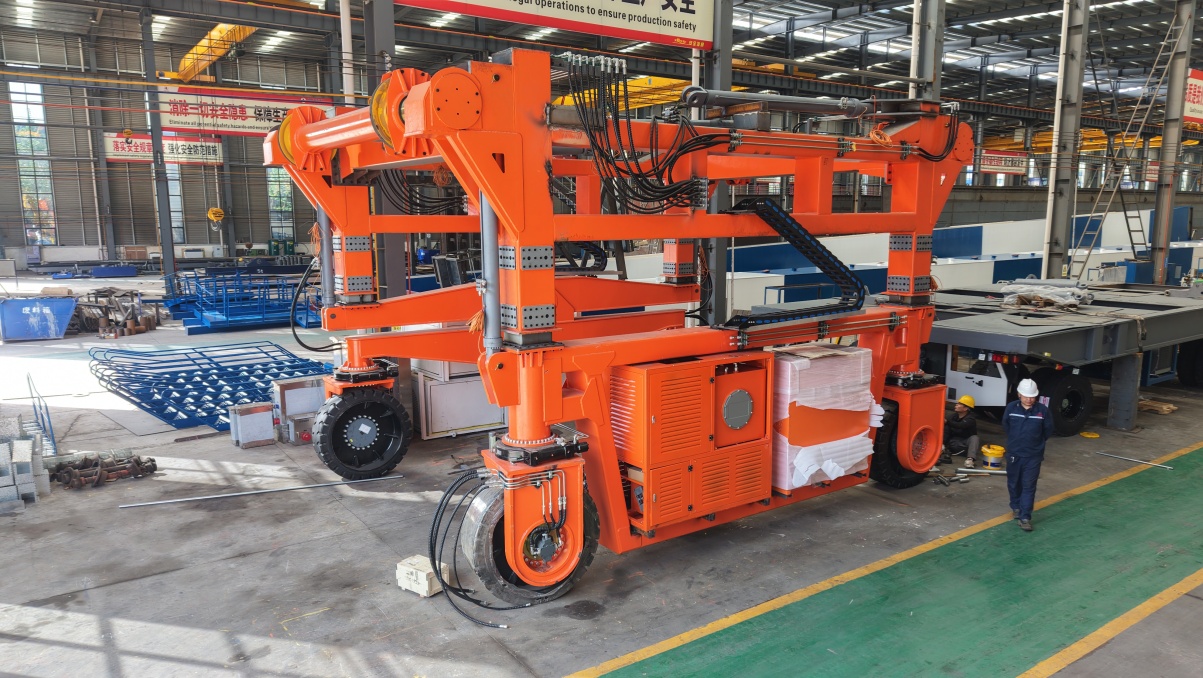
In addition to standard containers, container straddle carriers can be customized according to actual operating conditions for handling heavy loads such as large BESS energy storage cabinets, wide-body cargo, special containers, and modular equipment.
When cargo dimensions, weight, and load distribution vary, the spreader, lifting frame, and locking structure can be modified accordingly, allowing the equipment to accommodate different cargo types and operating requirements.
A container straddle carrier uses a rubber-tyred travel system and can move within the operating area without fixed rails. The machine can adjust its travelling direction according to the storage positions and operating routes on site, making it suitable for yards where the working position needs to be changed frequently.
For sites without fixed rails, yards where the layout may need to be adjusted, or temporary operating areas, the rubber-tyred design provides greater freedom of movement.
The hydraulic system provides power for lifting and other key movements of the machine, meeting the handling requirements of heavy containers and special cargo. Hydraulic transmission allows precise control of machine movements, enabling smooth adjustment during lifting and lowering and helping reduce impact during heavy-load operations.
Depending on the specific configuration, a container straddle carrier can support multiple travelling modes, including straight travel, transverse travel, crab steering, and carousel turning.
Different modes can be used for conventional straight-line transfer, lateral positioning, adjustment in narrow areas, and changes of direction in confined spaces. This allows the machine to adapt to different yard aisles and operating layouts.
Under standard configurations, the container straddle carrier’s spreader can be designed to handle common container sizes such as 20ft, 40ft, and 45ft containers.
If special-sized or non-standard cargo needs to be handled, the spreader span, locking method, and lifting structure can be adjusted according to actual requirements, allowing the machine to accommodate different cargo dimensions and weights.
Selecting a container straddle carrier should not be based on a single parameter. The choice needs to take into account the cargo, site conditions, and operating method. Only when the equipment specifications match the actual working conditions can the machine meet requirements for safe, stable, and long-term operation.
Rated load capacity is a basic parameter when selecting a container straddle carrier. The selection should not be based solely on container dimensions; the maximum cargo weight in actual operations also needs to be confirmed.
If the machine will also be used to handle BESS energy storage cabinets, heavy-duty modules, or other special cargo, the actual cargo weight and load distribution should be calculated separately, ensuring that the rated capacity meets the maximum operating load requirements.
The container sizes used in daily operations should be confirmed in advance, along with the applicable range of the spreader.
If the machine will mainly handle standard 20ft, 40ft, and 45ft containers, an adjustable spreader designed for these sizes can be selected. If special-sized or non-standard containers are involved, the spreader span, locking method, and overall structure should be confirmed during the design stage to ensure they meet the operating requirements.
Stacking height is directly related to how the available yard space is used. For applications that only require ground-level handling and loading or unloading, the basic configuration can be selected according to the required lifting height.
If two-high container stacking is required, the container height, spreader structure, and overall frame height of the machine need to be properly matched. Special lifting height requirements can also be customized according to the actual operating conditions.
Site conditions have a direct impact on the operating stability of a container straddle carrier. During selection, the ground bearing capacity needs to be confirmed, taking into account the machine’s own weight, maximum load, and tyre contact pressure.
The road surface material, aisle width, turning space, overall yard dimensions, and the presence of slopes, potholes, or other uneven areas should also be considered. This ensures that the machine dimensions, tyres, and steering system are properly matched to the site conditions.
Depending on the equipment design, a container straddle carrier can use different power configurations, including diesel-hydraulic, fully electric, and hybrid systems.
Diesel power is suitable for long-duration outdoor operations and sites without fixed charging facilities. Fully electric systems are suitable for applications with specific requirements regarding emissions, noise, or energy use. Hybrid systems can combine different power sources according to the actual operating requirements.
Compared with equipment operating on fixed rails, a container straddle carrier is not restricted by a fixed track and can move and change direction independently within the operating area. This flexibility is particularly useful for temporary container repositioning, occasional container movements, and yard operations where working positions need to be changed frequently.
A container straddle carrier can carry out a series of operations, including container lifting, transfer, positioning, and stacking, reducing the need for coordination between different types of equipment.
Under suitable operating conditions, this can reduce reliance on trailers, forklifts, and other auxiliary handling equipment, making the overall handling process more direct.
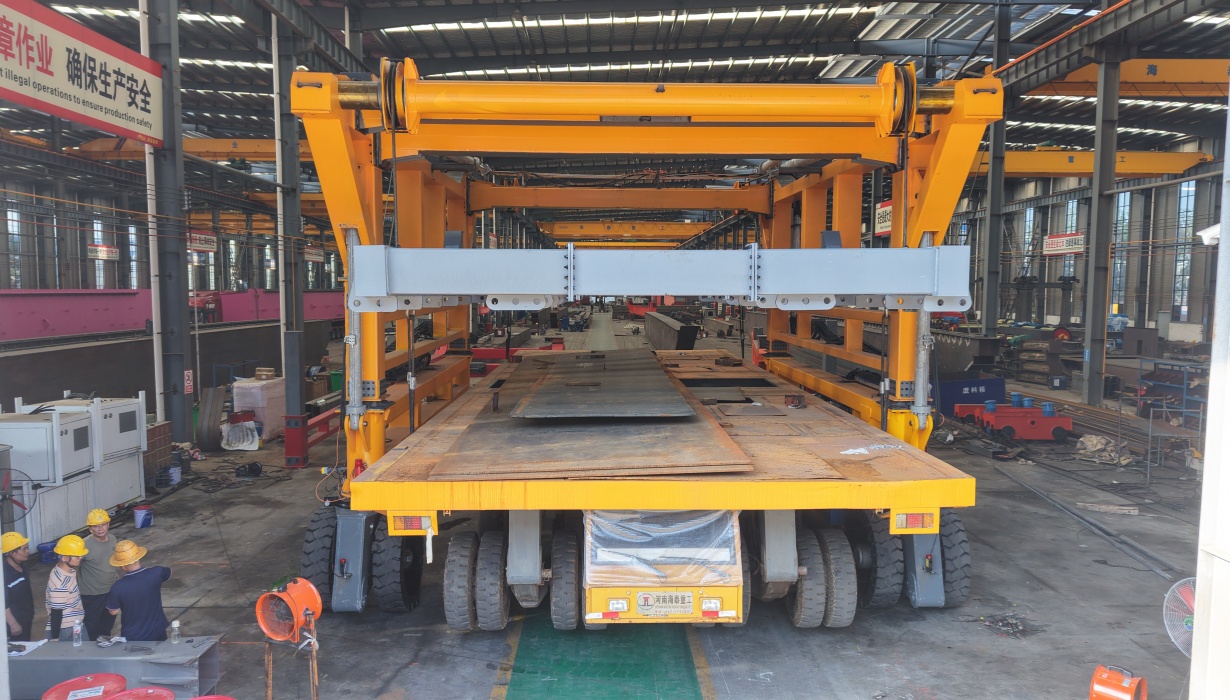
Because a container straddle carrier integrates lifting and transfer functions into one machine, some applications do not require several types of handling equipment to be configured at the same time.
This can reduce equipment scheduling and coordination between different machines while also helping control the overall investment in equipment purchase, maintenance, and operation.
A container straddle carrier can be customized according to cargo dimensions, weight, site conditions, and operating procedures. By adjusting the frame dimensions, lifting height, spreader structure, steering modes, and power configuration, the machine can meet special handling requirements beyond standard containers.
A container straddle carrier is a heavy-duty industrial machine, so its operation requires consideration of the load, ground conditions, equipment status, and personnel safety at the same time. Proper operation and regular maintenance are important for keeping the machine running safely and reliably.
The equipment must not be operated beyond its rated load capacity. The cargo should also be checked to ensure that the load is evenly distributed and that its centre of gravity remains stable. During lifting and transfer, travelling and lifting speeds should be properly controlled, avoiding sudden stops, sharp turns, and rapid lifting or lowering.
Before operation, check the ground bearing capacity, surface condition, and access conditions, and remove obstacles and debris from the travel route.
For soft, severely uneven, or insufficiently load-bearing ground, an assessment should be carried out before the machine is put into operation. This helps prevent ground conditions from affecting the stability of the equipment.
Operators need to maintain a clear field of view and confirm that safety devices such as cameras, warning lights, and audible and visual alarms are working properly.
While the machine is operating, attention should be paid to nearby personnel, vehicles, and obstacles. The working area should be isolated and controlled in accordance with the site’s safety management requirements.
Emergency stops, overload protection, travel limits, anti-collision devices, and other safety systems must not be switched off or removed without authorization.
During routine maintenance, key components such as the hydraulic system, spreader locking pins, drive system, steering system, and tyres should be inspected according to the machine’s operating conditions. If any abnormal condition is found, the machine should be stopped for inspection. Operation should only resume after the equipment has been confirmed to be in normal working condition.
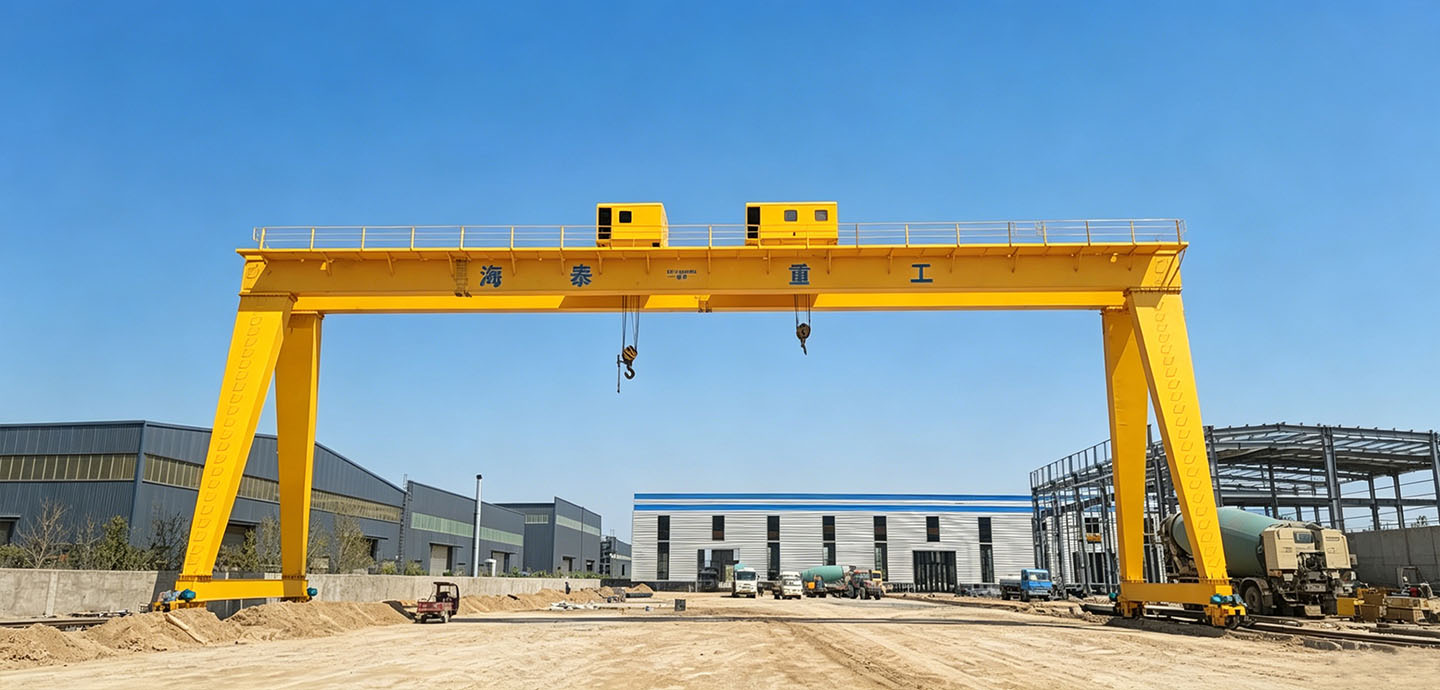
Haitai Crane can design container straddle carrier solutions based on the user’s load requirements, cargo dimensions, site conditions, and operating procedures. From frame dimensions, lifting height, and rated load capacity to spreader structure, steering modes, and power configuration, the equipment can be adjusted according to specific working conditions.
For special applications involving BESS energy storage cabinets, wide-body non-standard cargo, heavy-duty modular equipment, and similar loads, the equipment structure and spreader solution can be further modified to match the actual handling requirements.
Haitai Crane has long been engaged in the development and manufacturing of heavy-duty handling and lifting equipment, with products used in demanding applications across logistics, new energy, heavy industry, and other fields.
During project design, the equipment structure and configuration can be tailored according to factors such as cargo weight, site access conditions, ground bearing capacity, and stacking requirements.
Haitai Crane has in production capabilities covering steel structure fabrication, welding, machining, component assembly, and complete machine commissioning. During production, the steel structure, mechanical components, and key systems undergo the necessary quality inspections and assembly tests.
From raw materials and structural fabrication to complete machine assembly and commissioning, each stage is controlled according to equipment manufacturing requirements, providing a solid foundation for subsequent delivery and on-site operation.
Before delivery, the container straddle carrier undergoes complete machine commissioning and relevant functional inspections, including no-load operation, rated load testing, lifting and steering tests, and safety device inspections.
The equipment is delivered only after its operating condition and functions have been confirmed to meet the design requirements. Haitai Crane can also provide supporting services such as equipment installation and commissioning, operator training, and after-sales maintenance to help put the machine into practical operation.