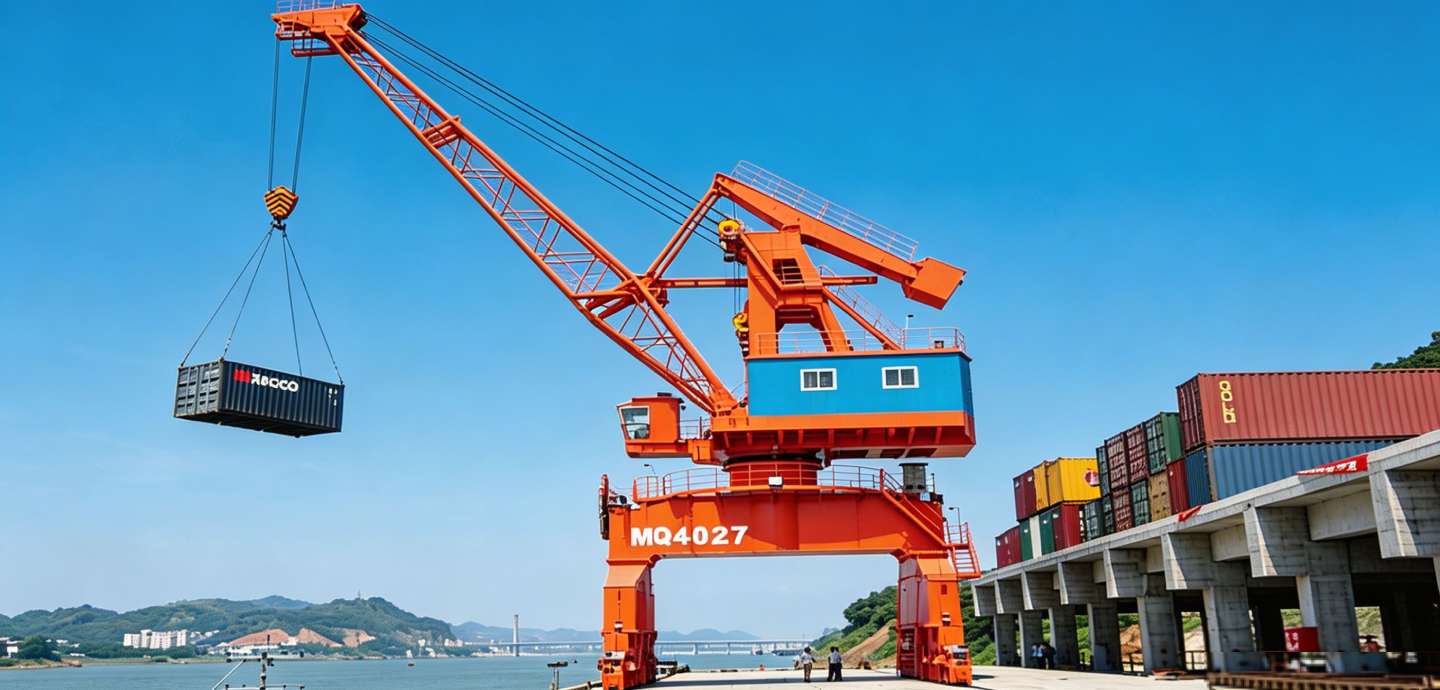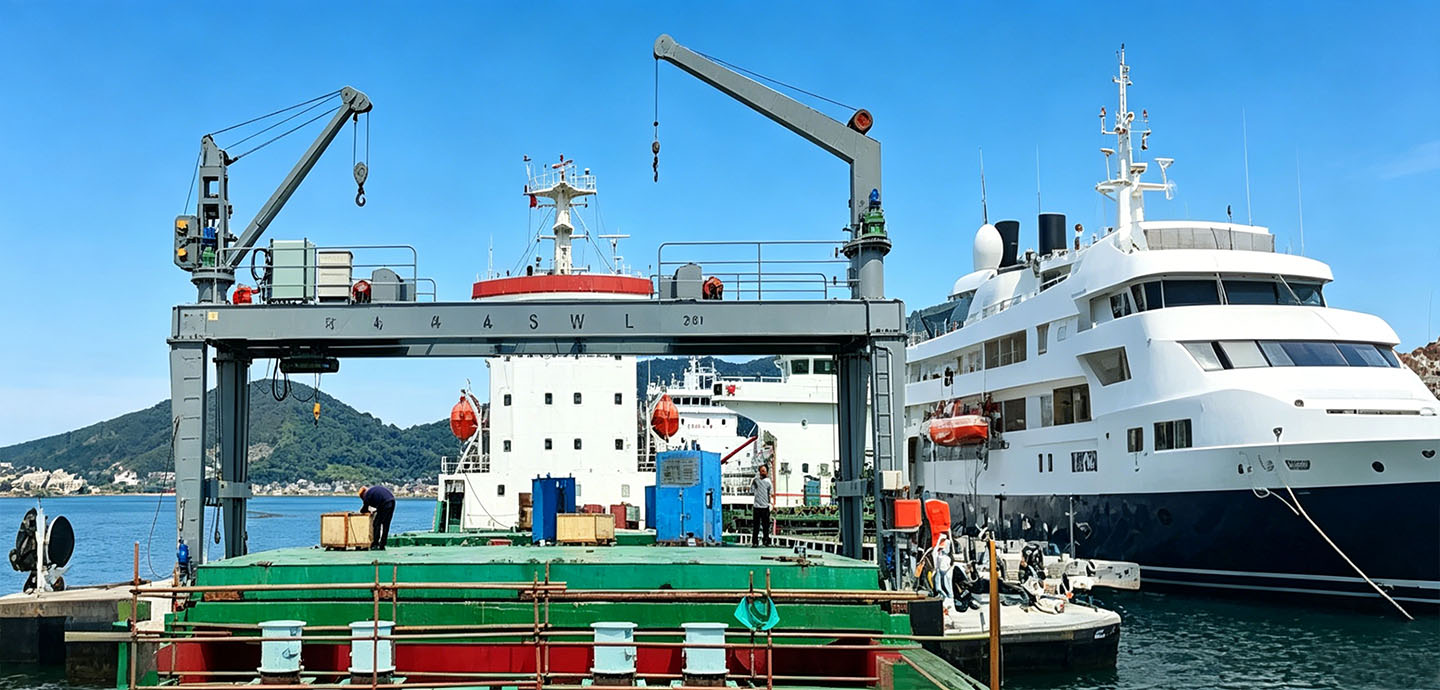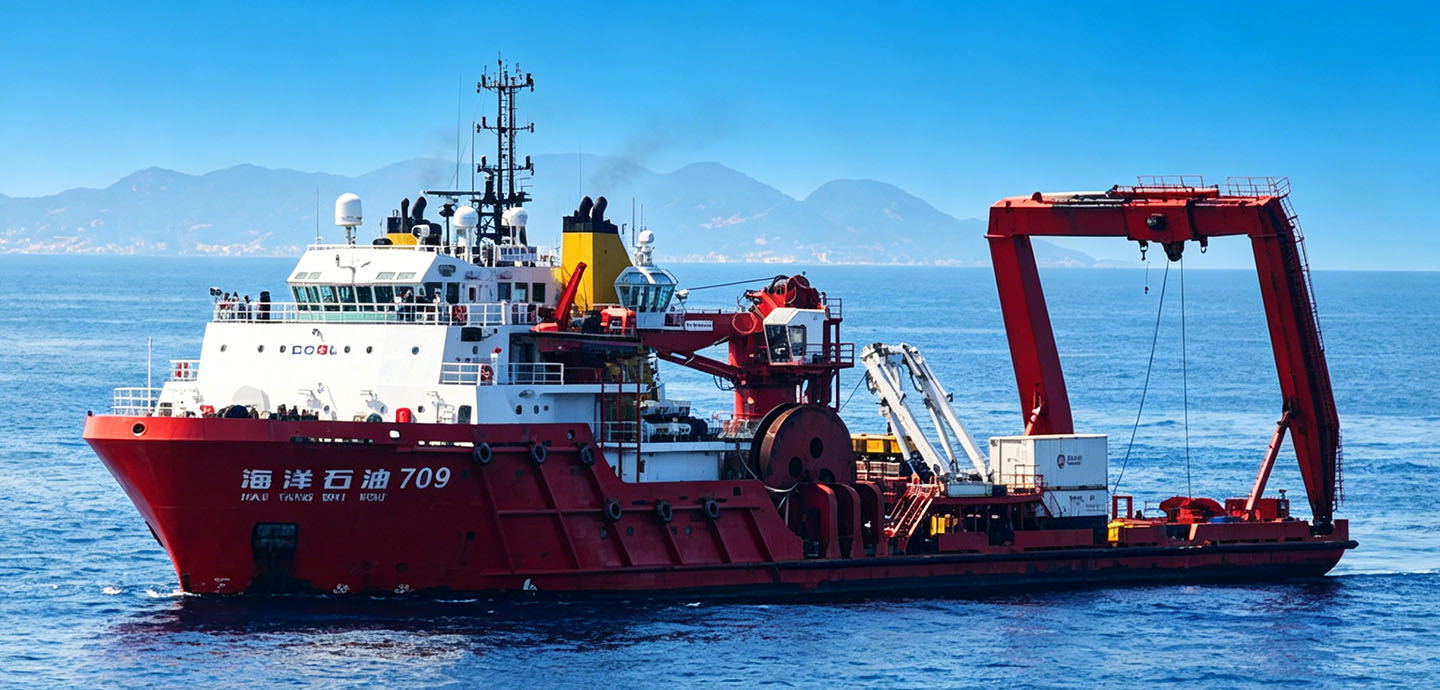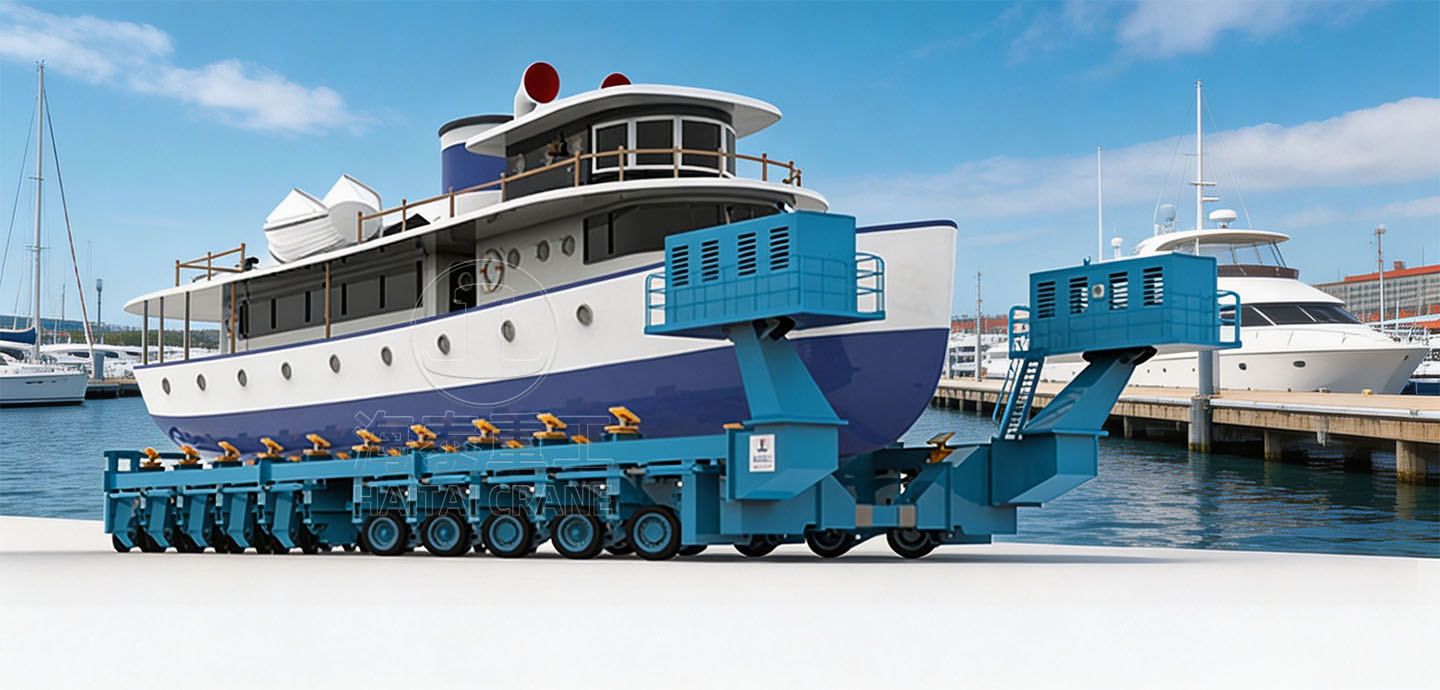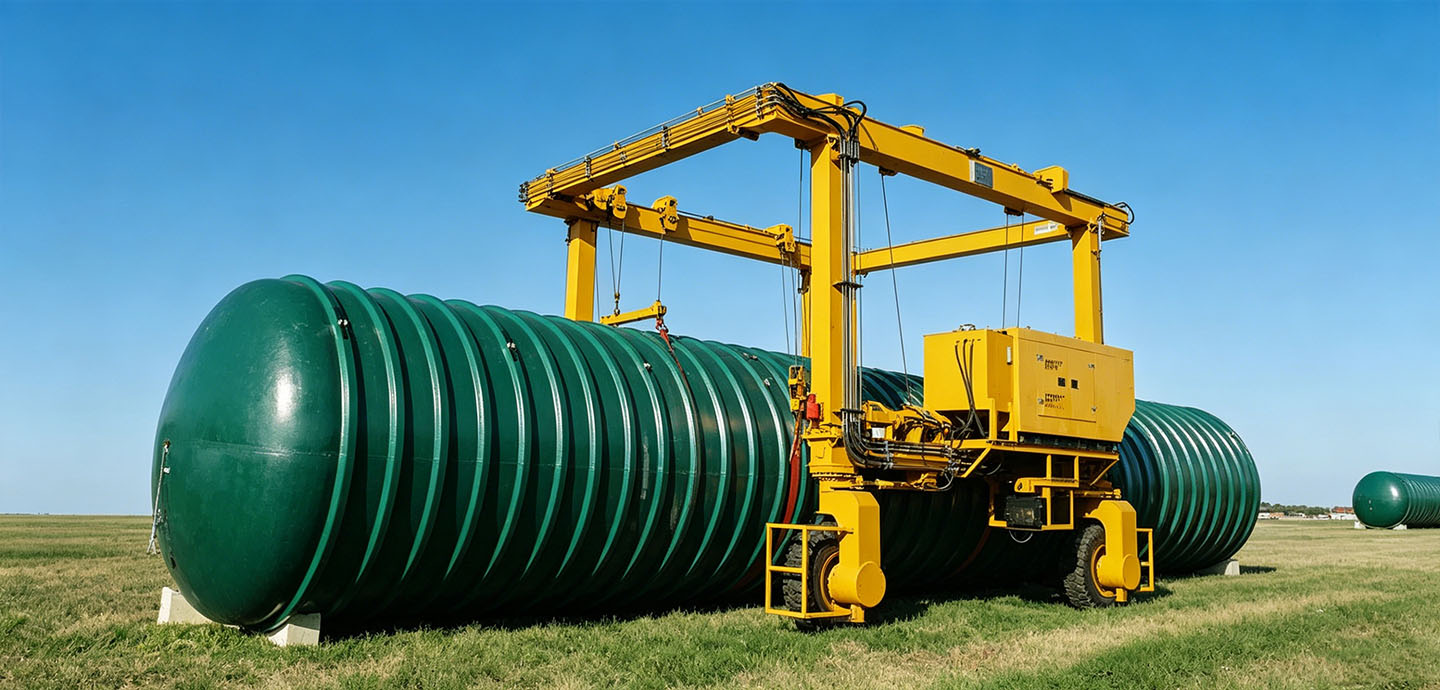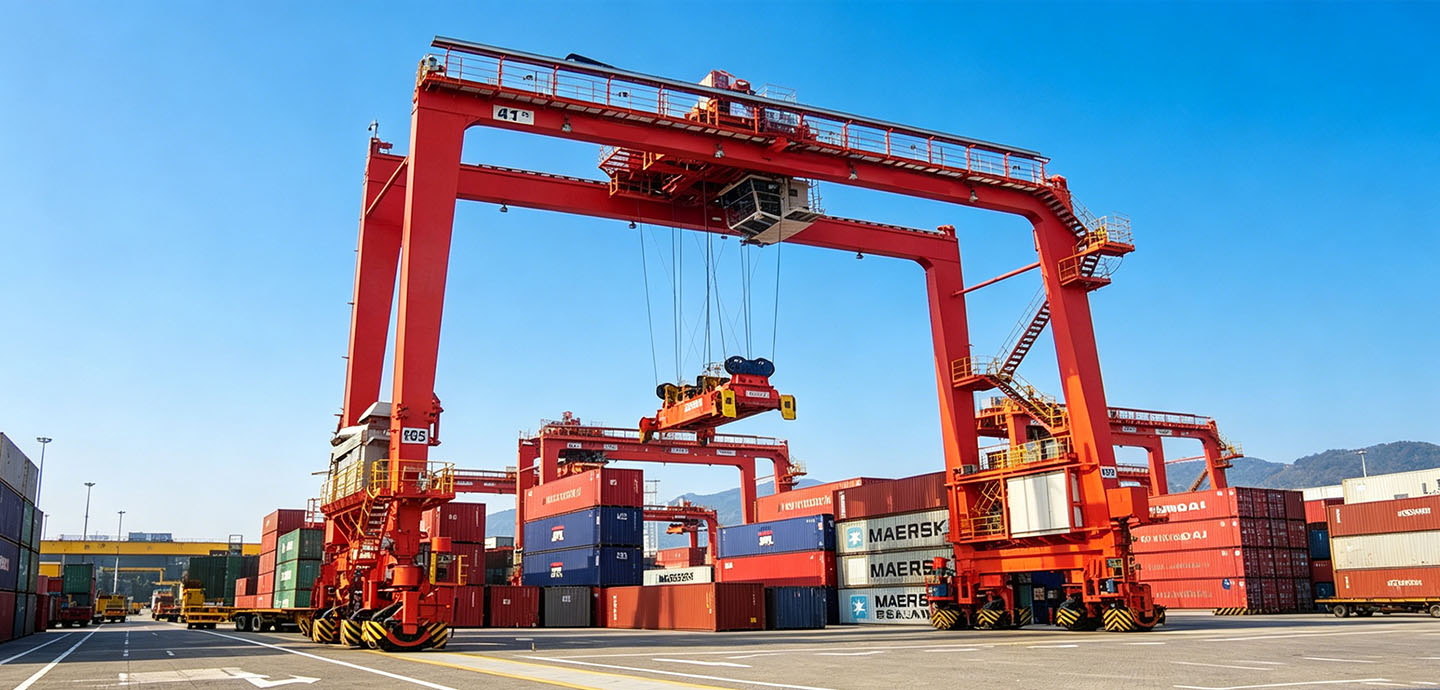
Maritime transportation, offshore engineering, and offshore operations rely heavily on various types of deck equipment, with marine cranes serving as the most essential lifting equipment. A “ship crane” is a common colloquial term for a marine deck crane and is a critical piece of equipment for loading and unloading cargo, hoisting equipment, and conducting construction work at sea.
Unlike land-based cranes, marine cranes operate in a highly specialized environment. Constant sea swell, high levels of salt fog, high humidity, and unpredictable factors such as ship roll and list all place higher demands on the structural strength, stability, and corrosion resistance of marine crane. Ordinary land-based cranes cannot adapt to the complex conditions at sea, which underscores the core significance of the specialized design of marine cranes.
From the daily loading and unloading of cargo on bulk cargo ships and container ships to the operation and maintenance of offshore platforms, the construction of offshore engineering projects, and maritime rescue operations, the applications of marine cranes span the entire maritime sector.

Marine cranes are specialized lifting equipment permanently installed on ship decks, offshore platforms, and maritime work vessels. Commonly referred to in the industry as “ship cranes,” they are classified as specialized marine slewing cranes. Their primary function is to perform various lifting operations—such as cargo handling, equipment installation, supply replenishment, and component hoisting—under dynamic offshore conditions.
The key feature that distinguishes the marine cranes from land-based cranes is its complete adaptation to harsh marine conditions. The entire unit is designed to be corrosion-resistant, shock-resistant, and tilt-resistant, enabling stable operation even amid ship roll and sea swells. It also meets the maritime equipment standards of major classification societies, making it suitable for both navigation and operational scenarios.
Most marine cranes utilize hydraulic drive systems, ensuring smooth and stable operational movements that meet the high-precision and high-safety requirements of offshore lifting operations. The base of marine crane is securely welded to the ship’s reinforced deck structure, preventing any displacement caused by the ship’s movement. The entire unit can rotate 360 degrees, providing flexible operational coverage to meet lifting needs from any direction on the vessel.
Unlike temporary lifting equipment, marine cranes are standard, fixed-mount specialized equipment on vessels and serve as core supporting equipment for ships and offshore engineering platforms. From design and production to installation and acceptance, the marine cranes are subject to strict maritime standards, ensuring safety and durability far exceeding that of ordinary lifting equipment. They are also essential infrastructure for ensuring the smooth conduct of offshore operations.
Depending on their structural design, operational functions, and intended applications, marine cranes can be classified into several types. Different models vary significantly in lifting capacity, operating radius, and structural characteristics, and are suited for different maritime operations.
Stiff boom marine cranes are the most basic and widely used type of marine crane. Their boom length is fixed and cannot be extended or retracted. The overall structure is simple, with a low failure rate, high structural rigidity, stable load-bearing performance, and extremely low maintenance requirements.
The stiff boom marine cranes have a fixed operating radius and are suitable for cargo loading and unloading operations on conventional bulk cargo ships and general cargo ships. For vessels with single-purpose operations where the lifting radius does not need to be adjusted frequently, stiff boom marine cranes offer better cost-effectiveness and a longer service life, making them the mainstream choice for small and medium-sized merchant ships.
The telescopic boom marine crane features a segmented telescoping structure, allowing the boom length to be freely adjusted according to operational needs and enabling flexible changes to the working radius and lifting height. When stowed, the telescopic boom marine crane has a compact footprint that does not occupy excessive deck space; when extended, it can cover a wide operational area.
It offers greater adaptability and is commonly used on offshore supply vessels, engineering support vessels, and offshore construction platforms. Faced with complex marine lifting scenarios—such as close-range cargo transfer and long-distance equipment hoisting—t telescopic boom marine cranes can adapt flexibly, making them a common choice for high-end maritime work vessels today.
Grab-type marine cranes are specialized work models equipped with dedicated hydraulic grab attachments, primarily used for the loading and unloading of bulk cargo such as coal, ore, and sand and gravel. The hoisting, slewing, and luffing functions can operate independently or in sync, resulting in extremely high bulk cargo handling efficiency.
The grab-type marine cranes are primarily installed on large bulk cargo ships and port service vessels, specifically addressing the operational challenges of hoisting bulk cargo without hooks. Some high-end models are equipped with a four-rope grab structure, which ensures more stable material handling and minimizes spillage, making them ideal for large-scale, high-frequency bulk cargo operations.
Knuckle-boom marine cranes feature a boom that folds for storage, resulting in a compact overall structure that occupies minimal deck space, making them suitable for vessels with limited deck space and small work platforms. The knuckle-boom marine crane offers flexible operation and high lifting precision, and is commonly used for small-scale equipment maintenance, supply replenishment, and maritime repair operations.
Compared to other models, knuckle-boom marine cranes have a lower maximum lifting capacity but excel at precision operations; they are widely used for routine lifting tasks on fishing vessels, government vessels, and small offshore workboats.
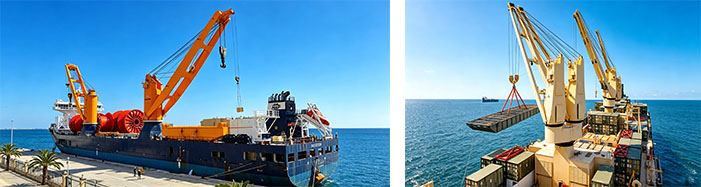
Marine cranes feature a precision-engineered overall structure, with each component performing a specific function and working in coordination to complete lifting operations. All core components undergo maritime-grade anti-corrosion and anti-vibration reinforcement treatments to withstand harsh offshore operating environments. The core components are primarily categorized as follows.
The base serves as the load-bearing foundation for the entire marine crane. It is typically fabricated from high-strength steel plates welded together and secured to the ship deck’s reinforced steel structure using a full-penetration welding process. It must withstand the crane’s own weight, the hoisting load, and the impact forces caused by wind and waves at sea, serving as the foundation for ensuring the equipment’s stable operation.
The slewing bearing, mounted atop the base, is the core component that enables the 360-degree rotation of marine crane. Featuring a large-scale bearing and gear structure, it offers high load-bearing capacity and smooth rotation, supporting the boom’s full-range rotational operations. As it must withstand alternating loads over the long term, it demands extremely high levels of wear resistance and structural strength.
The boom is the core operational component of a marine crane. Mainstream models feature a box-type structure, while some large-scale equipment uses a truss structure, balancing lightweight design with high strength. Different boom configurations—such as fixed booms, telescopic booms, and folding booms—correspond to different operational functions.
The boom’s surface undergoes anti-corrosion coating and anti-rust treatment to withstand salt fog corrosion in marine environments. During operation, the boom is subjected to multiple loads, including tensile, bending, and impact forces. As a key component for equipment wear monitoring, routine inspections must focus on issues such as deformation, corrosion, and cracks.
The primary power source for marine cranes is the hydraulic system, which consists of core components such as hydraulic pumps, hydraulic cylinders, control valves, hydraulic lines, and reservoirs. The hydraulic system provides the power required for the boom’s luffing, extension, slewing, and lifting of heavy loads.
The entire hydraulic system features a sealed design, making it suitable for the humid, salt-fog-prone marine environment and effectively preventing malfunctions caused by water or dust ingress. The advantages of hydraulic transmission include smooth operation and uniform power output, which help prevent the swaying of heavy loads during lifting operations and enhance safety during offshore operations.
The lifting mechanism consists of a winch, steel wire rope, a pulley block, and a hook, and serves as the core mechanism for lifting and lowering heavy loads. The steel wire rope is a marine-grade, wear-resistant type with high tensile strength and excellent corrosion resistance, making it suitable for long-term offshore operations.
The braking mechanism is critical to safety and features a dual-brake configuration comprising both hydraulic and mechanical brakes. In the event of work stoppage, power loss, or sudden malfunction, the brakes can rapidly lock the winch and boom to prevent the load from falling or the boom from slipping, thereby avoiding safety accidents during offshore lifting operations.
The electrical control system comprises an operator console, controllers, sensors, and wiring harnesses; all electrical components are waterproof, explosion-proof, and corrosion-resistant models specifically designed for maritime use. Operators control the equipment’s various operational movements via the control console, ensuring simple and precise operation.
The safety protection system includes overload protection, limit switches, and emergency stop devices. When the hoisting weight exceeds the rated load, or when the boom extends or rotates beyond safe limits, the marine crane automatically sounds an alarm and stops operation, thereby eliminating risks caused by improper operation at the source.
The overall operational logic of marine cranes centers on hydraulic power transmission, integrated with mechanical drive and electrical control, to sequentially perform a series of lifting operations such as slewing, boom extension, and hoisting. The entire operational process is stable and controllable, making it well-suited for dynamic offshore operating environments.
Upon startup, the ship’s power supply delivers oil to the hydraulic system. The hydraulic pump converts mechanical energy into hydraulic energy, and a control valve assembly distributes the pressurized oil to various actuators, such as the slewing motor, boom extension cylinder, and hoisting motor. These components operate independently without interfering with one another; they can function individually or in synchronized coordination.
During slewing operations, the hydraulic motor drives the slewing bearing gears, causing the entire boom platform to rotate horizontally and enabling 360-degree azimuth adjustment. During boom extension operations, the boom extension cylinders extend or retract to raise or lower the boom, thereby adjusting the working radius and lifting height to accommodate lifting requirements at different distances and heights.
The lifting and lowering of heavy loads are achieved through the operation of the winch. A hydraulic motor drives the winch, controlling the hoist hook’s vertical movement by winding or unwinding the steel wire rope. The pulley block allows for adjustment of the lifting ratio to accommodate loads of different tonnages, ensuring stable power output.
Throughout the entire operation, the safety protection system continuously monitors the equipment’s operating status in real time. Should issues such as overload, limit switch activation, or abnormal oil pressure occur, the system immediately triggers protective mechanisms, cutting off power output and locking the equipment in place. Upon completion of the operation, the operator retracts the boom, resets the equipment, shuts down the hydraulic system and power supply, and completes the entire operational process.
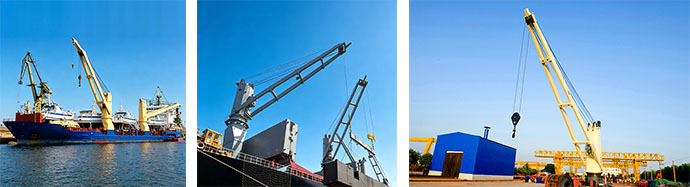
Marine cranes are used in a wide range of applications, including commercial shipping, offshore engineering, maritime operations and maintenance, and emergency response, making them indispensable core equipment for various types of offshore operations. Different models are designed for specific applications.
Bulk cargo ships, general cargo ships, and multipurpose cargo ships are the primary vessels on which marine cranes are installed. Stiff-boom and grab-type marine cranes can handle the loading and unloading of various cargoes, including ore, grain, construction materials, and general merchandise. They do not rely on port gantry cranes and can independently complete cargo transshipment even in offshore areas without port facilities.
Many small and medium-sized merchant vessels are not equipped with large port gantry cranes for berthing operations; their onboard marine cranes are the sole cargo-handling tools, directly determining the vessel’s operational flexibility and navigational adaptability.
Offshore drilling platforms, wind power platforms, and nearshore construction platforms are all equipped with specialized marine cranes. Telescopic boom and knuckle boom marine cranes are primarily used for platform equipment installation, component replacement, routine operations, maintenance, and repairs, as well as the lifting and transport of offshore engineering materials and construction equipment.
The operating environment for offshore engineering is complex, and lifting operations require high precision. The smooth handling characteristics of marine cranes meet the demands for precise lifting at high altitudes and under dynamic offshore conditions, ensuring the smooth progress of construction projects.
Maritime supply ships, service ships, and scientific research vessels rely on marine cranes to carry out operations such as maritime material supply delivery, equipment deployment, and the hoisting and retrieval of scientific research instruments. During offshore operations, the transfer of supplies and replacement of equipment between vessels must be performed using marine cranes.
Such scenarios demand high levels of stability and flexibility from the equipment. Telescopic-boom marine cranes, with their adjustable working radius, have become the equipment of choice for support vessels and research vessels.
Small marine cranes installed on maritime rescue vessels and law enforcement vessels can be used for operations such as salvaging sunken ships, retrieving equipment that has fallen overboard, deploying rescue supplies, and hoisting emergency components. With their rapid response times and flexible operation, the marine cranes are well-suited for sudden maritime emergencies.
In operations such as offshore rescue, fairway clearance, and maritime incident response, marine cranes can quickly complete lifting tasks, providing critical equipment support for maritime emergency rescue efforts.
Marine cranes operate long-term in a maritime environment characterized by high salt fog, high humidity, and frequent vibrations, causing them to wear out much faster than land-based cranes. Proper operation and regular maintenance are essential for minimizing breakdowns, extending equipment lifespan, and ensuring operational safety.
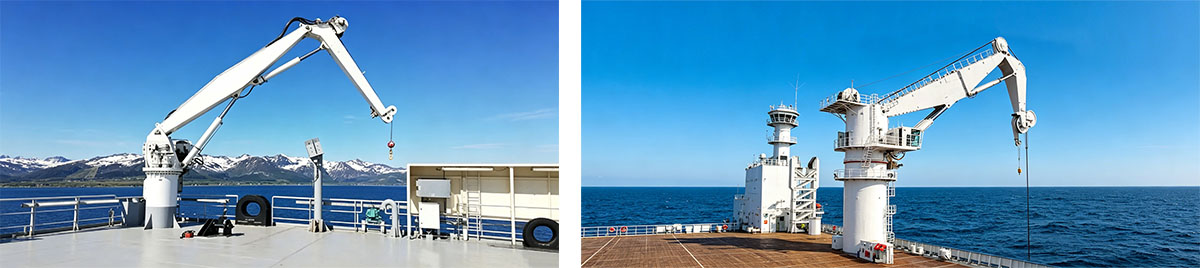
Before commencing operations, a no-load test must be conducted to individually test all functions—including boom rotation, boom extension/retraction, hoisting, and braking—and inspect the equipment for any abnormalities such as unusual noises, jamming, or leaks. At the same time, verify the lifting load; overloading is strictly prohibited. When sea conditions are rough, lifting operations must be suspended in accordance with vessel operating procedures.
During the lifting process, operators must control the marine crane smoothly, avoiding aggressive maneuvers such as sudden stops, sharp turns, or rapid lifting and lowering. Since the ship’s hull naturally sways at sea, aggressive operations can cause the load to swing violently, which can easily lead to safety issues such as loss of balance during lifting or wire rope wear and breakage.
A designated person must supervise the work area; personnel are prohibited from lingering or passing beneath the boom or the suspended load. When multiple pieces of equipment are operating in coordination, unified command signals must be used to prevent safety accidents caused by conflicting movements. After operations are completed, the boom must be retracted to its designated position, the braking mechanism locked, and the equipment’s power supply disconnected.
Before and after each day’s operations, perform a basic visual inspection of the marine crane. Pay particular attention to wire rope wear, corrosion, and broken strands; check the hooks and pulleys for deformation or damage; inspect the hydraulic lines for oil seepage or leaks; and listen for any abnormal noises during equipment operation.
Once a week, apply specialized lubricating grease to the slewing bearings, gears, and hinge joints, and clean salt spray, dust, and oil residue from the equipment’s surface to prevent salt buildup from corroding the metal structure. At the same time, check the tightness of all fastening bolts and promptly tighten any loose components.
Conduct a system inspection once a month to test the quality of the hydraulic oil and the stability of oil pressure, and calibrate the sensitivity of safety components such as limit switches, overload protection, and emergency brakes to ensure that safety protection functions are operating normally.
Every six months to one year, a comprehensive and thorough overhaul of the marine crane must be performed. Non-destructive testing should be conducted on steel structures such as the boom and base to identify potential hazards like fine cracks, corrosion, and deformation, and timely rust removal, repainting, and anti-corrosion treatment should be carried out.
Completely replace aged hydraulic seals and piping, filter or replace the hydraulic oil, and remove impurities from the hydraulic oil tank. Comprehensively inspect electrical circuits, sensors, and control systems; repair aged or damaged wiring; and calibrate control accuracy.
In accordance with classification society regulations, a full-load test and equipment certification must be completed every five years. Professional testing verifies equipment performance, ensuring compliance with maritime safety standards and meeting the qualification requirements for vessel navigation and operations.
When a vessel is docked for an extended period or the marine crane is idle for a long time, proper storage and protection measures must be implemented. Thoroughly clean the equipment’s surface, apply anti-rust grease, and perform specialized anti-corrosion treatment on precision components such as wire ropes, gears, and bearings.
Turn off the electrical system switches and wrap the equipment in waterproof and moisture-proof packaging to prevent the corrosive effects of humid sea air and salt spray on electrical components. Periodically start the equipment for no-load operation to prevent components from seizing up or rusting due to prolonged inactivity, ensuring the equipment is ready for use at any time.
As core lifting equipment in the maritime sector, marine cranes—with their specialized designs tailored to complex offshore operating conditions—support a wide range of operations, including ship loading and unloading, offshore engineering, supply replenishment, and emergency rescue, making them indispensable to modern maritime operations.
Different types of marine cranes each have their own structural advantages and suitable applications. A clear understanding of the equipment’s structural composition and operating principles helps professionals better select appropriate models and use them in accordance with standards. Standardized operating procedures and routine maintenance are essential for reducing equipment failure rates, extending service life, and mitigating safety risks associated with offshore lifting operations.
With the continuous development of maritime shipping and offshore engineering, the technology and performance of marine cranes are also constantly improving. Mastering basic equipment knowledge and operation and maintenance skills is essential to fully leverage the equipment’s performance and ensure the efficient and safe conduct of all types of offshore operations.