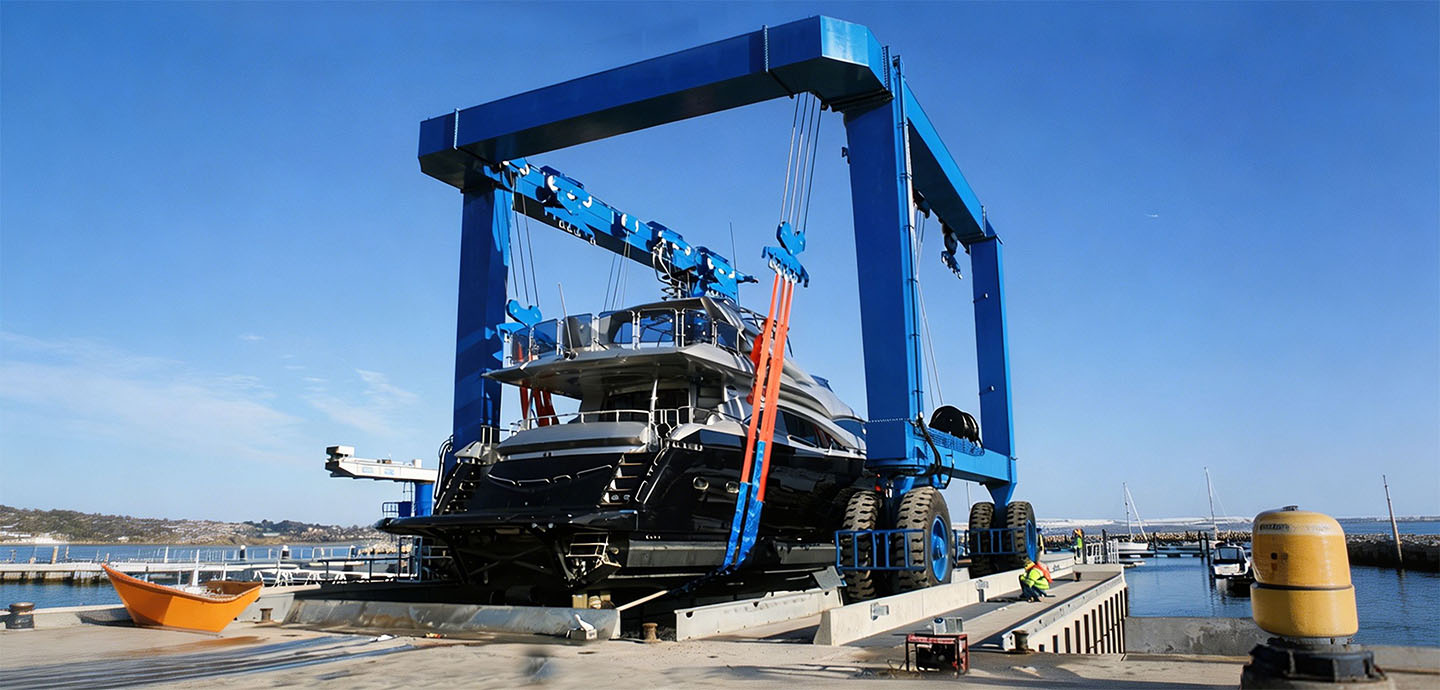
Mobile boat hoists, also known as travel lifts, are widely used in marinas, shipyards, and boat maintenance facilities. They are commonly used to launch and retrieve vessels, move them over short distances, and position them in designated storage areas. During these operations, the vessel is supported by slings, making sling arrangement and hull loading important factors in lifting safety.
Different vessels have different hull materials, bottom profiles, and center-of-gravity positions. If the slings are incorrectly positioned, the load is unevenly distributed, or the vessel tilts during lifting, the hull surface or structure may be damaged.
For this reason, every travel lift operation should follow a lifting plan based on the vessel’s hull structure, with appropriate equipment configurations and operating procedures in place to protect the hull.
A vessel’s hull supports its own weight and withstands hydrodynamic forces, equipment loads, and other external forces during operation. However, this does not mean that every part of the hull is suitable for supporting lifting loads.
When a vessel is afloat, the surrounding water provides buoyant support, distributing the load across the hull. Once the vessel is lifted out of the water, this support condition changes. Its weight must then be transferred through the slings to the supporting structure of the travel lift.
The contact points between the slings and the hull, the contact area, and the load distribution among the lifting points all affect how the hull is loaded.
Differences in hull structure. Vessels vary in bottom shape, keel design, hull materials, and internal reinforcement. Some areas are designed to withstand higher support loads, while others may not be suitable for direct support. Without checking the hull structure beforehand, the slings may be positioned in unsuitable areas.
High vessel maintenance costs. Yachts and other vessels often have carefully finished hull coatings, propulsion systems, and underwater fittings. Unnecessary friction between the slings and the hull, or contact with components such as rudders and propellers, can lead to additional repair work.
Dynamic loads during lifting. Lifting a vessel out of the water and moving it to a designated location is not a completely static process. The hull may be affected by sling adjustments, equipment movement, uneven ground, and changes in operating speed. Even when the travel lift has sufficient rated capacity, these actual working conditions must still be taken into account.
Hull protection therefore affects not only the safety of an individual lifting operation but also the vessel’s subsequent maintenance, storage, and use.
Understanding the potential causes of hull damage helps operators prepare a more suitable lifting plan. In actual operations, hull damage is often not caused by a single factor. Instead, it may result from a combination of sling arrangement, load distribution, and operating conditions.
The slings are the load-bearing components that directly connect the travel lift to the vessel. Their positioning has a direct effect on how the hull is loaded.
If the sling spacing does not match the vessel’s length and center of gravity, the hull may not receive adequate support. Slings positioned too close to the middle or ends of the vessel may also cause certain areas to carry an unsuitable share of the load.
For vessels with keels, rudders, and propellers, the clearance between the slings and underwater fittings requires particular attention. Incorrectly positioned slings may press against or collide with these components during lifting.
Slings may also shift slightly as the vessel is lifted. If they are not properly positioned, or if oil, sharp debris, or other foreign objects are present on the hull surface, the risk of friction and localized damage may increase.
Sling positions should therefore not be determined simply by dividing the vessel’s length into equal sections. They should be established according to the vessel manufacturer’s lifting instructions, hull drawings, and actual center-of-gravity position.
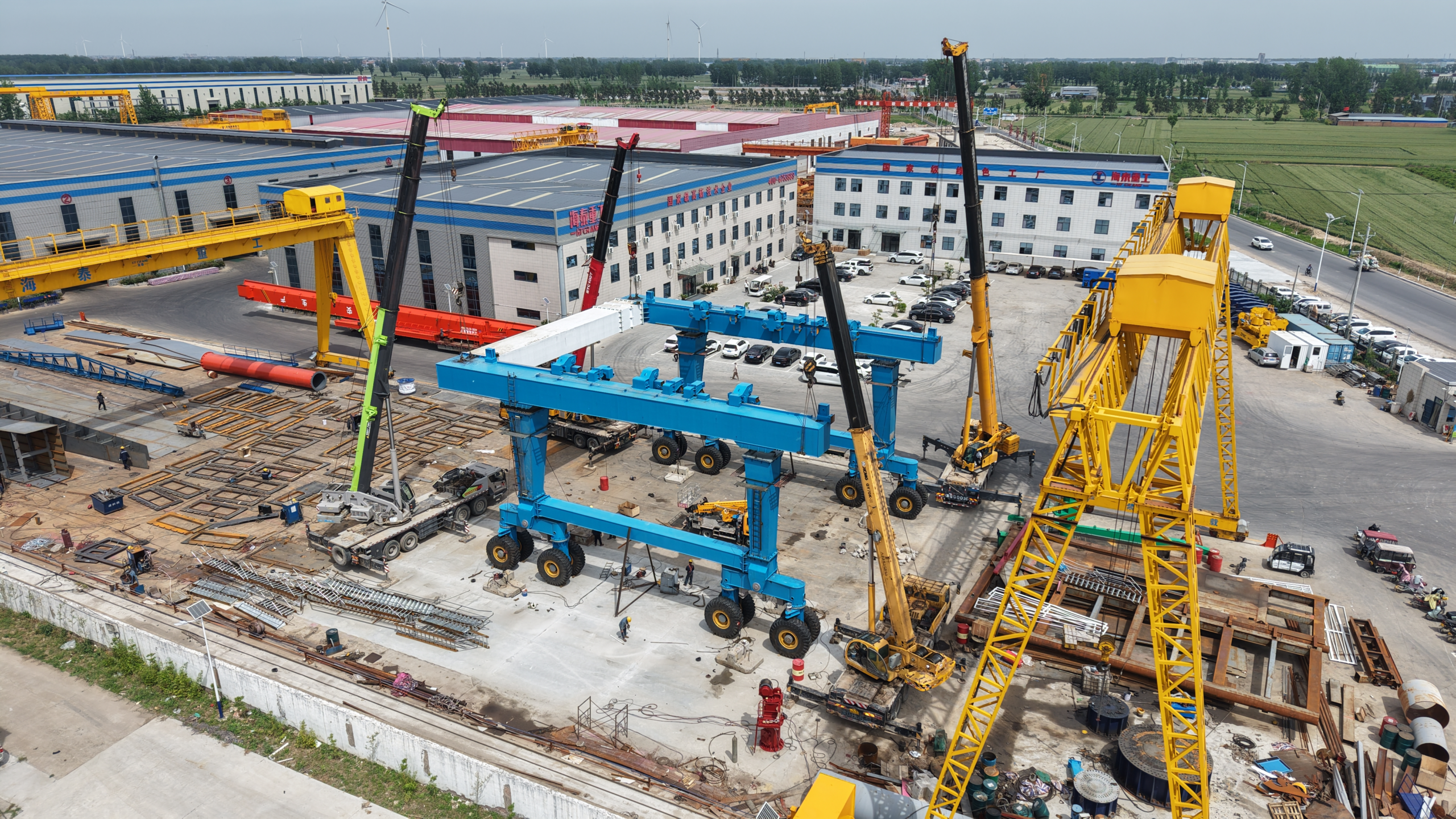
When several slings support a vessel, the distribution of the load among the lifting points is particularly important.
If the vessel’s center of gravity is not in the expected position or the slings are incorrectly arranged, some slings may carry a much larger share of the load than others. This can result in excessive localized loading on the hull.
The hydraulic lifting system must also operate in a coordinated manner. If there are noticeable differences in the travel or speed of individual lifting points, the vessel may tilt, changing the loading conditions of the slings.
It is important to understand that a synchronized hydraulic system does not necessarily mean that every part of the hull receives exactly the same load. Actual loading also depends on hull stiffness, the center of gravity, sling positions, and the overall lifting arrangement.
A suitable lifting plan must therefore consider both the synchronization capabilities of the equipment and the structural characteristics of the vessel.
Different types of vessels have different hull bottom structures, so the same sling arrangement cannot be applied to every vessel.
For example, some monohull vessels have deep-V bottoms, while certain workboats have pronounced keels or stern structures. Catamarans, on the other hand, require consideration of the spacing between their two hulls and the supporting areas of each hull.
If the sling arrangement is not adjusted to suit the vessel, the slings may fail to support the hull securely or may place additional pressure on certain structural areas.
For vessels with unusual or less common hull designs, it is advisable to obtain lifting instructions from the vessel designer or manufacturer before operation and prepare a sling arrangement based on the specific hull structure.
Different vessels vary in hull configuration, bottom profile, and structural design. Even when two vessels have similar weights, their requirements for sling positioning and support may be quite different. When using a mobile boat hoist, the supporting areas must be identified according to the hull structure rather than applying the same lifting arrangement to every vessel.
Monohull vessels are one of the most common hull types. Tugboats, coastal patrol boats, some ferries, and recreational boats may all use this configuration.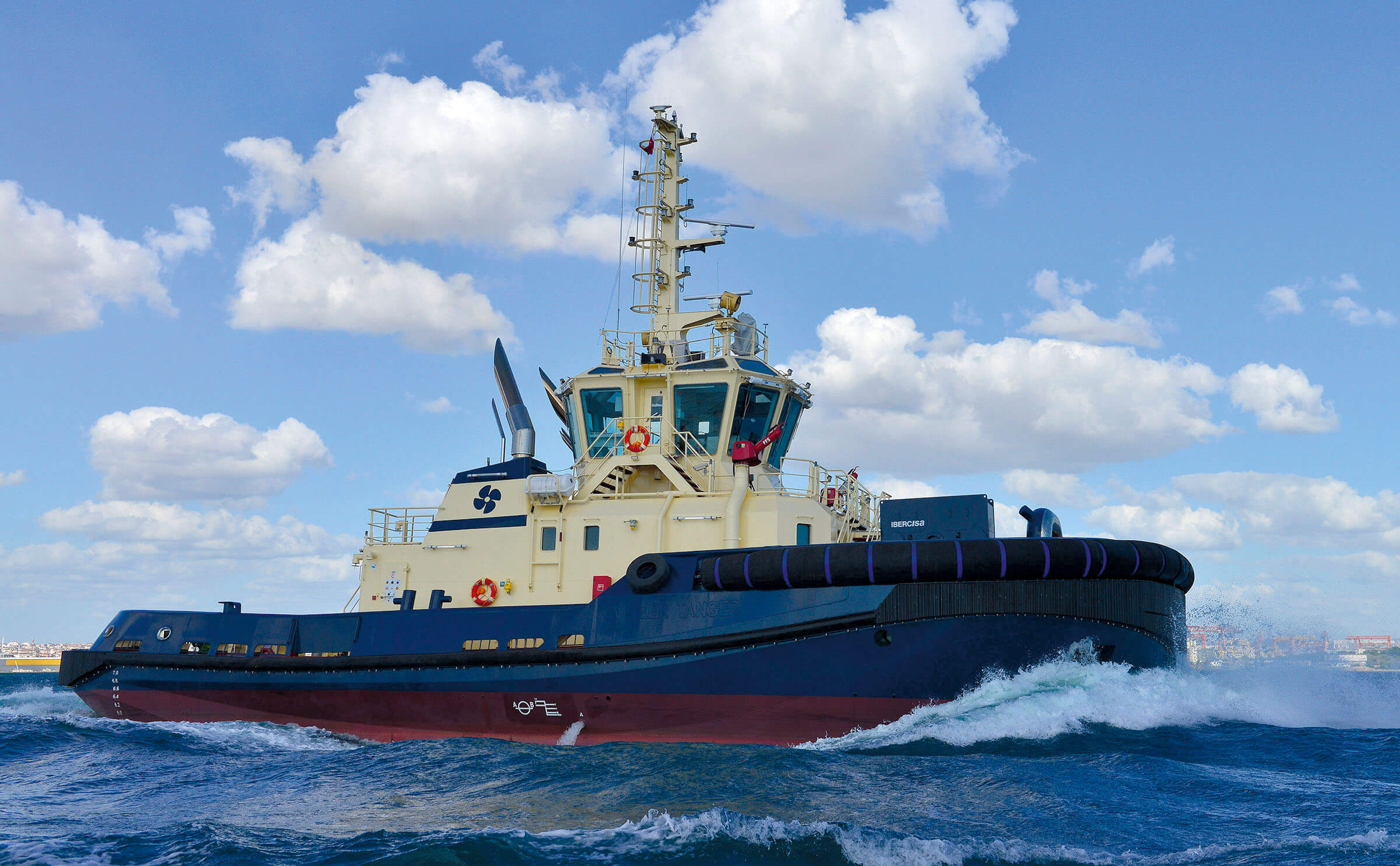
These vessels have a single continuous hull, but their bottom profiles and internal structural reinforcements can vary considerably. For example, some boats have deep-V hulls, while certain workboats feature pronounced keels, stern structures, or other protruding components.
Before lifting, the approved load-bearing areas of the hull should be identified. Sling spacing must be determined according to the vessel’s length, center of gravity, and bottom structure. For deep-V hulls, particular attention should be paid to how the slings contact the angled hull surfaces to prevent them from slipping during lifting.
For tugboats and some workboats, the propellers, rudders, shafts, and other stern fittings also require special attention. Slings should be positioned away from components that are not designed to bear lifting loads or that could be damaged through contact. This helps keep the vessel stable during lifting and transfer.
A catamaran has two relatively independent hulls connected by transverse structures to form a complete vessel. Catamaran motor yachts, high-speed passenger vessels, and catamaran ferries all fall into this category.
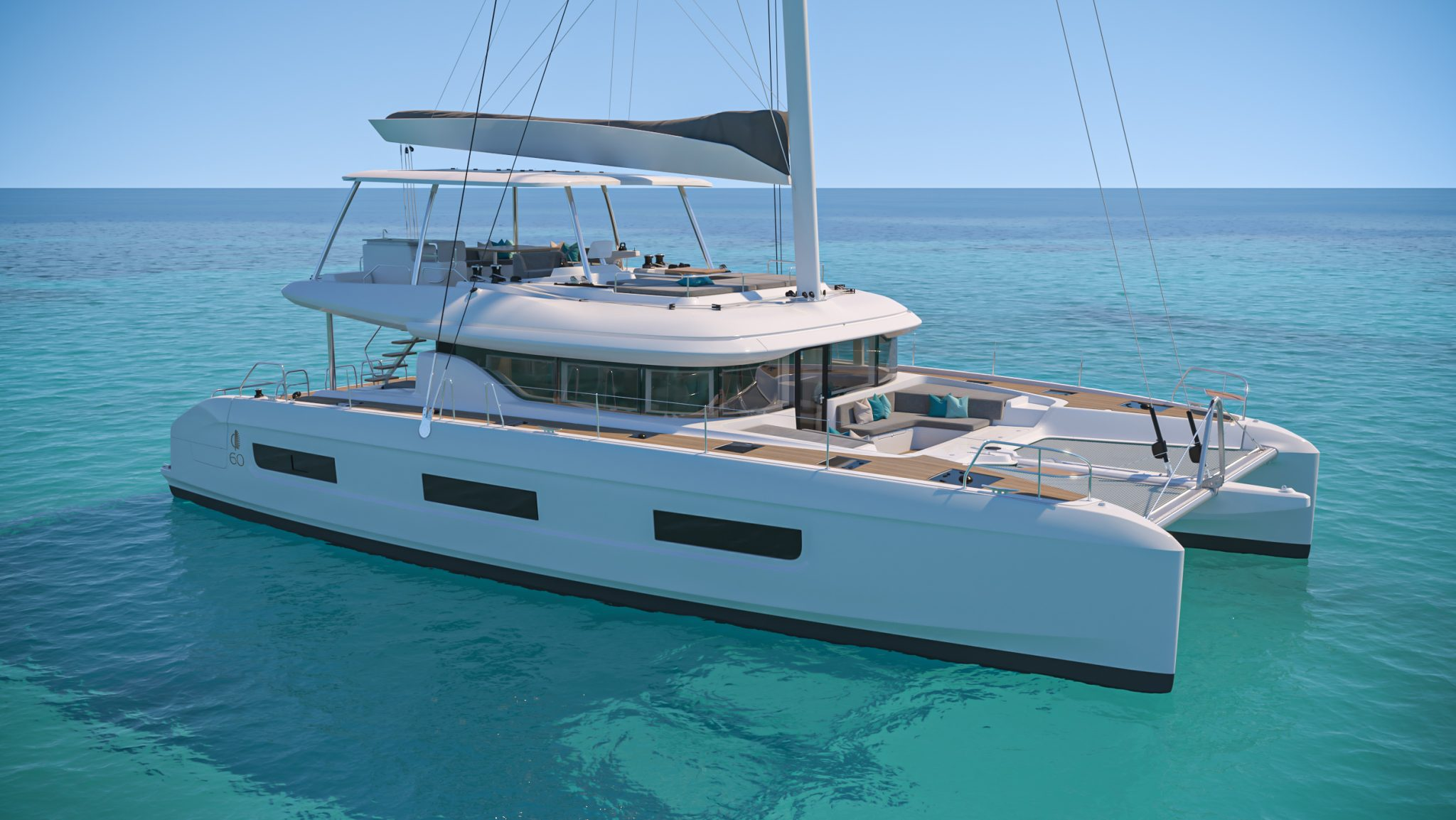
Compared with conventional monohull vessels, catamarans generally have a greater overall beam. The distance between the two hulls and the design of their connecting structures directly affect sling arrangement and the required dimensions of the travel lift.
During lifting, the approved supporting areas of both hulls must be identified. The slings should support each hull in accordance with the vessel’s lifting requirements. They should not be placed arbitrarily against the connecting structures between the hulls or positioned where they may interfere with underwater fittings.
For large catamarans, it is also important to check the spacing between the front and rear slings, load distribution between the two hulls, and the vessel’s overall balance during lifting. The travel lift’s frame span, sling length, and lifting configuration should be selected according to the vessel’s actual beam and weight.
In addition to conventional monohull and catamaran vessels, some projects involve floating houses, high-speed utility boats, and workboats with special structural designs. These vessels may not be suitable for standard yacht-lifting arrangements.
For example, a floating house may use pontoons or other flotation structures as its base. Its load-bearing areas may differ considerably from those of a conventional boat. Before lifting, the supporting capacity of the bottom structure, suitable sling contact areas, and the need for special supports or lifting attachments should all be confirmed.

For specially designed high-speed passenger vessels, ferries, and workboats, lifting requirements should also be checked against the actual hull drawings. Some vessels may look similar to conventional monohulls or catamarans, but their internal reinforcements, underwater fittings, and weight distribution can be quite different.
If a vessel has special hull materials, a non-standard bottom structure, or no clearly marked lifting points, it is advisable to obtain lifting instructions from the vessel designer or manufacturer before operation. Where necessary, the travel lift manufacturer should also assess the sling arrangement and support requirements based on the vessel’s dimensions and load characteristics.
In addition to a suitable lifting plan, the travel lift’s own configuration also affects hull protection. Sling materials, the hydraulic lifting system, and sling adjustment options are all important factors to consider when designing the equipment.
Polyester slings are commonly used as load-bearing components on mobile boat hoists. Compared with rigid hooks or metal contact components, flexible slings can conform to a certain extent to the shape of the hull, reducing the risk of damage caused by direct contact with rigid parts.
However, wider slings are not necessarily better, and using flexible materials alone does not guarantee hull protection. Sling width, length, rated capacity, and construction should all be selected according to the vessel’s weight and actual lifting requirements.
For yachts with delicate surface coatings, the cleanliness of the sling contact surfaces also deserves attention. Sand, metal fragments, or other hard particles attached to the slings may scratch the hull surface during lifting and movement.
During routine use, slings should be regularly inspected for cuts, wear, damaged stitching, and other signs of deterioration. If damage affects their load-bearing capacity, they should be handled or replaced according to the sling manufacturer’s instructions rather than kept in service.
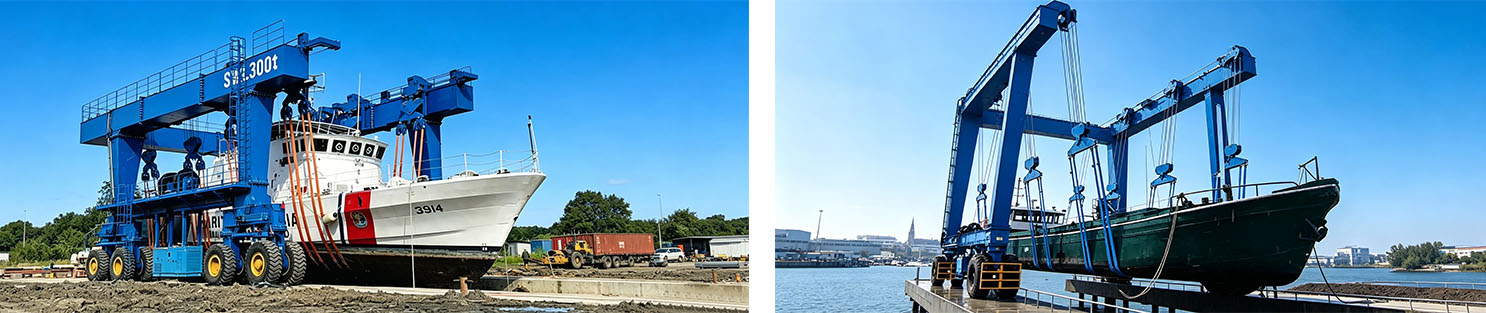
Mobile boat hoists generally use multi-point hydraulic lifting systems, in which hydraulic power drives the individual lifting mechanisms to raise and lower the vessel.
During lifting, the individual lifting points must operate in coordination according to the control requirements to keep the vessel in a relatively stable position. This coordination is particularly important when handling heavier vessels or those with longer hulls.
If there are noticeable differences in the heights of individual lifting points, the vessel may tilt, changing sling positions and load distribution. The equipment should therefore be fitted with a suitable synchronization control system based on its lifting arrangement, and the hydraulic system should be checked regularly during operation.
One point needs to be made clear: hydraulic synchronization is designed to coordinate lifting movements. It cannot replace correct sling positioning or load calculations. Vessels with significantly offset centers of gravity or unusual hull structures still require an individual lifting plan.
Vessels vary considerably in length, beam, and hull bottom structure. A fixed sling spacing may not be suitable for every vessel.
For this reason, some mobile boat hoists are designed with adjustable sling arrangements, allowing operators to change sling positions according to the dimensions and structural characteristics of different vessels.
For vessels of different lengths, for example, the spacing between the front and rear slings should be determined according to the approved supporting areas and center of gravity. For vessels with keels or special bottom structures, sufficient clearance must also be provided for the keel, propellers, rudders, and other components.
It is important to remember that adjustable sling positioning does not mean the slings can support the vessel at any location. All adjustments must remain within the equipment’s permitted configuration range and comply with the vessel manufacturer’s lifting requirements.
Suitable equipment configurations do not mean that every lifting operation can begin without preparation. In actual operations, operators must check the vessel’s condition, site conditions, and equipment status before proceeding.
Before lifting, collect the vessel’s basic information, including its actual weight, length, beam, hull structure, center of gravity, and the layout of underwater fittings.
Particular attention should be paid to the vessel’s actual lifting weight. In addition to the hull itself, fuel, fresh water, onboard equipment, stored items, and other additional loads should also be taken into account. The equipment and slings should not be selected based solely on the vessel’s stated unloaded weight.
If the vessel’s weight is unclear, or its actual configuration differs significantly from the original design, the information should be verified before lifting. This helps prevent errors in load estimation from affecting lifting safety.
The slings directly support the vessel’s weight, so their condition should be checked before every operation.
Inspect the sling surfaces for cuts, wear, deformation, loose stitching, and other signs of damage. Their rated capacities must also be confirmed to ensure they meet the requirements of the planned lifting operation.
In addition to the slings themselves, the connecting fittings, lifting points, and related load-bearing structures should also be inspected. If any abnormal condition is found, the operation should be stopped until the issue has been addressed.
Before installing the slings, their positions should be confirmed according to the vessel’s structure and the lifting plan.
Check that the slings are clear of propellers, rudders, keels, and other protruding components. Also confirm that they are positioned within the approved load-bearing areas of the hull and that the spacing between the front and rear slings meets the requirements.
For vessels with unusual hull structures, refer to the lifting drawings or support instructions provided by the vessel manufacturer. The fact that a vessel can be lifted does not automatically mean that the selected sling positions are suitable.
Before proceeding with the full lifting operation, a short test lift can be carried out according to the lifting plan, allowing the vessel to gradually clear its original supports.
During this process, observe whether the slings shift, whether the vessel tilts noticeably, and whether the individual lifting points operate in coordination.
If the vessel’s position becomes abnormal, the slings begin to slip, or any unusual loading condition is observed, lifting should be stopped immediately. The lifting arrangement should then be reviewed and adjusted under safe conditions.
A test lift does not replace the required pre-lifting inspections. Repeatedly raising the vessel to test how much load the hull can withstand is not an acceptable substitute for a proper lifting assessment.
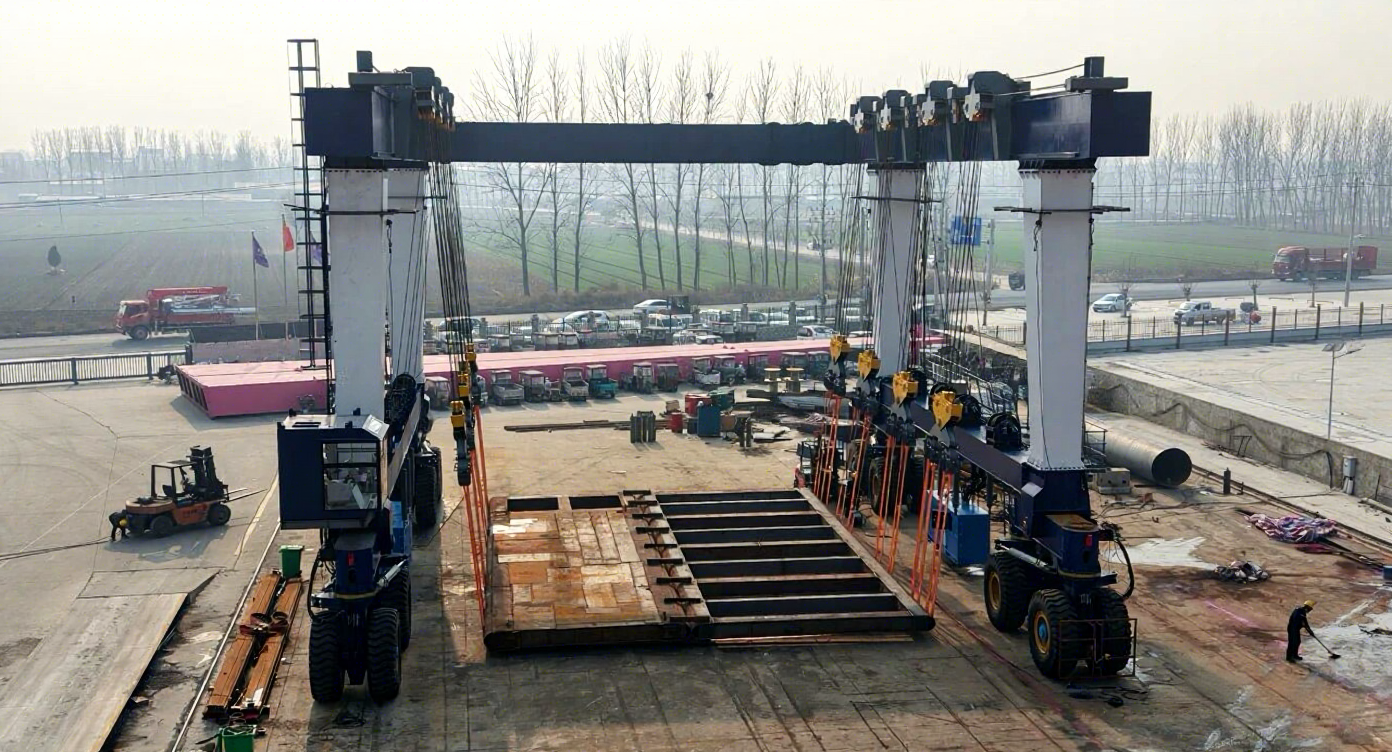
Once the vessel is fully clear of the water and ready to be moved, operators must control the travel speed and steering movements of the equipment.
Avoid sudden acceleration, sharp turns, and abrupt braking during movement, as these actions may cause unnecessary vessel movement or inertial loads. The travel route should also be checked in advance to confirm that the ground surface, passage width, and turning space are suitable for the equipment.
If the operating area contains slopes, joints, or other ground obstacles, their effects on equipment stability and vessel transfer should be assessed beforehand. The fact that the travel lift has a certain level of mobility does not mean that site road conditions can be overlooked.
Once the vessel reaches its designated position, it should be lowered slowly according to the planned support arrangement.
Before lowering, confirm that the storage stands, cradle, or other support structures are ready and capable of supporting the vessel. As the vessel approaches its supports, operators should monitor the relative positions of the hull and support structures to prevent accidental contact.
The slings should only be released according to the operating procedure after the vessel is securely positioned and its weight has been transferred to the designated supports.
The entire lowering process should be controlled carefully, especially when the vessel has a complex bottom structure or limited support areas.
For marinas, shipyards, and boat maintenance facilities, selecting a mobile boat hoist involves more than checking its rated capacity and overall dimensions. It is also important to consider whether the equipment can accommodate the vessel types and lifting requirements encountered in daily operations.
Confirm the required lifting capacity. The equipment capacity should be selected according to the actual weight of the heaviest vessel to be handled, taking additional onboard loads and lifting configurations into account. The rated capacity must meet the requirements of the complete lifting system and should not be determined solely by the vessel’s stated weight.
Check the sling configuration. Different vessels may require different sling widths, lengths, rated capacities, and positioning arrangements. Before purchasing, provide the manufacturer with information about the vessel types commonly handled and the maximum vessel dimensions. This allows the sling configuration to be selected according to actual operating requirements.
Pay attention to lifting synchronization. For heavier vessels and those with longer hulls, ask about the equipment’s hydraulic lifting arrangement, synchronization control method, and related safety protection devices. Confirm that these features are suitable for the intended operating conditions.
Consider sling adjustment capabilities. If a marina needs to handle vessels with different lengths, beams, and hull bottom structures, the available sling adjustment range becomes particularly important. A suitable configuration allows one machine to accommodate a wider range of vessels, but all adjustments must remain within the equipment’s design limits.
Provide lifting information for special vessels. If daily operations involve catamarans, vessels with deep keels, large motor yachts, or other special vessel types, it is advisable to provide the relevant hull drawings, weight data, and lifting requirements during the purchasing stage. Based on this information, the equipment manufacturer can assess the frame span, lifting height, sling arrangement, and other customized configurations.
For a travel lift manufacturer, the real challenge is not simply to increase the rated lifting capacity. The equipment’s supporting structure, sling configuration, and control system must be suitable for the types of vessels the customer actually needs to handle.
Protecting vessel hulls during travel lift operations requires careful consideration of hull structure, sling positioning, load distribution, and equipment operating conditions. Flexible slings, synchronized hydraulic lifting systems, and adjustable sling configurations can all support safer lifting, but they must be combined with a suitable lifting plan and proper operating procedures.
Haitai Crane provides customized mobile boat hoist solutions based on vessel weight, dimensions, hull structure, and site operating conditions. If you have special vessel types or specific lifting requirements, feel free to contact our team to discuss an equipment configuration suitable for your project.