Against the backdrop of rapid global growth in logistics and container transportation, RTG Crane plays an irreplaceable role as core equipment in container handling. Capable of efficiently loading, unloading, stacking, and transferring containers over short distances, they are widely deployed in ports, container yards, logistics parks, and similar settings, directly impacting the throughput efficiency and operational costs of the entire logistics chain.
The core purpose of this guide is to provide purchasing entities with a systematic and professional framework for selecting RTG Crane. By outlining core characteristics, key selection factors, cost control methods, and procurement processes of RTG Crane, it helps buyers avoid common pitfalls in model selection. This enables informed decisions aligned with specific needs, ultimately achieving the optimal balance between equipment investment and operational efficiency.
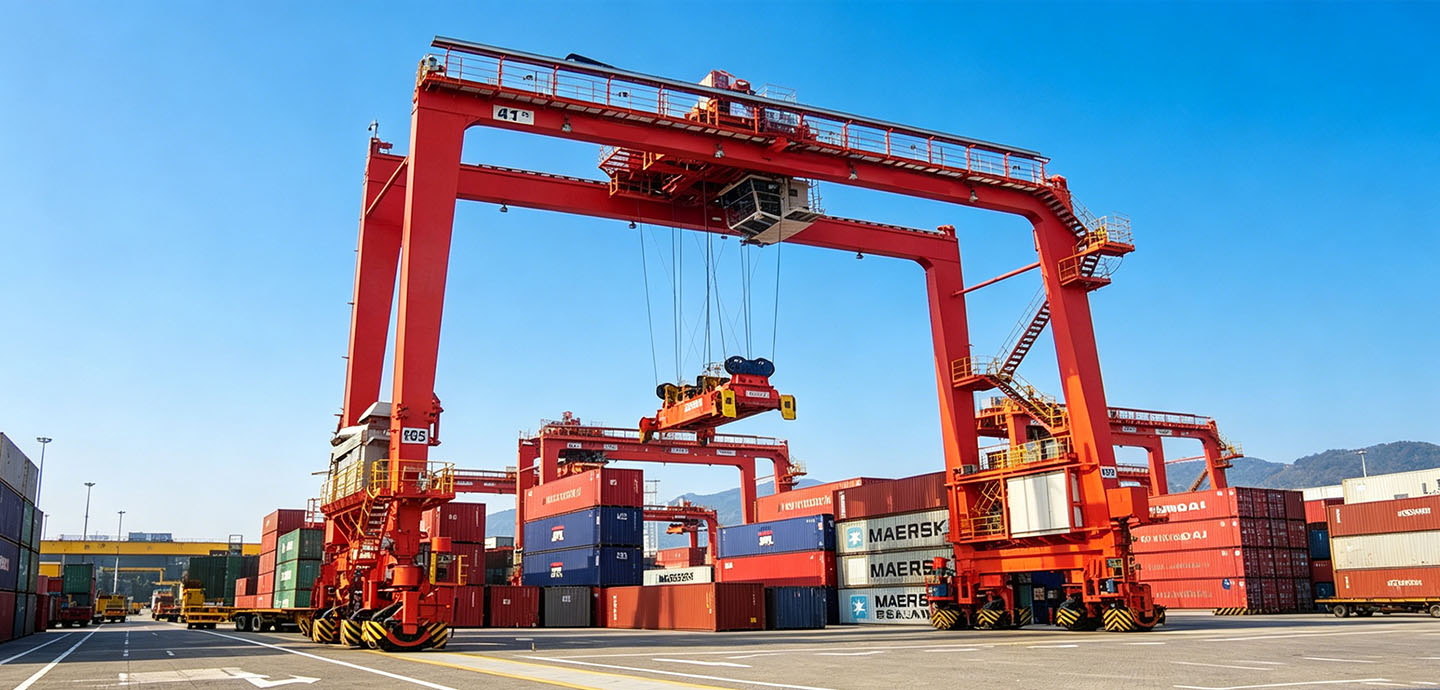
RTG Crane is a wheeled handling device featuring gantry-type frame. By spanning containers with its frame, it employs lifting mechanisms for vertical container movement and relies on its travel system for horizontal positioning. Its core functions include:
RTG Cranes are highly focused on container-intensive handling sectors, primarily including:
The performance and reliability of RTG Cranes depend on the quality of key components, primarily including:
Based on power source and operational requirements, RTG Crane can be categorized into three types to suit different work scenarios:
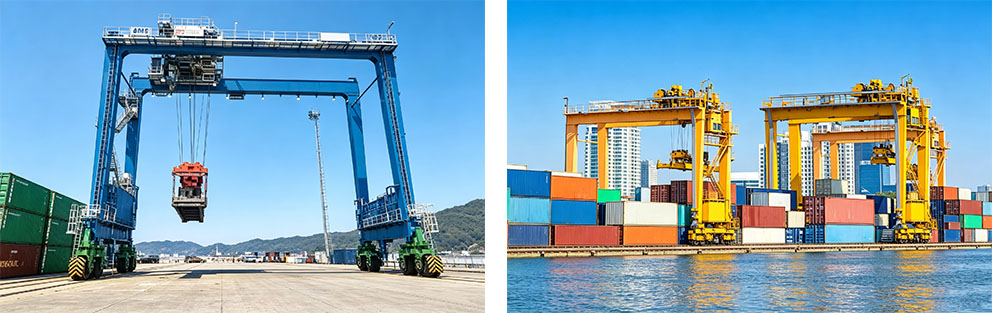
Load capacity and size compatibility form the fundamental selection criteria, requiring strict alignment with operational requirements:
Load Capacity Matching: First determine the maximum weight of containers routinely handled (e.g., 20-foot standard containers approx. 24 tons, 40-foot high-cube containers approx. 30 tons). Select models with load capacity slightly exceeding peak requirements (reserve 10%-20% margin to prevent long-term overload damage). For example, yards primarily handling 40-foot containers should prioritize RTG Crane with a load capacity of 35 tons or higher.
Container Size Compatibility: Verify the range of container sizes the equipment can handle, including common specifications like 20-foot, 40-foot, and 45-foot containers. Simultaneously, ensure the equipment’s wheelbase and track width align with the width of site access lanes (e.g., a 40-foot RTG Crane requires a minimum aisle width of approximately 12 meters).
RTG Crane performance directly impacts operational efficiency. Key metrics to focus on include:
Additionally, equipment performance must align with terminal throughput capacity: For example, a yard handling 100,000 TEUs (twenty-foot equivalent units) annually requires ensuring both the individual operational efficiency of RTG Crane (approximately 20-25 TEUs/hour) and the number of units deployed (typically 3-5 units) meet peak operational demands, preventing logistics bottlenecks caused by inadequate equipment performance.
As high-investment, long-term assets, quality and durability directly determine the lifespan and operational cost of RTG Crane:
Generally, high-quality RTG Crane has a design lifespan of 10-15 years, while low-quality equipment may experience issues like frame deformation or hydraulic system failures within 5 years, ultimately increasing long-term operational costs.
Selecting a reputable manufacturer is crucial for ensuring equipment quality and after-sales service:
Additionally, assess credibility and service capabilities comprehensively through industry case studies, customer feedback, and the manufacturer’s after-sales service network coverage.
Operational requirements vary across scenarios, necessitating close attention to equipment customization and functional configuration. The core customization requirements including:
Note: Customized features increase equipment costs. Balance necessity of requirements with cost control to avoid blind pursuit of high-end configurations.
The maintenance convenience and after-sales support for RTG Crane directly impact equipment downtime and operational costs:
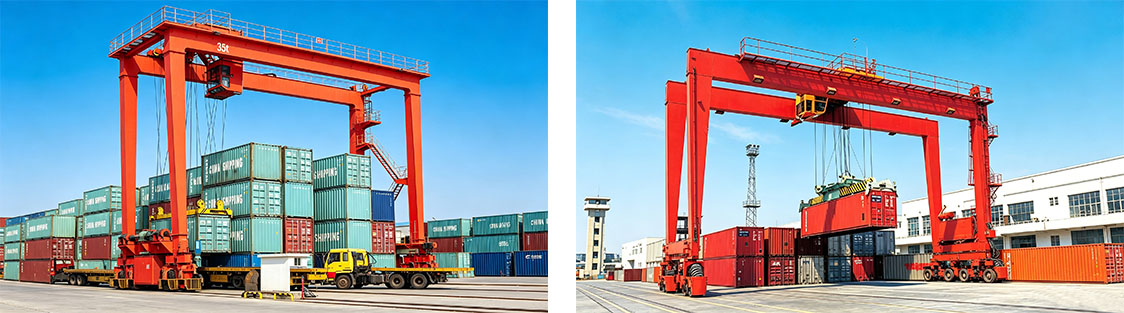
The procurement of RTG Crane should not focus solely on the initial price. A comprehensive assessment of the Total Cost of Ownership (TCO) is necessary to achieve a balance between cost and benefits.
Prices vary significantly across different types and configurations of RTG Cranes. For example:
Note: Lower-priced equipment may compromise on material quality or core component brands. Evaluate these factors alongside the preceding “Quality and Durability” section to avoid escalating operational costs later due to initial savings.
This cost includes initial purchase price, operational and maintenance costs (spare parts replacement, maintenance, fuel/electricity expenses), labor costs (operators, maintenance personnel), and downtime losses (work stoppages due to equipment failures). For example, in the total lifecycle cost (10 years) of a diesel RTG Crane, the initial purchase price accounts for only 30%-40%, while operational/maintenance costs and downtime losses can exceed 60%.
Therefore, procurement decisions should prioritize optimal TCO: For instance, while electric RTG Crane has higher initial purchase costs, their electricity expenses are significantly lower than diesel fuel costs, coupled with reduced maintenance expenses. Over extended usage (5+ years), their total cost of ownership becomes lower than diesel models.
Precisely Match Requirements: Avoid over-spacing. For instance, a yard stacking only 3 layers doesn’t require a 15-meter lift height model; non-automated yards shouldn’t blindly purchase smart stacker cranes to reduce unnecessary costs.
Negotiate Volume Discounts: When purchasing multiple units, negotiate volume discounts with manufacturers. Typically, buying 3 or more units can secure a 5%-10% price reduction.
Optimize Payment Terms: Negotiate installment plans with manufacturers (e.g., 30% down payment, 50% upon equipment acceptance, 20% after warranty period) to alleviate financial pressure;
Minimize Downtime Losses: Reduce equipment failure downtime by selecting high-reliability equipment, signing comprehensive after-sales contracts, and establishing internal preventive maintenance systems, thereby indirectly lowering costs.
Procuring RTG Crane is a systematic project requiring a scientific process to ensure each step aligns with your needs.
Before contacting suppliers, clarify your requirements checklist to avoid blind selection:
Basic Parameter Requirements: Confirm container types handled daily (20ft/40ft/45ft), maximum weight, stacking layers (determines lift height), yard dimensions (determining equipment wheelbase and turning radius);
Efficiency Requirements: Calculate required single-unit handling efficiency (TEU/hour) and equipment quantity based on yard throughput (e.g., if peak hour demand is 50TEU and single-unit efficiency is 25TEU/hour, 2 units are needed with 1 spare recommended);
Environmental Requirements: Confirm environmental standards (e.g., zero-emission requirements) and climatic conditions (e.g., corrosion resistance for coastal areas, cold-start capability for frigid regions);
Smart Capability Requirements: Specify whether equipment must integrate with existing management systems or if future automation upgrades are planned.
Supplier Screening: Identify 3-5 suppliers meeting manufacturer credibility criteria through industry exhibitions, association recommendations, and client case studies.
Request for Proposal: Provide suppliers with detailed requirements including equipment specifications, functional configurations, delivery timelines, and after-sales service standards. Require written proposals containing technical parameters, quotations, case studies, and service commitments.
Preliminary Assessment: Compare proposals for compliance with requirements, budget alignment, and after-sales support. Eliminate suppliers failing to meet key criteria (retain 2-3).
Verify Technical Specifications: Require shortlisted suppliers to provide detailed technical drawings, core component brand lists (e.g., hydraulic systems, motor brands), and third-party test reports (e.g., load capacity, safety performance) to prevent inflated specifications.
Align with Demand Details: For instance, verify minimum turning radius compliance for narrow site passages; confirm system integration feasibility for smart system integration needs;
Engage Technical Experts: Invite industry consultants or senior internal operations personnel to assess equipment reliability and suitability from a technical perspective.
Visit Supplier Factories: Conduct field inspections of production scale, manufacturing processes, and quality control procedures to verify production capacity and quality management standards.
Review Customer Case: Visit similar clients (e.g., storage yards of comparable size) to observe equipment operation firsthand and gather user feedback (e.g., failure rates, after-sales service response times).
Prototype Testing: If feasible, request the supplier to provide a prototype for on-site testing. Test items include: load capacity, travel speed, lifting speed, maneuverability, operational convenience, and safety feature effectiveness. Record test data and conduct comparative evaluations.
Price Negotiation: Based on preliminary proposal evaluations and prototype test results, negotiate final pricing with shortlisted suppliers. Leverage conditions like bulk purchasing or long-term partnership to secure discounts while clarifying what the quoted price includes (e.g., installation/commissioning, operator training, initial spare parts).
Warranty Terms Negotiation: Key discussions include warranty duration, coverage scope (including parts replacement and labor costs), and liability for malfunctions (e.g., compensation mechanisms for losses caused by equipment failures).
Negotiate Delivery Timelines: Confirm equipment production cycles, delivery dates, and installation/commissioning periods to ensure alignment with project schedules (e.g., yard commissioning deadlines) and prevent delays.
Sign Formal Contracts: Contracts must specify equipment specifications, pricing, payment terms, delivery schedules, warranty conditions, after-sales service provisions, and breach of contract liabilities. Legal counsel should review contract terms to mitigate legal risks.
Establish Delivery Schedule: Coordinate with suppliers on transportation methods (e.g., road/sea freight), delivery locations, and installation/commissioning timelines.
Prepare Acceptance Conditions: Pre-arrange equipment storage areas, power/fuel supply facilities, and operator training to enable rapid operational deployment upon arrival.
Acceptance and Payment: Upon delivery, conduct acceptance inspections based on contractually agreed technical specifications and testing standards (e.g., no-load/full-load tests, safety function tests). Make payments after successful acceptance while requiring suppliers to provide equipment certificates of conformity, maintenance manuals, spare parts lists, and other documentation.
Selecting RTG Crane involves a systematic decision-making process that comprehensively evaluates requirements, quality, cost, and service. This choice directly impacts the operational efficiency and long-term competitiveness of logistics terminals. This guide begins with foundational knowledge of RTG Crane, outlines six key selection factors, methods for controlling total lifecycle costs, and standardized procurement procedures. Its core purpose is to help buyers establish a scientific decision-making framework.
During the actual procurement process, buyers are advised to consistently prioritize their operational requirements. Avoid blindly pursuing high-end configurations or low-cost equipment; instead, select the most suitable equipment and supplier for your specific needs. Simultaneously, focus on establishing long-term partnerships with suppliers to ensure stable after-sales support throughout the equipment’s entire lifecycle. This approach ultimately provides a solid foundation for the sustained development of logistics operations.