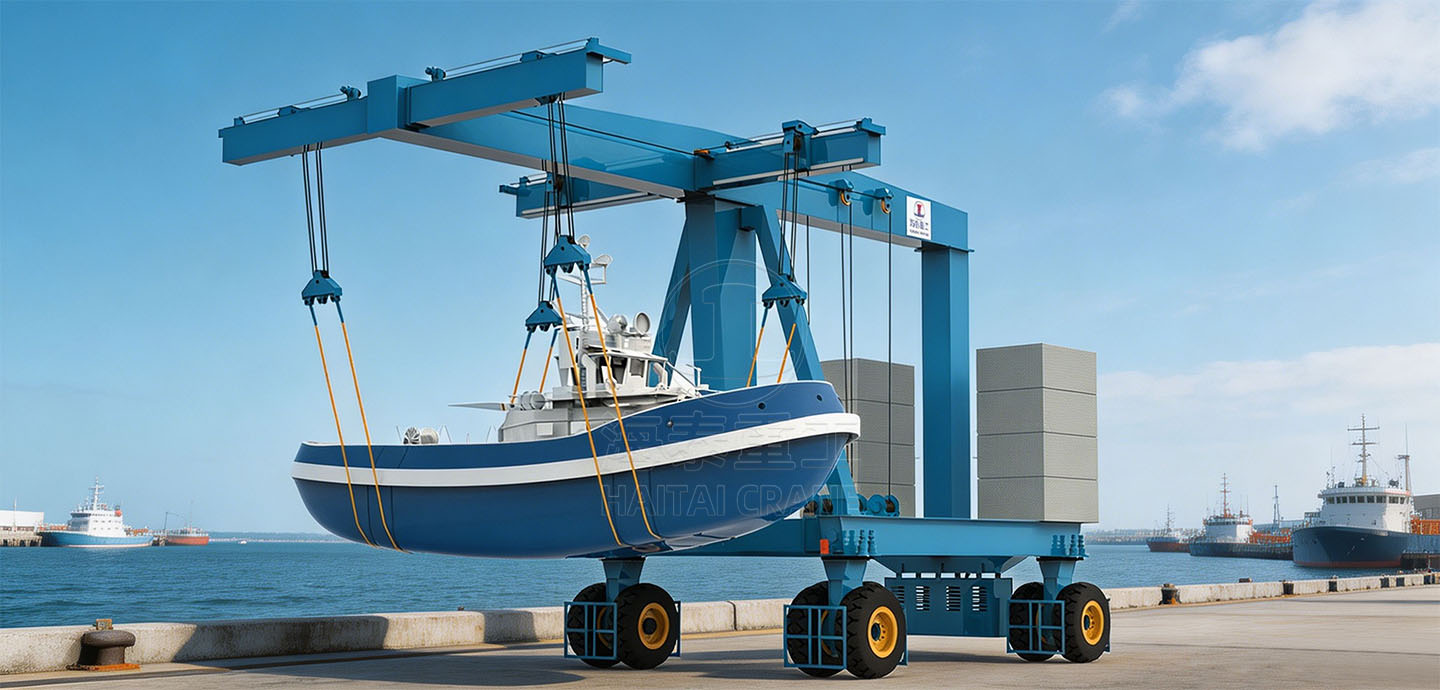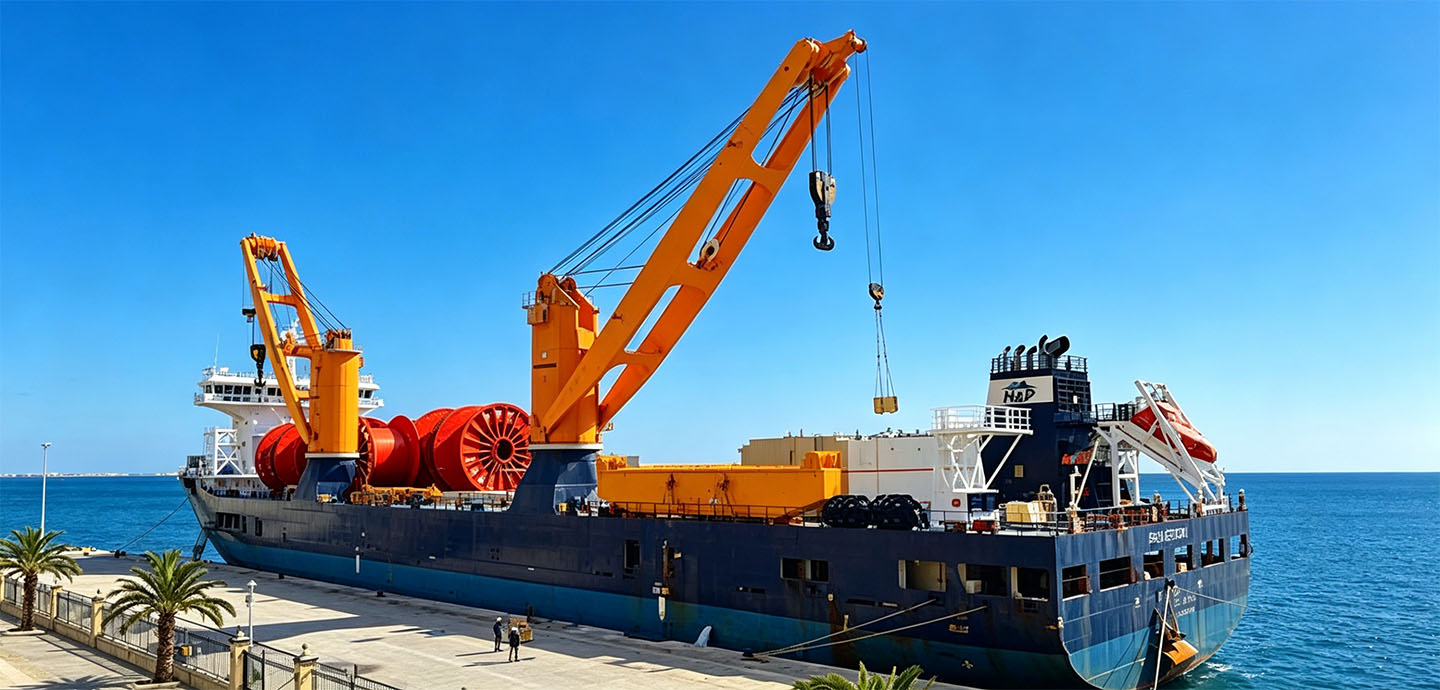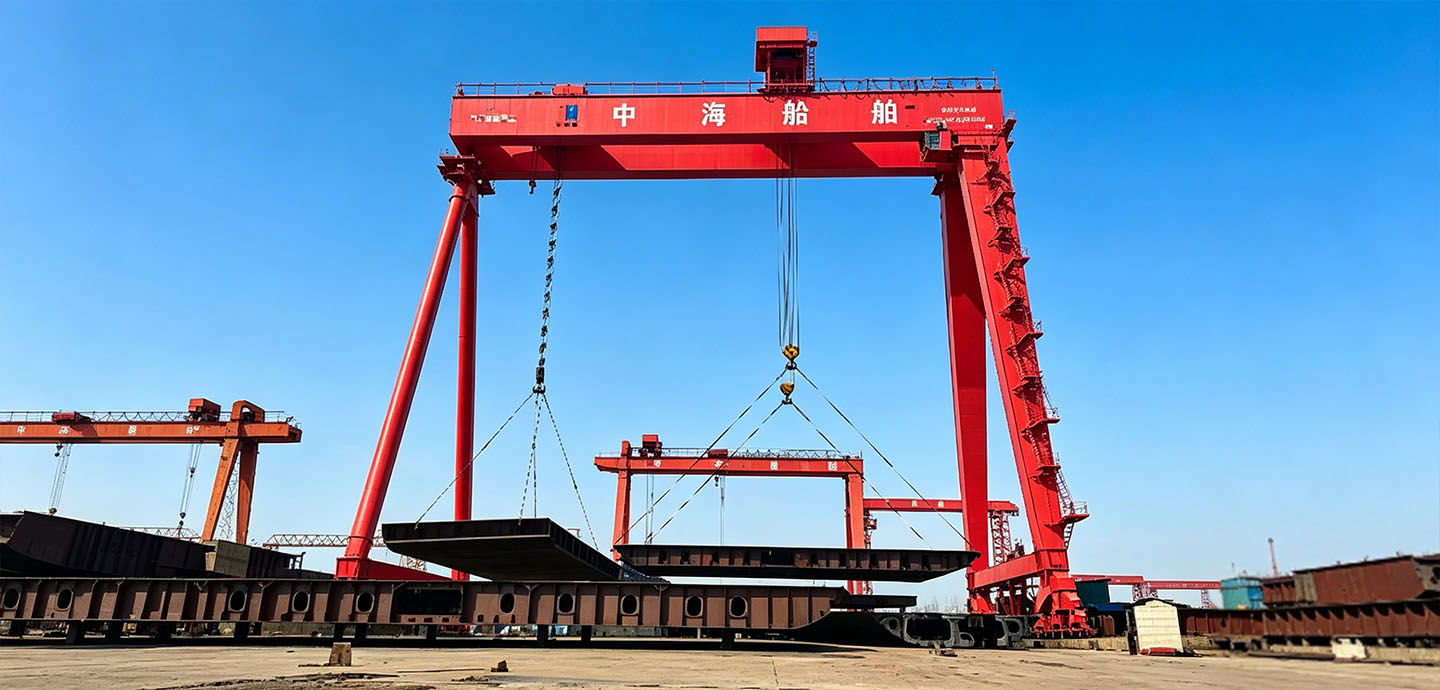
In the fields of modern logistics, port operations, and heavy-material handling, the rubber-tyred container gantry crane stands out with its unique flexibility and powerful lifting capacity. Different from fixed rail mounted container gantry cranes, rubber tyred container gantry cranes are equipped with heavy-duty rubber tyres, enabling them to move freely on various sites. This characteristic makes them not only indispensable in basic port container operations but also crucial in industrial scenarios. In factories and manufacturing facilities, rubber tyred container gantry cranes undertake important tasks such as the transfer of bulk raw materials on production lines, the assembly and hoisting of heavy machinery, and the re-organization of industrial goods in areas where fixed infrastructure is difficult to cover or where construction costs are too high, thus becoming a core equipment for improving operational efficiency.
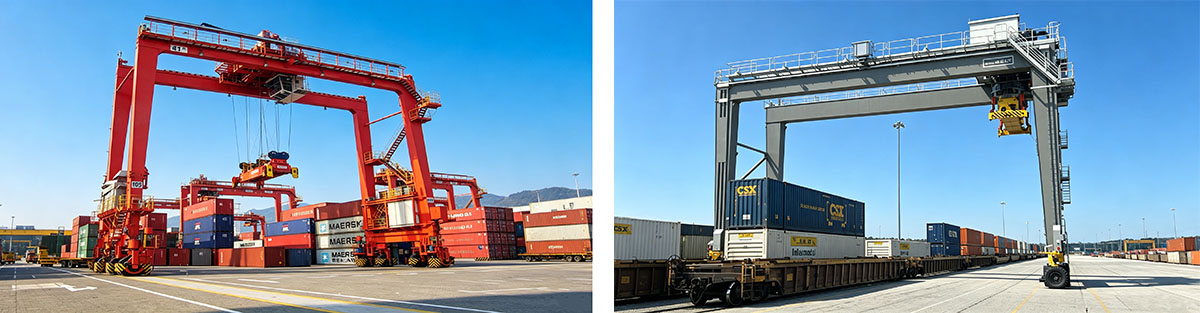
As a type of heavy machinery, the rubber-tyred container gantry crane is widely used in the efficient handling of containers at industrial terminals and shipyards. Its stable operation depends on the coordinated work of multiple key components, which jointly realize core functions such as container loading, unloading, and transfer.
This is the core structure of the rubber-tyred container gantry crane, tasked with the primary mission of lifting and moving heavy objects (such as containers). The main-body frame must possess extremely high structural strength to support the huge loads during lifting and provide an installation foundation for other components.
The rubber tyres equipped on the rubber-tyred container gantry crane are the key to its mobility. These tyres are specially designed to be wear-resistant and pressure-resistant, capable of adapting to various ground environments such as terminals and factory areas. They not only ensure the flexible movement of the crane within the site but can also achieve short-distance road transportation when necessary.
Axles connect the tyres to the main structure, while the suspension system plays a role in stabilization and support. Together, they evenly distribute the weight of the crane to each tyre, reducing ground pressure. Additionally, they buffer vibrations during movement, ensuring smooth operation and avoiding impacts on operation accuracy due to bumps.
As a liftable component, the telescopic boom determines the operating range of the rubber-tyred container gantry crane. By extending or retracting, the boom can adapt to the stacking and handling requirements of containers with different heights and lengths, enhancing the operational flexibility of the equipment.
A movable component installed at the end of the telescopic boom, its design conforms to the structural characteristics of containers, enabling it to firmly grip and lift containers. It is a key component to ensure the safe transportation of goods.
Responsible for controlling various functions of the rubber-tyred container gantry crane, including the lifting, rotation of the boom, the movement of the whole machine, and the gripping and releasing of the lifting gear. The control systems of modern rubber-tyred container gantry cranes mostly adopt intelligent designs, enabling precise operation and improving operational efficiency and safety.
This includes facilities such as the cushion layer in the container stacking area, providing a stable operating surface for the r rubber-tyred container gantry crane. At the same time, this system also integrates various safety devices, such as limit switches, alarm devices, etc., to prevent accidents during operation and ensure the safety of personnel and equipment.
Technical parameters are the core indicators for measuring the performance of rubber-tyred container gantry crane, directly determining their applicable scenarios and operational capabilities. When selecting a rubber-tyred container gantry crane, various parameters need to be comprehensively evaluated according to actual needs.
The rated lifting capacity refers to the maximum weight that rubber-tyred container gantry crane can safely lift and is the most basic performance parameter of the equipment. The lifting capacities of different models of rubber-tyred container gantry crane vary greatly, with a common range from 20 tons to over 65 tons. When choosing, it is necessary to consider the weight of the goods involved in the operation. For example, standard containers are usually 20-40 tons, while heavy-duty mechanical equipment may require a lifting capacity of over 50 tons. It should be noted that the weight of the lifting gear itself also needs to be considered, and the actual effective lifting capacity needs to deduct the weight of the lifting gear.
The span refers to the horizontal distance between the centers of the two side legs of the rubber-tyred container gantry crane, which determines the operating width that the crane can cover. The standard span is usually between 20 meters and 30 meters, which can meet the needs of most container yards and factory workshops. For special scenarios, such as the handling of extra-wide goods or in large-scale factory areas, rubber-tyred container gantry crane with a larger span can be customized. The span design needs to take into account stability. An overly large span may affect the anti-rollover ability of the equipment, and it is necessary to balance this through strengthened structural design.
The lifting height is the maximum vertical height that rubber-tyred container gantry crane can lift heavy objects, including the distance from the ground to the highest position of the lifting gear. This parameter is directly related to the stacking height of goods, with a common range of 9 meters to 21 meters. In scenarios such as ports that require high-density stacking, a higher lifting height can improve site utilization. For example, it can stack containers up to more than 6 layers. The design of the lifting height needs to consider the structural strength of the boom and the performance of the hoisting system.
The trolley running speed refers to the speed at which the lifting gear moves along the direction of the main girder, usually measured in meters per minute. This speed directly affects the operational efficiency. The faster the speed, the more handling times can be completed within the same time. The common range of trolley running speed is from 50 meters per minute to 150 meters per minute. In high-throughput ports and other scenarios, a relatively fast speed is usually selected to improve production efficiency. However, the speed needs to be matched with the braking system to ensure accurate positioning.
The crane running speed is the speed at which the entire rubber-tyred container gantry crane moves through its tyres, measured in meters per minute, generally between 20 meters and 45 meters per minute. This parameter determines the transfer efficiency of the equipment within the work site. For scenarios that require frequent changes of the operation area (such as large-scale factories and multi-area terminals), a higher speed can reduce non-operational time. At the same time, the speed design needs to consider tyre wear and ground bearing capacity to avoid potential safety hazards caused by overly fast operation.
The rubber-tyred container gantry cranes have various power-supply methods, commonly including diesel engines, electric drives, and hybrid-power systems. Diesel power is suitable for outdoor scenarios without external power sources but has higher fuel consumption and emissions. Electric drives are more environmentally friendly and have lower operating costs, suitable for fixed-site operations. Hybrid power combines the advantages of both and can switch power modes under different working conditions, taking into account flexibility and environmental friendliness.
The turning radius refers to the minimum diameter of the circular space required for rubber-tyred container gantry crane to make a 360-degree turn and is a key parameter for measuring the mobility of the equipment. A smaller turning radius enables it to operate flexibly in narrow sites, such as compact container yards or factory workshops. The size of the turning radius is related to the tyre-steering angle and the length of the vehicle body. During the design, a balance needs to be found between mobility and structural stability.
The hoisting mechanism includes a hoisting motor, gearbox, drum, and wire rope (or chain), which is the core component for realizing the lifting and lowering of heavy objects. Its performance directly affects the lifting speed, accuracy, and safety. A high-quality hoisting mechanism needs to have strong power output, a stable braking system, and durable transmission components to ensure reliable operation under heavy loads.
The rubber-tyred container gantry cranes are generally equipped with advanced control systems, including automated operation, remote control, and safety-interlock functions. The automated system can accurately execute repetitive operations through programming, reducing human errors. Remote control allows operators to monitor and control the equipment from a safe area. The safety-interlock can automatically stop the machine in case of dangerous situations such as overload and over-limit, ensuring operational safety. The advancement of the control system is an important factor in enhancing the intelligent level and operational efficiency of rubber-tyred container gantry crane.
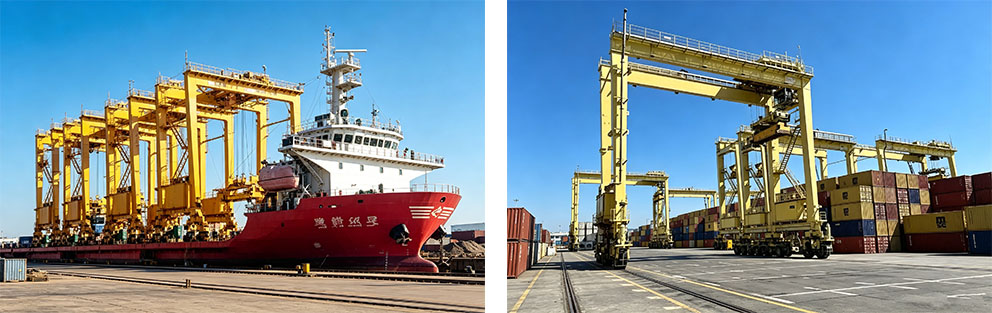
Thanks to its flexibility, high load-bearing capacity, and wide adaptability, the rubber-tyred container gantry crane plays an irreplaceable role in multiple fields. From port terminals to industrial factory areas, its application scenarios are constantly expanding, making it an important support for modern logistics and engineering operations.
Multimodal transport yards are key nodes connecting different transportation modes such as ships, trucks, and trains. rubber-tyred container gantry cranes undertake the task of container transfer across different transportation modes here. For example, they transfer containers unloaded from ships to trucks or trains, or stack containers arriving by land transportation for sea-bound transportation, ensuring a seamless connection of the logistics chain. The flexible movement ability of rubber-tyred container gantry crane enables them to adapt to complex operation routes in the yard, reducing the connection time between different transportation tools and improving the inter-modal transportation efficiency.
In large-scale logistics and distribution centers, rubber-tyred container gantry cranes are used to handle batches of heavy goods and large parcels. They can transfer goods from transport vehicles to storage areas or, according to order requirements, transfer goods from the storage area to the sorting line, optimizing the utilization of warehouse space. For the distribution of large-scale commodities such as furniture and mechanical equipment, rubber-tyred container gantry crane can efficiently complete loading and unloading operations, reducing the labor intensity of manual handling and shortening the goods-turnover cycle.
Railway maintenance yards need to frequently handle heavy components such as railway tracks, sleepers, and maintenance equipment, and the emergence of rubber-tyred container gantry crane has solved this problem. They can accurately hoist railway tracks for replacement, move large-scale maintenance machinery to the operation position, or transfer materials and tools required for maintenance. Their rubber-tyre design does not damage the railway tracks and can move flexibly in the complex terrain of the maintenance yard, supporting the daily maintenance and emergency repair work of railway facilities.
Industrial warehouses often store large-scale equipment and industrial raw materials (such as steel, pipes) and other bulky items. The strong load-bearing capacity of rubber-tyred container gantry crane makes them an ideal handling tool for such goods. They can transfer goods from the warehouse entrance to the designated storage area and improve the utilization of vertical space through stacking. In the warehouses of manufacturing enterprises, rubber-tyred container gantry crane can also cooperate with the production-line rhythm, timely deliver raw materials to the production workstations, or transfer finished products from the production line to the storage area, achieving an efficient connection between production and warehousing.
The rubber-tyred container gantry crane is widely used in fields such as logistics and ports due to its significant advantages in performance, cost, environmental protection, etc., making it the preferred equipment for many heavy-handling scenarios.
The rubber-tyre design of rubber-tyred container gantry crane gives them 360-degree steering ability, enabling them to move flexibly in narrow spaces and adapt to complex operation environments. Whether in the dense container areas of port yards or the equipment layout of factory workshops, rubber-tyred container gantry crane can efficiently complete goods transfer, reducing the impact of site restrictions on operations.
The rubber-tyred container gantry crane can handle not only standard containers but also various types of goods such as high-cube containers, break-bulk cargo, and engineering goods. By changing different lifting gears, they can meet diverse lifting needs without the need to configure separate equipment for different goods, reducing equipment investment costs and enhancing operational versatility.
The rubber-tyred container gantry crane has a relatively fast lifting and moving speed, enabling them to quickly complete the loading, unloading, and stacking of goods. At the same time, they can stack containers up to more than 6 layers, greatly improving the utilization rate of site space and storing more goods in a limited area, which indirectly improves the overall operational efficiency.
Compared with other container-handling equipment such as quay cranes, rubber-tyred container gantry cranes have lower operation and maintenance cost. Their rubber-tyre design does not require the laying of tracks or complex foundation structures, reducing infrastructure construction cost. In addition, rubber-tyred container gantry cranes have relatively low energy consumption, and long-term use can save a large amount of energy cost.
The rubber-tyred container gantry crane can be powered by clean energy sources such as electricity, LNG (liquefied natural gas), and hydrogen. Compared with traditional diesel-powered equipment, emissions are significantly reduced, helping to reduce environmental pollution in ports and industrial areas. In the context of increasing global environmental awareness, the environmental-friendly characteristics of rubber-tyred container gantry crane make them more in line with the requirements of sustainable development.
As a type of heavy-duty equipment integrating mobility and strong lifting capacity, the rubber-tyred container gantry crane plays an indispensable role in modern logistics, port operations, industrial production, and other fields. Its diverse types meet the operational needs of different scenarios, precise technical parameters ensure efficient and stable operation, wide-ranging application scenarios demonstrate its strong adaptability, and significant advantages make it an ideal choice for improving operational efficiency and reducing costs.
With the rapid development of the logistics industry and the advancement of industrialization, the technology of rubber-tyred container gantry crane is also constantly evolving. Automation, intelligence, and environmental protection will be its future development directions. Whether in busy port terminals or large-scale industrial factory areas, rubber-tyred container gantry crane will continue to play a core role, providing a solid guarantee for the smooth operation of the global supply chain. For enterprises, a deep understanding of the characteristics and applications of rubber-tyred container gantry crane and the rational selection and use of this equipment will help improve their operational efficiency and market competitiveness.