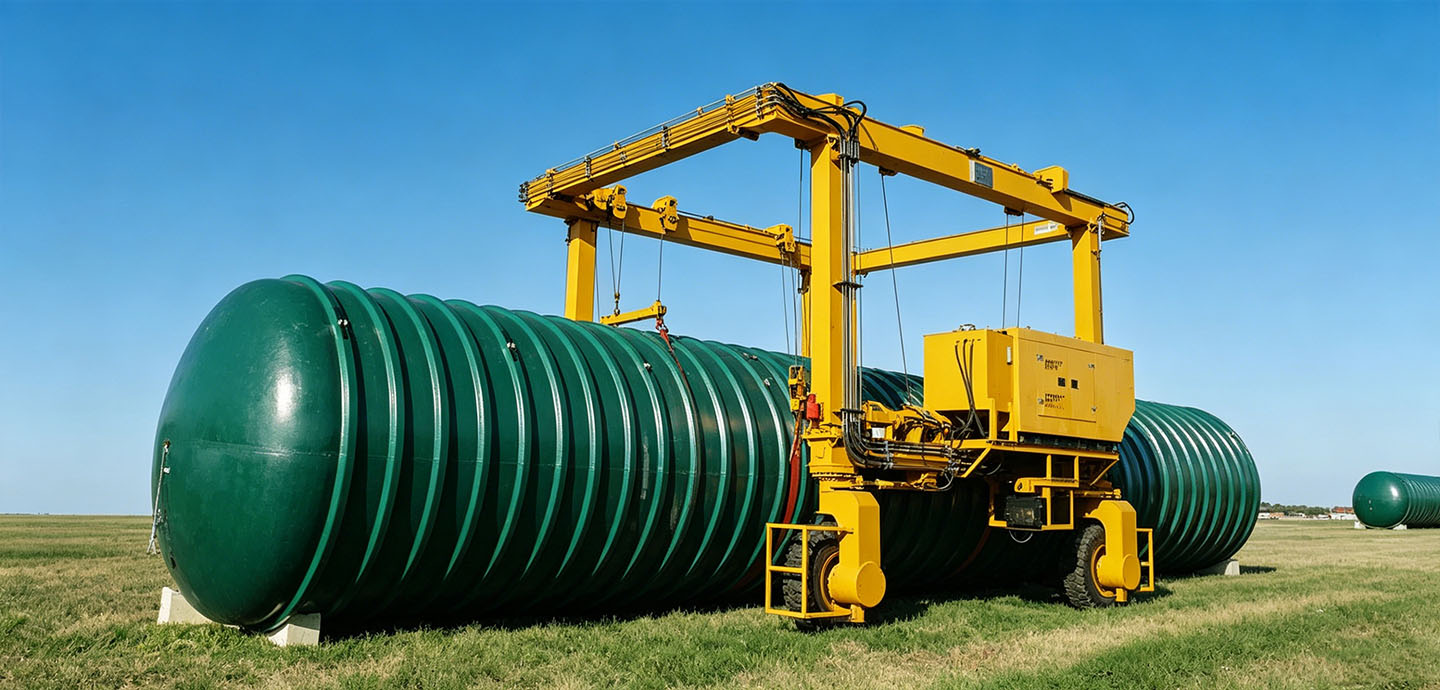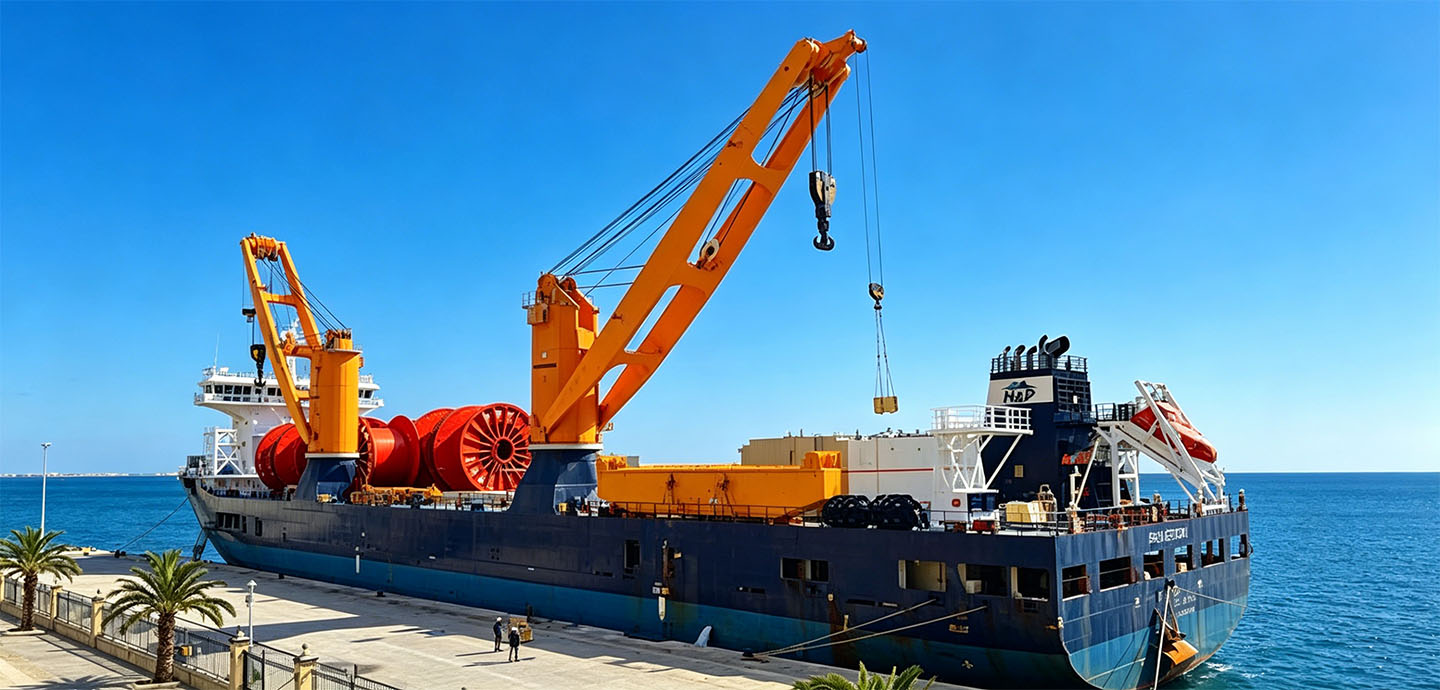
In a container yard, handling efficiency depends not only on equipment operating speed but also on the number of container handovers, storage layout, travel routes, and coordination between different stages of operation. When containers need to pass through multiple machines for unloading, transfer, stacking, and dispatch preparation, waiting times and coordination between equipment can extend the overall operating cycle. As container volumes increase, issues such as congested lanes, repeated handling, and container repositioning can put additional pressure on yard operations.
A container straddle carrier offers a different approach to equipment configuration for these operations. Within the limits of its rated capacity, lifting height, and site conditions, it can combine container lifting, short-distance transfer, and stacking in a single machine. Its rubber-tyred travel system also provides greater flexibility when planning internal yard routes and arranging container storage positions.
However, introducing a straddle carrier does not automatically guarantee improved yard efficiency. The actual results also depend on how well the equipment matches the yard layout, container specifications, and operating schedule. Understanding these factors helps determine whether a container straddle carrier is suitable for the specific handling requirements of a container yard.
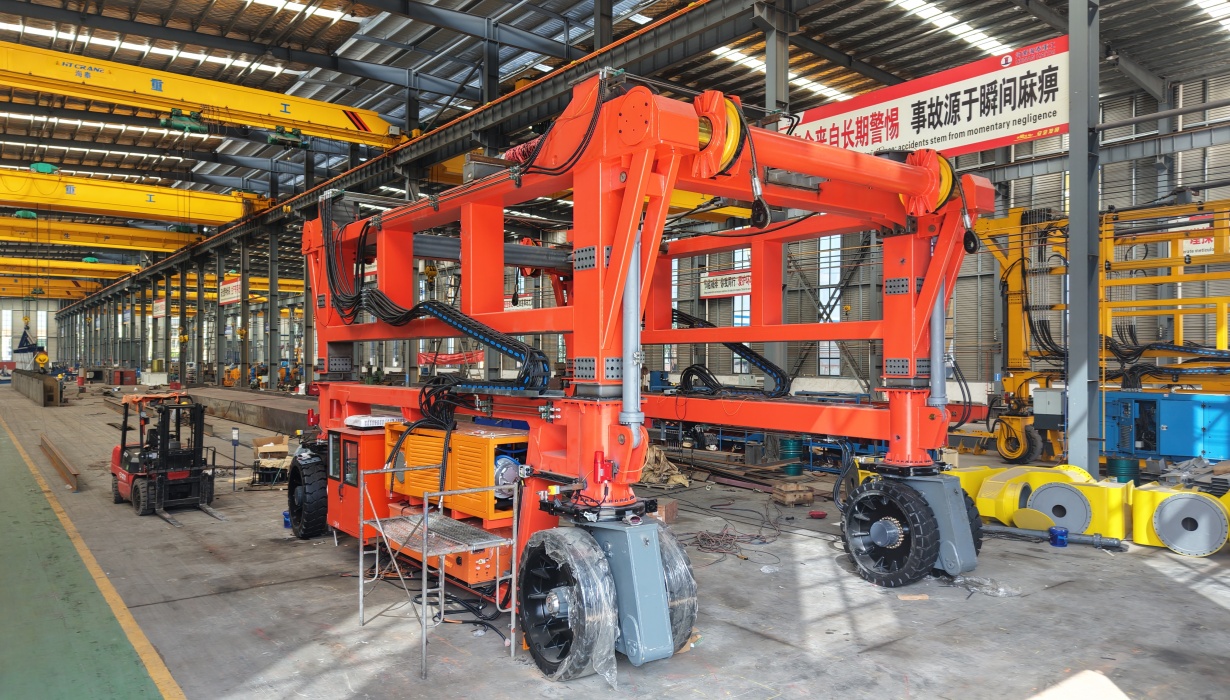
A container straddle carrier can improve yard efficiency in several ways, including combining equipment functions, reducing unnecessary handling, making better use of yard space, and adapting to changing operational demands.
In some traditional handling arrangements, container lifting and horizontal transport are carried out by separate machines. For example, lifting equipment may first place a container onto a transport vehicle, after which another machine takes over to stack it. Each additional equipment handover requires positioning, loading or unloading, and scheduling.
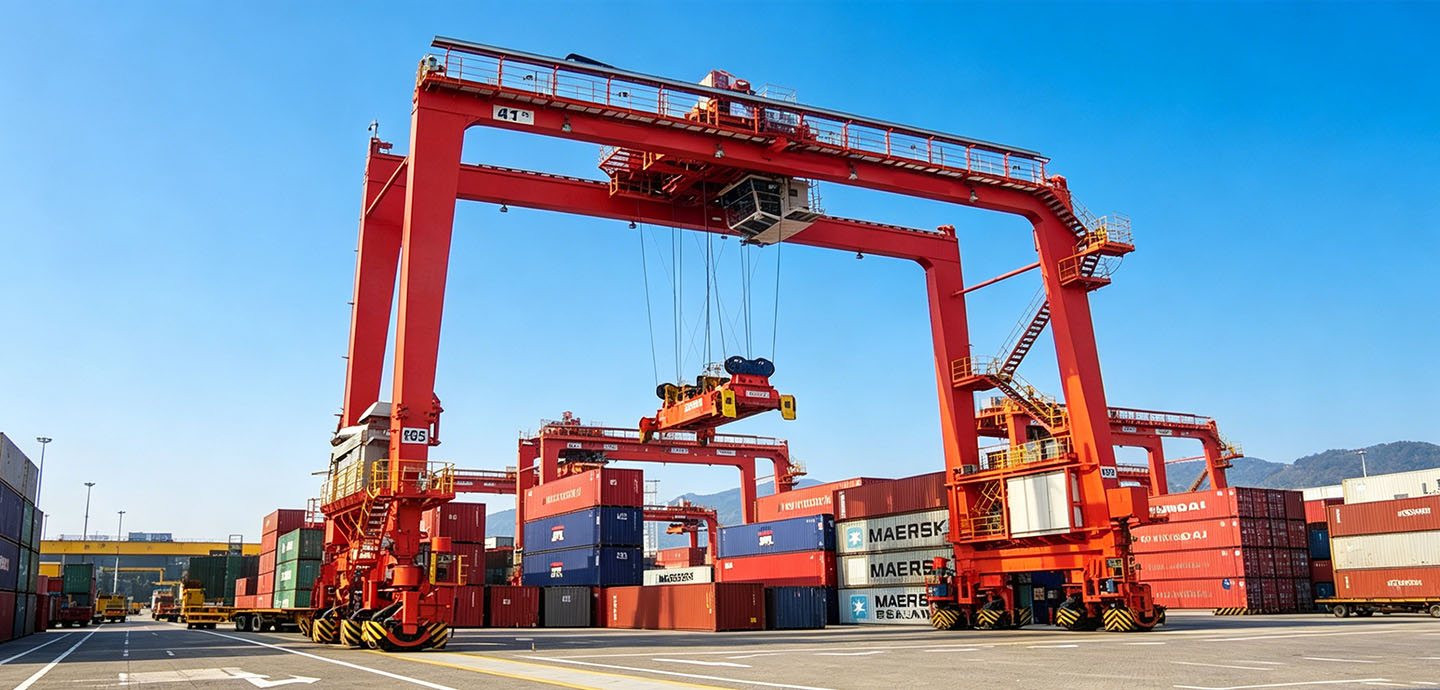
A container straddle carrier features a portal-style frame that allows it to travel over containers within its dimensional and operating limits. It uses a spreader to lock onto and lift the container, then carries it to the intended location. When the required operating conditions fall within the machine’s design capabilities, a single straddle carrier can carry out container pickup, short-distance transport, and stacking in sequence.
This integration can reduce the need for separate horizontal transport equipment in certain applications, making the movement of containers from the receiving point to the target storage position more direct. This approach is particularly worth considering for internal container transfers, restacking between adjacent areas, and short-distance handling between handover points and storage areas.
Repeated handling is an important factor affecting container turnover efficiency. When containers are transferred between different machines, the process often involves setting them down, repositioning equipment, and lifting them again. These operations take time and increase the workload involved in equipment scheduling and on-site coordination.
Where operating conditions permit, a straddle carrier can carry a container directly from the receiving point to its designated storage position, reducing the need to set it down temporarily and lift it again. A similar continuous handling approach can be used when moving containers from the storage area to a dispatch handover point.
The benefits of reducing repeated handling go beyond shortening individual operating cycles. When fewer handovers are required between stages, there may also be fewer machines and operational points to coordinate, helping reduce waiting times and scheduling conflicts.
However, the actual results depend on the existing handling process. If a yard already uses a well-coordinated combination of equipment, the extent of improvement offered by a straddle carrier needs to be assessed against the actual operating cycle.
Yard space utilization is closely related to equipment design, lane layout, stacking height, and container storage rules. A straddle carrier can travel over containers during handling. In a suitable layout, this can reduce reliance on certain types of lateral access space and provide more options for arranging container blocks and planning travel lanes.
Compared with equipment that needs to access containers from the side for pickup and placement, a straddle carrier operates differently. As a result, the required lane space and container block arrangements may also differ. For yards where container positions need to be adjusted frequently, careful planning of travel routes, pickup and placement positions, and handover areas can help balance space utilization with operational convenience.
However, a straddle carrier is not necessarily suitable for every compact yard. The equipment span, turning space, clear lane width, ground load-bearing capacity, and planned stacking height all need to be evaluated during the design stage.
When assessing the space-saving potential of a container straddle carrier, it should therefore be compared as part of the overall yard layout rather than judged solely by equipment type.
Cargo flows and handling tasks in a container yard change with orders, transport schedules, and inventory levels. At certain times, operations may focus on receiving incoming containers, while at others, priority may shift to organizing containers for dispatch or rearranging storage areas.
A container straddle carrier uses rubber-tyred wheels and is not directly restricted by fixed rails. Where site conditions and steering capabilities permit, it can move between different container blocks to handle container transport, stacking, pickup, and repositioning.
For example, when certain containers need to be moved to a handover area ahead of schedule, a straddle carrier can adjust the handling sequence according to the operating plan. When a particular container block needs to be reorganized, it can also pick up containers and restack them in new positions.
This flexibility helps yards respond to changing operational requirements, but it does not mean the equipment can move freely into every area without restrictions. Its actual operating range still depends on lane conditions, turning space, ground conditions, and equipment configuration.
In an actual container yard, a container straddle carrier typically works in coordination with external transport vehicles, handover areas, and storage plans. Its role in yard operations can be understood through three main stages.
When containers arrive at the yard by truck or other means of transport, a straddle carrier can move them to designated storage areas according to the handover arrangements. Under suitable operating conditions, the machine can handle both lifting and internal transport directly, reducing intermediate handovers.
At this stage, particular attention should be paid to the location of handover points, main travel routes, and coordination with external transport vehicles. Proper planning of entry and exit routes and handover areas can help reduce vehicle conflicts and unnecessary waiting.
Once a container reaches its designated storage block, the straddle carrier can stack it according to the yard plan. When container positions need to be changed, the machine can also pick up, move, and restack containers within the limits of its rated capacity and lifting capabilities.
Yard managers need to define container block allocations, storage sequences, and positions for containers awaiting dispatch in advance. This is particularly important in yards where containers need to be retrieved frequently, as well-planned storage positions can reduce subsequent reshuffling and repeated handling.
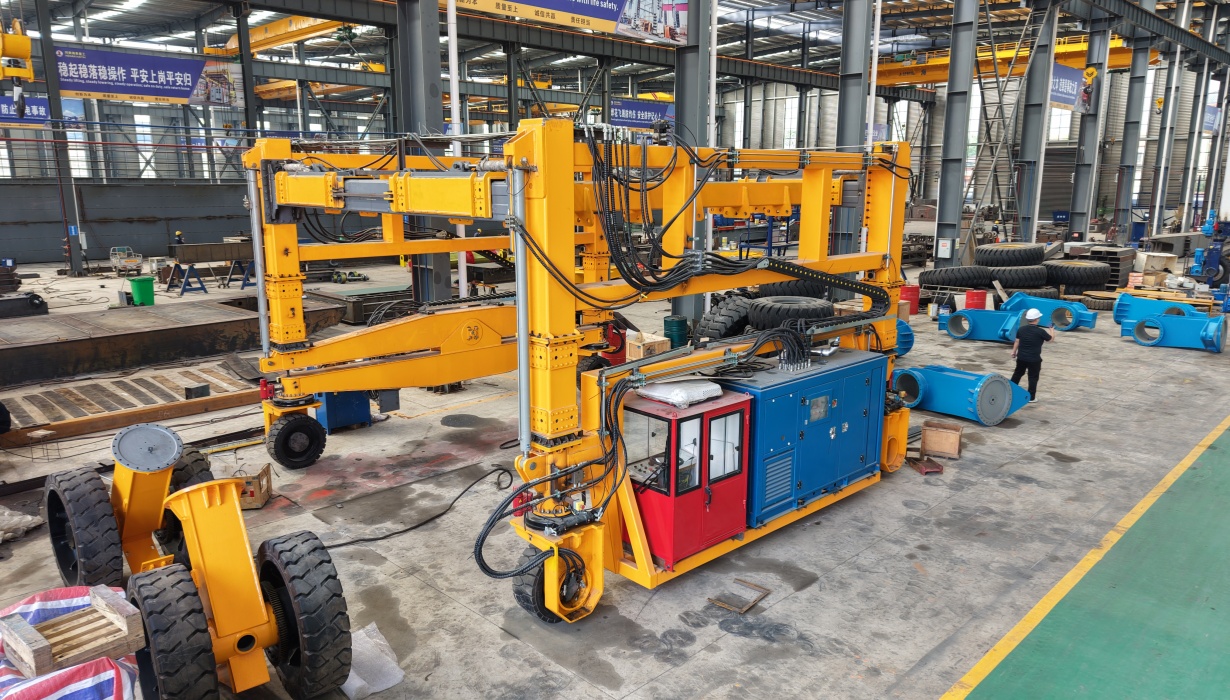
When a container is ready for dispatch, the straddle carrier can move it from its designated storage position to the assigned handover area, preparing it for loading onto a truck or transfer to the next stage of transport.
This stage needs to be coordinated with the transport schedule. Moving containers too early may occupy valuable space in the handover area, while moving them too late can increase truck waiting times. The handling sequence, handover location, and truck arrival times therefore all need to be included in the operating plan.
From receiving and storage to dispatch handover, a straddle carrier can take part in several consecutive stages of yard operations. However, the machine is only one part of the overall operating system. Route planning, task sequencing, and coordination at handover points also affect overall container turnover efficiency.
Container straddle carriers can be used in a variety of container handling applications, but whether they can improve yard efficiency depends on the actual operational requirements.
In yards with frequent container arrivals and departures, where short-distance transfers between storage blocks are common, a straddle carrier can handle receiving, transport, stacking, and container repositioning. Inland logistics hubs, rail freight terminals, and intermodal yards, for example, may need to move containers between different handover points and storage areas.
For these sites, it is worth assessing whether a straddle carrier can reduce equipment handovers in the existing workflow and whether the handling capacity of a single machine can meet demand during peak periods.
In some yards, container allocations and stacking plans change with cargo flows. Storage areas may need to be reorganized periodically, or containers awaiting dispatch may need to be moved to different positions.
Where lane layouts and ground conditions permit, a straddle carrier can move between different container blocks to accommodate these changing transport and storage requirements. For sites that do not want their operating range to be entirely restricted by fixed rails, this type of equipment offers a useful configuration option.
Container storage areas at manufacturing facilities, logistics distribution yards, and other industrial sites may need to handle incoming raw materials, outgoing finished products, and temporary container repositioning at the same time.
The workload, container specifications, and handling routes can vary across these sites. Equipment selection therefore needs to balance versatility with suitability for the actual operating conditions. Whether a straddle carrier is the right choice should be determined by considering container weight, required stacking height, yard layout, and daily handling frequency.
At the same time, yards focused on very high stacking, large-scale standardized operations, or specific automated workflows should compare straddle carriers with other suitable lifting and handling solutions. If the ground cannot support the required loads, lane space is restricted, or the equipment cannot cover the required operating area, the equipment configuration needs to be reassessed.
Even when the right container straddle carrier has been selected, its actual operating efficiency is still influenced by a combination of site conditions, equipment configuration, and operational management.
The yard layout directly affects a straddle carrier’s travel distance, number of turns, and handover efficiency. Clear lane width, spacing between container blocks, turning space, and the location of handover areas all need to match the machine’s dimensions and travel capabilities.
During the planning stage, it is worth mapping the container receiving points, main storage areas, and dispatch handover points to identify the most practical routes. Unnecessary detours and route intersections should be minimized, while sufficient space should be reserved for turning, passing other vehicles, and making necessary operating adjustments.
If the main operating routes are too long or there are no clear connections between high-traffic areas, even a machine with good operating performance may not be able to reach its full potential because of empty travel and waiting time.
Container specifications, maximum load weight, and the target number of stacking tiers are fundamental factors in determining the right straddle carrier configuration.
Handling 20ft, 40ft, and 45ft containers may involve different requirements for spreader compatibility, equipment span, and operating space. Whether a machine can handle multiple container sizes or use a twin 20ft container lifting arrangement depends on its specific design and technical specifications.
The rated capacity must cover the maximum weight encountered in actual operations, while the lifting height and clear height beneath the frame must accommodate the planned stacking height. If the machine’s capabilities are insufficient, some containers may not be handled or stored according to the intended plan. Conversely, a configuration that significantly exceeds actual requirements may increase purchasing and maintenance costs.
Before selecting equipment, it is therefore important to identify the container sizes handled most frequently, maximum container weight, target stacking height, and typical handling methods, rather than basing the decision on a single specification.
The steering system, power options, and control system affect how well a straddle carrier adapts to different site conditions and operating tasks.
Different models may use different steering configurations, and some machines are designed to move laterally or diagonally. For sites where equipment positioning needs to be adjusted frequently, lane width, turning space, and operating routes should be assessed to determine whether multidirectional steering is necessary.
The power system should be selected according to operating intensity, energy availability, working hours, and environmental requirements. Diesel powered, battery powered, and hybrid systems each have their own suitable applications. Actual operating range and continuous working performance depend on the equipment configuration and site conditions.
The control system should also match the way the yard is managed. If the project requires task dispatching, position feedback, or integration with a yard management system, interface requirements, the intended level of automation, and maintenance conditions should be clarified in advance rather than pursuing a higher level of automation simply for its own sake.
Equipment performance alone does not determine a yard’s actual throughput. Task allocation, potential route conflicts between vehicles, and the timely arrival of transport trucks all affect the overall operating cycle.
Setting task priorities appropriately, reducing unnecessary transfers between container blocks, and planning storage positions for containers awaiting dispatch in advance can help reduce certain types of waiting and repeated handling. In yards where several machines work together, operating zones and dispatching rules should also be clearly defined to prevent congestion caused by multiple machines gathering at the same handover point.
Equipment maintenance and operator training are equally important. Regular inspections of the travel system, brakes, spreader locking mechanisms, and hydraulic system can help reduce the risk of equipment breakdowns and unplanned downtime. The more familiar operators are with the machine’s controls, site routes, and safety requirements, the easier it is to maintain a consistent operating pace.
Ultimately, the actual efficiency of a straddle carrier depends on how effectively its capabilities work together with the yard layout, task scheduling, and day-to-day management.
When selecting a container straddle carrier for your yard, it is advisable to define your requirements in the following areas before discussing a specific equipment solution with the manufacturer.
Identify the container sizes and types to be handled, along with the maximum gross weight. Also confirm whether the yard needs to handle refrigerated containers, open-top containers, or other special container types. This information will affect the spreader type, rated capacity, and equipment structural design.
Determine the target number of stacking tiers according to the yard layout, then check the equipment’s lifting height, clear height beneath the frame, and any relevant operating limitations. The planned stacking height must be consistent with the equipment’s technical specifications and on-site safety requirements.
Provide the yard layout, main lane widths, turning space, road surface conditions, gradients, and ground load-bearing capacity. These details help assess the equipment’s travel routes, steering requirements, and suitability for the site.
Specify the average daily handling volume, workload during peak periods, typical transport distances, and the main process for moving containers from receiving to dispatch. Where necessary, analyze the main causes of waiting, repeated handling, and equipment conflicts in the existing workflow to identify which stages a straddle carrier could improve.
Confirm the required frame span, overall dimensions, steering modes, power system, spreader configuration, and control system according to the actual operating conditions. If the project requires coordination with existing transport vehicles or integration with a yard management system, the handover method and interface requirements should also be clarified in advance.
Equipment selection should not focus solely on a higher rated capacity, faster travel speed, or a greater number of features. The right solution is one that meets safety and operational requirements while matching the equipment’s capabilities to the site conditions, handling frequency, and long-term operating needs.
For projects with complex site conditions or demanding configuration requirements, an assessment based on a site survey and technical calculations is recommended. This can help reduce the risk of problems after installation, such as incompatible lane dimensions, restricted steering, or insufficient handling capacity.
By combining lifting, short-distance transport, and stacking operations, a container straddle carrier can reduce certain unnecessary equipment handovers and provide more options for internal container movement and yard space organization. In yards with frequent handling requirements or a need to adjust container positions dynamically, a properly configured straddle carrier can help simplify workflows and improve equipment scheduling and handover arrangements.
However, whether the equipment can genuinely improve yard efficiency still depends on how well the container specifications, site layout, equipment configuration, and operational management work together. Haitai Crane can provide customized container straddle carrier solutions based on customers’ container specifications, load requirements, target stacking height, and site conditions.
If you are planning a new container yard or looking to improve an existing handling process, you are welcome to share your yard layout, container specifications, and expected operating requirements with Haitai Crane. This will allow us to further assess the equipment configuration best suited to your project’s operating conditions.