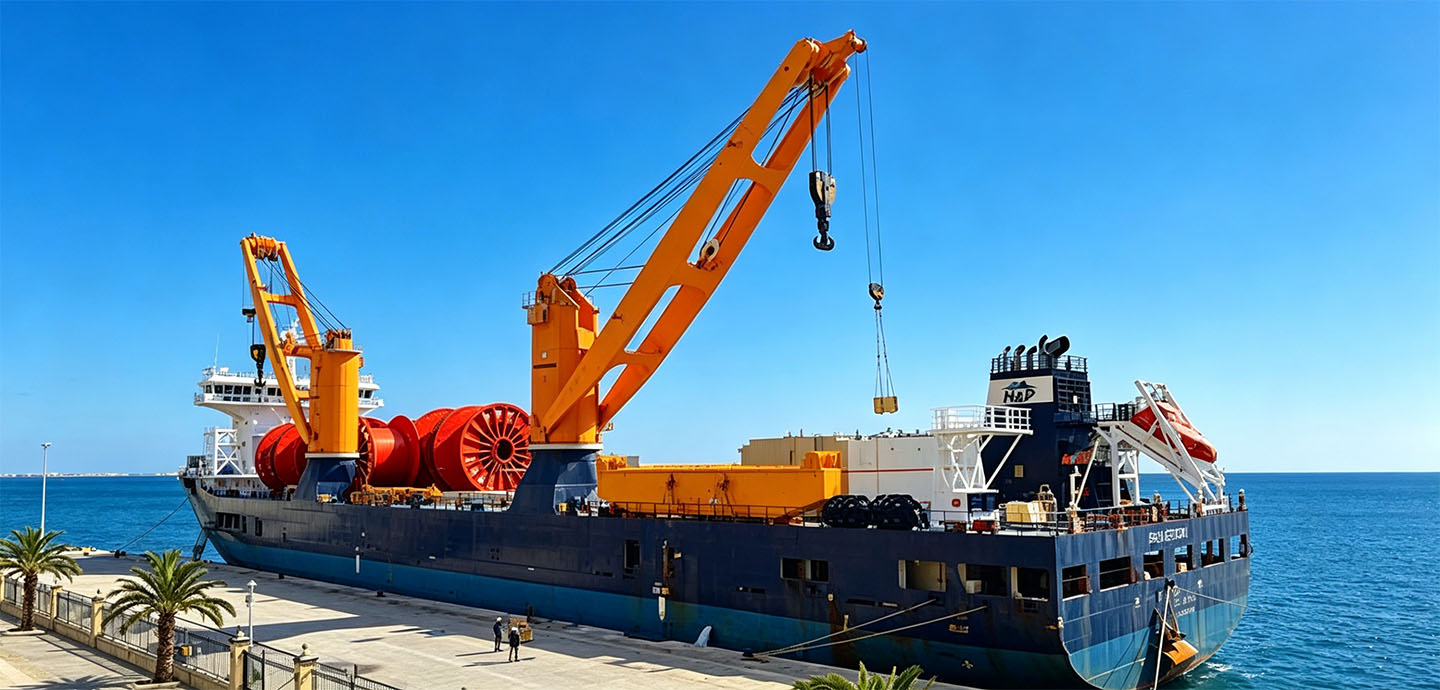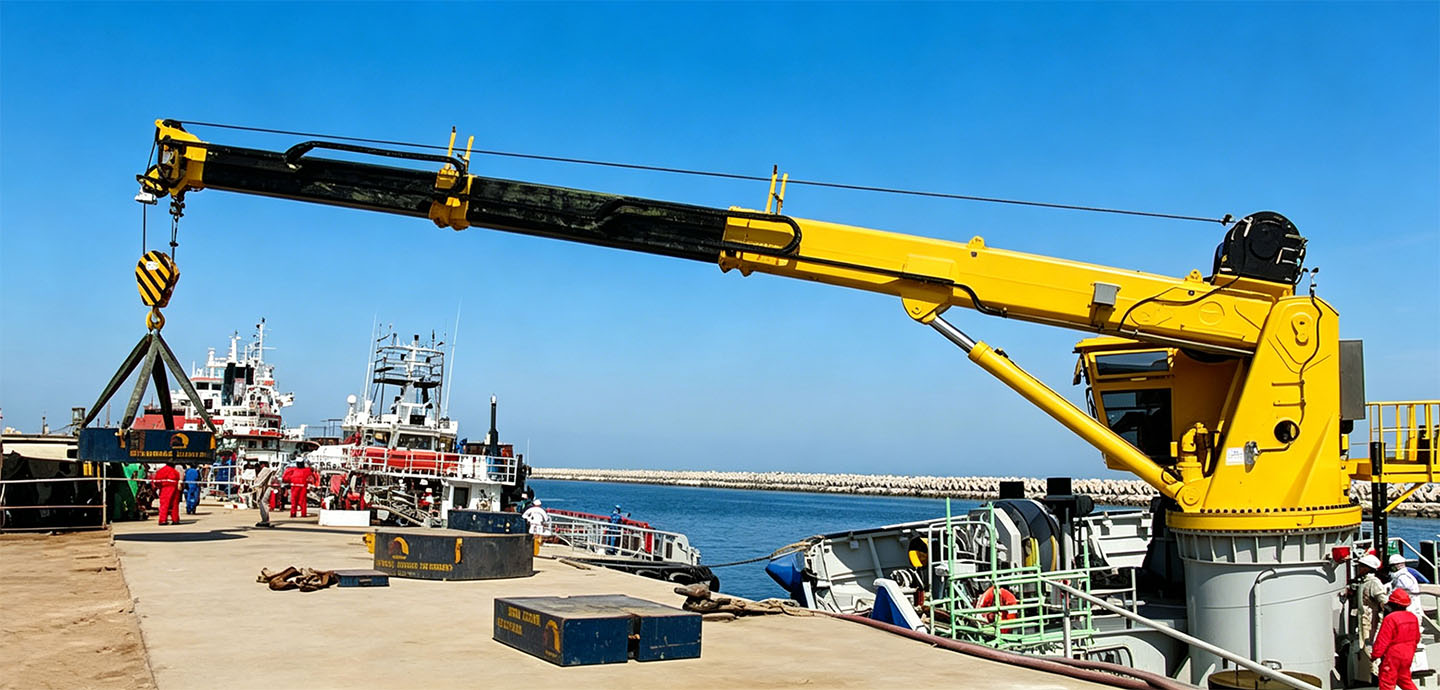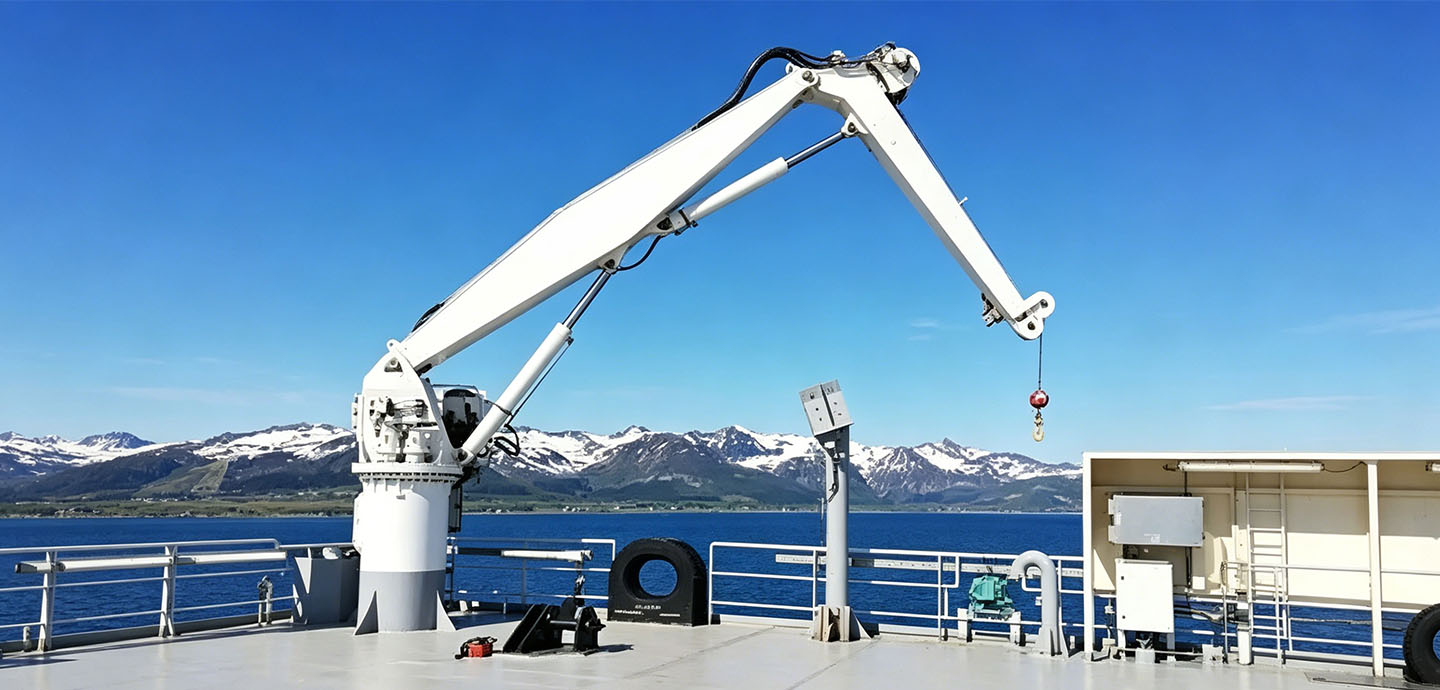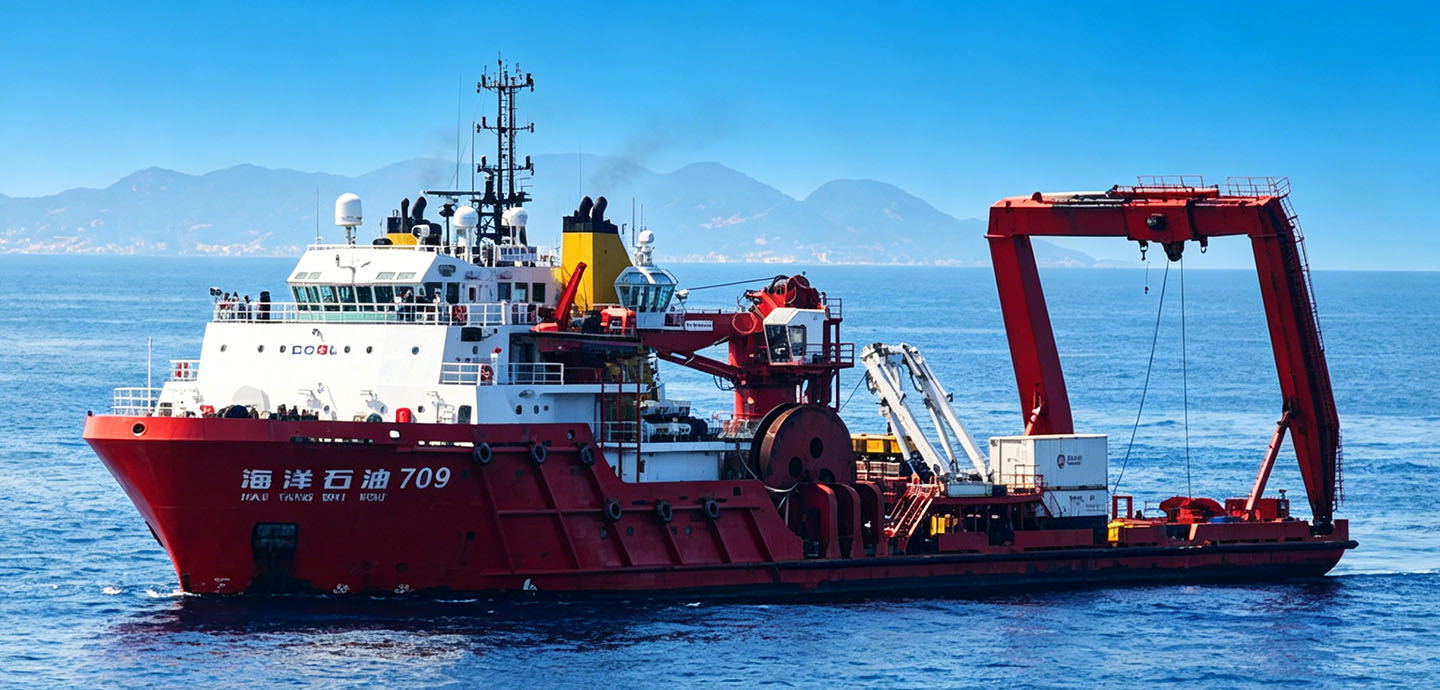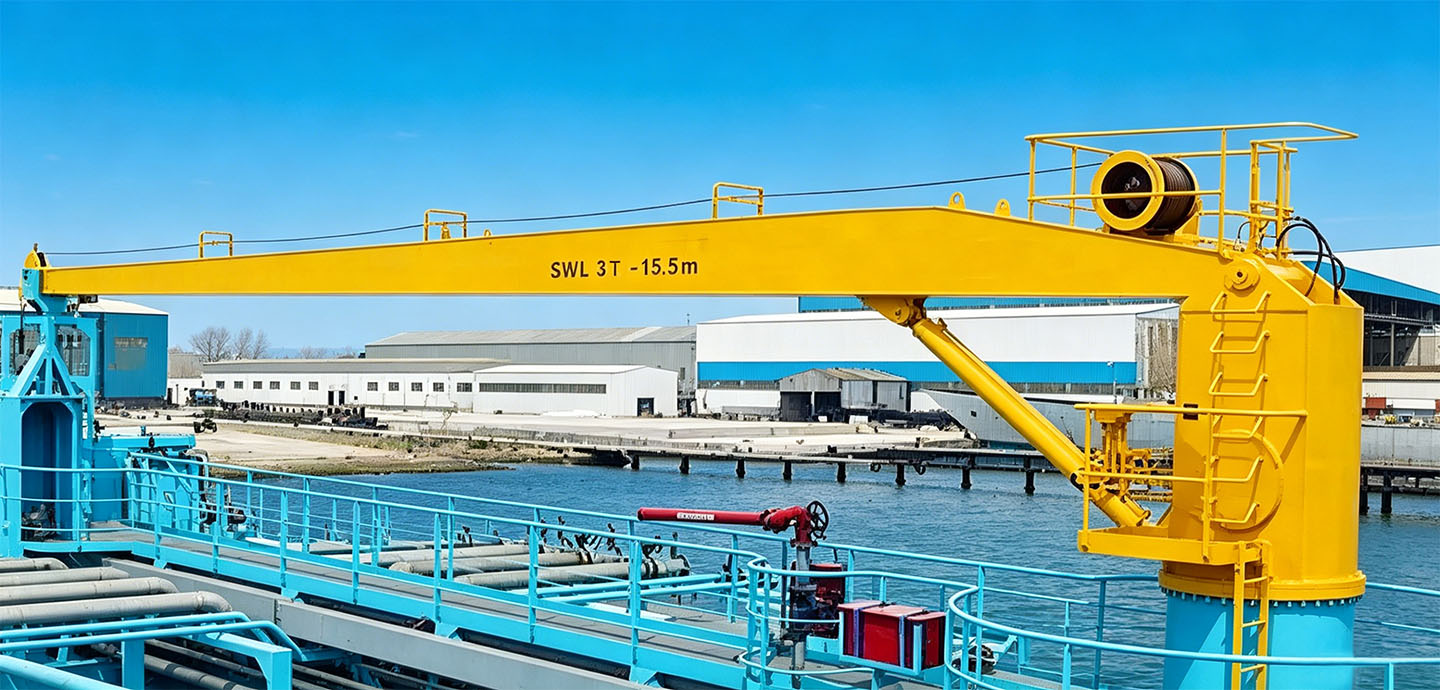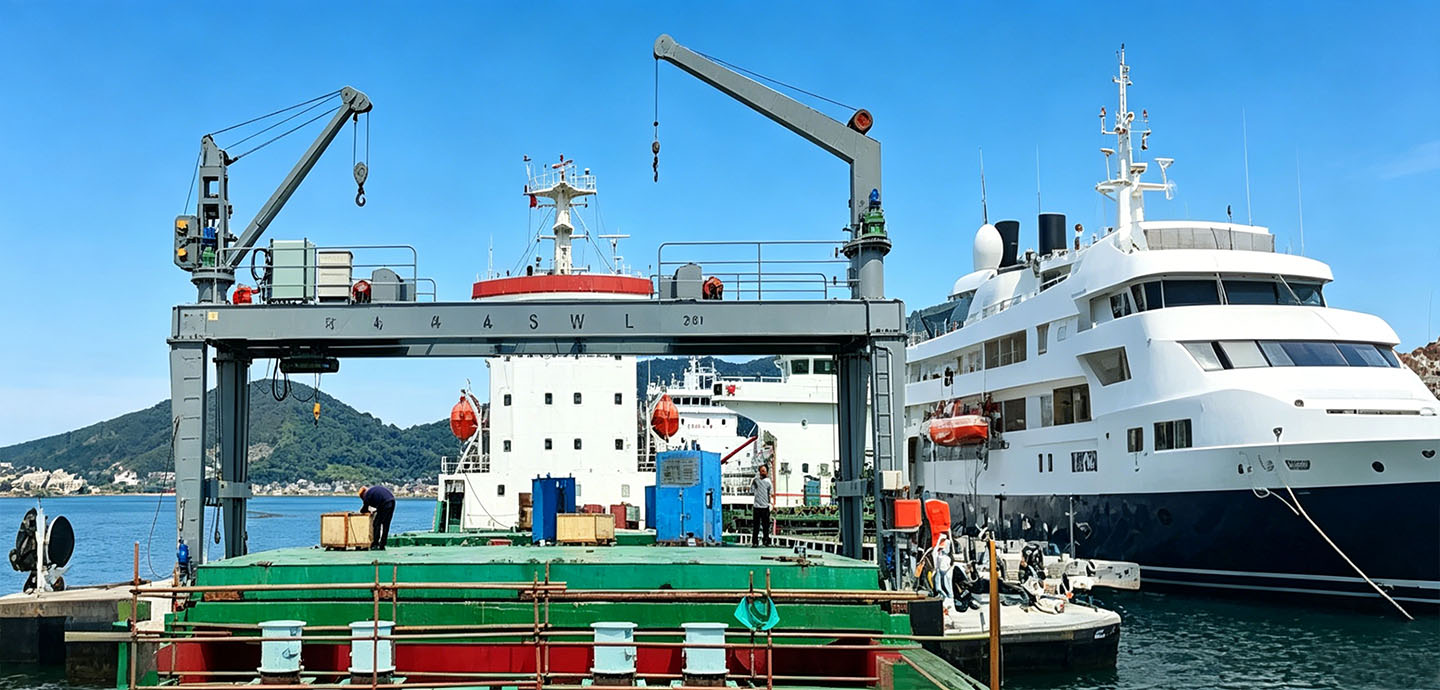
Marine cranes are widely used on cargo ships, workboats, offshore engineering platforms, in ports and shipyards, and in other marine applications. They are used for cargo handling, equipment lifting, vessel maintenance, and offshore operations. Different vessels and tasks have different requirements for crane capacity, working radius, installation space, and operating conditions.
When selecting a marine crane, a larger lifting capacity is not necessarily better. In addition to the maximum lifting capacity, factors such as available deck space, working range, vessel movement, wind and waves, and installation conditions must also be considered. If the crane specifications do not match the actual operating conditions, it may affect installation and daily operation, while also increasing maintenance costs and safety risks over time.
Therefore, choosing the right marine crane requires a clear understanding of the actual operating requirements, followed by a comprehensive assessment of the crane type, lifting capacity, working radius, installation space, operating environment, and safety certifications. This article covers the key factors to consider when selecting a marine crane, helping users choose equipment that better matches their vessel and working conditions.
The first step in selecting a marine crane is to clearly define its main purpose. Different applications have different requirements for crane movements, working range, lifting capacity, and protection measures. Once the application is clear, it becomes much easier to determine the appropriate crane type and specifications.
Cargo handling is one of the most common applications for marine cranes. They are mainly used for loading and unloading cargo while a vessel is in port or at anchor, as well as for handling deck materials and lifting supplies during voyages.
These operations typically involve relatively frequent lifting, stable loads, and a relatively concentrated working area. When selecting a crane for this type of work, greater attention is usually paid to operating stability, continuous-duty capability, and ease of routine maintenance. There is generally less need for an extremely large working radius or complex boom movements.
Most workboats and engineering vessels are equipped with cranes for installing, removing, and handling large spare parts, tools, machinery, and power components on board. Typical examples include vessel engine components, hydraulic equipment, maintenance tools, and deck machinery.
The loads involved in these operations can vary considerably. Some heavy equipment is not only large in weight but also bulky in size, while the lifting location may vary from one task to another. Compared with general cargo handling, this type of operation places greater demands on crane stability under different load conditions, as well as on accurate positioning and precise lifting control.
Offshore applications, including offshore platforms, offshore wind turbine maintenance, and offshore engineering vessels, generally involve more challenging conditions than nearshore operations. During lifting operations, the crane may be exposed to changing wind conditions, wave motion, and vessel movement.
For these applications, the crane must do more than simply meet the required lifting capacity. It also needs to operate reliably in a dynamic marine environment. This places higher demands on structural strength, operational stability, corrosion resistance, and safety protection features.
Cranes used with yachts, small workboats, and recreational vessels are mainly used for launching and hauling out small boats, maintenance work, and handling yacht equipment and related supplies.
This type of application usually places greater emphasis on compact size, flexibility, and ease of operation, while the demand for very high lifting capacities is relatively low. However, there may be stricter requirements for the space occupied by the crane when retracted, operating noise, and lifting accuracy.
After defining the application, the next step is to select a suitable crane type. Different types of marine cranes have their own advantages in terms of working range, use of available space, and operating flexibility. The required working range, available deck space, type of lifting tasks, and operating environment are the key factors to consider when choosing the crane type.
A straight boom marine crane has a relatively simple structure, good overall rigidity, and straightforward operation, making it suitable for a wide range of conventional vessel lifting tasks.
It is better suited to applications where the working range is relatively fixed and operating conditions are stable, such as cargo handling on general cargo ships and material handling within designated areas of the deck. For vessels that do not require a wide adjustment of the working angle or place a strong emphasis on folding and storage, a straight boom crane is generally a practical choice.
The main feature of a telescopic boom crane is that the boom length can be adjusted according to the lifting requirements. This allows the crane to adapt well to different working distances while taking up relatively little space when the boom is retracted.
This type of crane is suitable for vessels with limited deck space where lifting points are located at different distances. By adjusting the boom length, the crane can handle tasks ranging from short-distance lifting to material transfer over longer distances, giving it certain advantages on vessels where space is restricted.
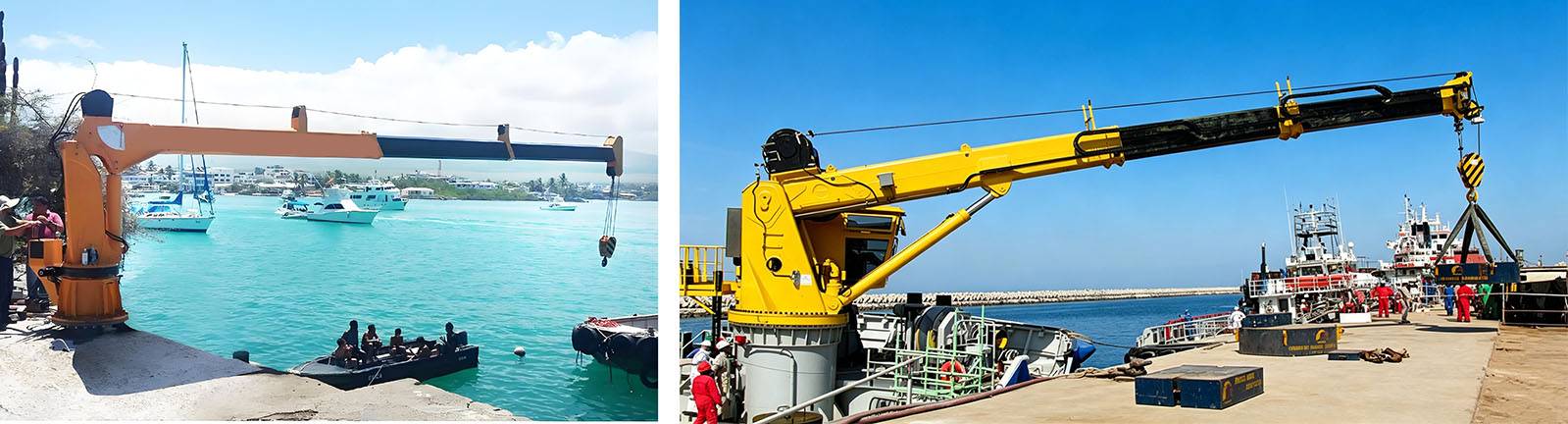
A knuckle boom marine crane offers a high degree of operating flexibility. Its boom can be folded and adjusted to different angles, allowing the crane to better avoid obstacles such as deck railings, equipment, and cabins.
This type of crane is suitable for offshore engineering, workboats operating under complex conditions, and vessels with relatively limited deck space. When lifting tasks involve numerous obstacles, complicated working angles, or require fine positioning adjustments, a knuckle boom crane can provide better adaptability.
Overall, the right crane type should be determined by the required working range, available deck space, type of lifting tasks, and operating environment, rather than simply by equipment price or rated specifications.
Lifting capacity is one of the key parameters when selecting a marine crane and is also one of the specifications users pay the most attention to. However, the selection should not be based solely on the crane’s rated lifting capacity. The required capacity also needs to be calculated based on the load, lifting accessories, and actual operating conditions. If the load calculation is incomplete, the crane may be undersized, increasing the risk of overload. On the other hand, choosing a crane with an unnecessarily high lifting capacity can result in higher equipment costs and wasted space on the vessel.
When determining the required lifting capacity of a marine crane, the first step is to identify the maximum load that may occur during actual lifting operations. The basic figure is usually the maximum weight of the cargo itself, but the total lifting load should also include the weight of the hook, slings, lifting devices, and other auxiliary equipment.
For projects equipped with spreader beams, special clamps, or other customized lifting devices, the self-weight of these components must also be included in the total load. Only by taking the weight of both the cargo and lifting accessories into account can the required lifting capacity of the marine crane be determined more accurately.
It is also important to distinguish between the maximum lifting load and the load commonly handled in daily operations. For extreme loads that occur only occasionally, it is not advisable to select a crane with a lifting capacity far beyond the actual requirements simply to accommodate infrequent situations. Instead, the selection should take into account equipment usage frequency, typical lifting tasks, and the overall operating conditions.
The rated lifting capacity of a marine crane is determined under specified design conditions, while actual offshore operations can be much more complex. During operation, the vessel may be affected by wind and waves, vessel movement, and suspended load swing, meaning that the actual load condition can differ from a static calculation.
Therefore, it is not enough to determine whether a crane meets the project requirements based only on its rated lifting capacity. The actual working radius, sea conditions, vessel movement, and lifting method also need to be evaluated together. This is particularly important for offshore or dynamic marine operations, where the dynamic effects caused by suspended load movement need to be fully considered to ensure that the crane has sufficient load-bearing capacity under actual working conditions.
When determining the rated lifting capacity of a crane, it is not recommended to have the equipment operate continuously at its rated limit. Long-term operation close to the maximum lifting capacity increases the working load on structural components, the hydraulic system, and other key parts, and may also shorten the service life of the equipment.
A reasonable load margin should be determined based on the maximum lifting load, working radius, operating frequency, sea conditions, vessel movement, and applicable design standards. For projects with relatively stable operating conditions, an appropriate margin can be set according to the actual design requirements. For offshore operations involving complex sea conditions and significant dynamic loads, a more thorough load assessment is required.
For the final selection, the crane’s rated lifting capacity should be sufficient to cover the actual maximum working load while leaving reasonable room for normal variations in operating conditions, rather than simply pursuing a higher rated capacity. This approach can meet the actual lifting requirements while also helping control equipment dimensions, installation space, and the overall procurement cost.
The working radius is an important parameter that is often overlooked and can easily lead to an unsuitable crane selection. A marine crane advertised as a “10ton marine crane” or “20ton marine crane” usually has its rated lifting capacity specified at a particular working radius. As the working radius changes, the actual lifting capacity also changes accordingly.
The maximum working radius refers to the farthest working distance that the crane boom can reach and directly determines the coverage of the lifting operation. During selection, the vessel’s actual operating requirements should be considered to determine the farthest lifting point that the crane needs to reach.
For example, operations such as supplying materials over the side of a vessel at a long distance, recovering equipment from the water, and transferring cargo alongside the vessel all require a sufficient maximum working radius. If the working radius is insufficient, the crane may not be able to complete the actual lifting task even when its rated lifting capacity meets the load requirement.
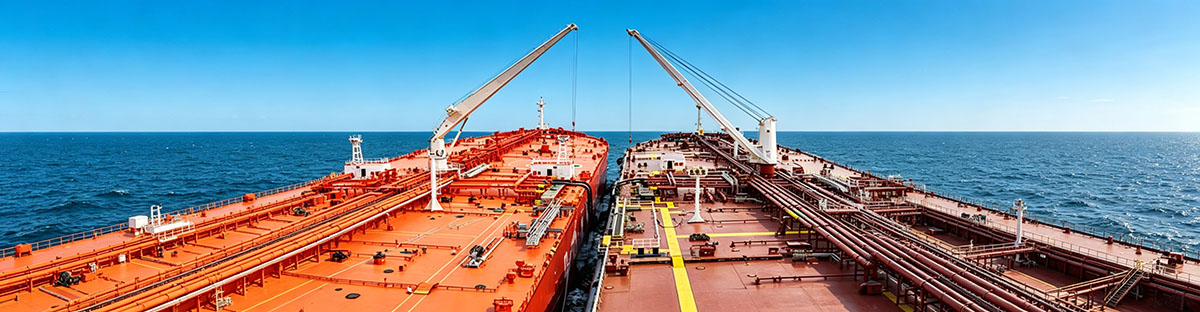
Many users focus only on the maximum working radius while overlooking the requirements for lifting at close range. The minimum working radius determines the crane’s operating capability and coverage when working close to its mounting base.
Equipment installation and removal near the deck, lifting materials through hatches, and handling supplies over short distances all require a suitable minimum working radius. If the minimum radius is not properly considered, blind spots may occur during close-range operations, making it impossible to cover important working areas.
The lifting capacity of a marine crane is closely related to its working radius. In general, as the working radius increases, the actual load that the crane can lift decreases accordingly. This is an important factor to consider when selecting a marine crane.
For example, a marine crane with a rated lifting capacity of 10 tons may achieve this rated capacity at a specific working radius. When the working radius increases, the actual lifting capacity at that position may decrease significantly.
Therefore, crane selection should not be based only on the rated tonnage. The load chart and the working radii most commonly used in the actual operation should also be considered to confirm the lifting capacity available at different working positions. This ensures that the crane can meet the operating requirements throughout its main working range.
Meeting the required specifications does not necessarily mean that a marine crane can be installed and operated properly. The equipment must also match the vessel’s deck layout, available installation space, and surrounding facilities. Some selection problems are not caused by insufficient crane performance, but by overlooking actual installation conditions at an early stage, which can eventually result in installation difficulties, interference during operation, or restricted access.
First, the available deck area for installation needs to be measured to confirm whether the crane foundation dimensions and mounting points are compatible with the vessel structure. The installation position should also be properly determined to avoid major passageways, equipment operating areas, and emergency escape routes.
The structural strength of the crane foundation also requires careful checking. The vessel foundation must not only support the crane’s own weight but also withstand the dynamic loads generated during lifting operations. For older vessels or areas where the deck has limited load-bearing capacity, a structural assessment should be carried out in advance, with reinforcement measures taken where necessary based on the actual conditions.
In addition, the available overhead space above the deck needs to be checked to ensure that the boom will not interfere with the wheelhouse, masts, lights, antennas, or other equipment during lifting, slewing, telescoping, or folding operations. The crane’s entire operating envelope should also be checked to prevent contact with railings, hatch covers, pipelines, and other deck equipment, while maintaining the necessary safety clearances.
For vessels with limited deck space, a compact crane with a folding or telescopic boom can be considered. By optimizing the crane structure and reducing the space occupied when the equipment is retracted or folded, this type of crane can make better use of the available deck space while still meeting the required lifting tasks.
Marine operating conditions can be complex and changeable. Different vessels may operate in different sea areas, sailing conditions, and duty levels, and these factors can all affect the crane’s structural configuration, protection requirements, and material selection. Selecting a crane without considering the actual operating environment may result in insufficient corrosion resistance, reduced operating stability, or more frequent maintenance.
The type of vessel and its intended operation determine the crane’s usage frequency and duty level. Cargo ships generally focus on stable and routine cargo handling, with relatively regular lifting operations. Workboats and engineering vessels have more varied lifting tasks, and the crane may also be used more frequently.
Offshore workboats and service vessels need to operate in offshore waters for extended periods, where operating conditions can vary considerably. Fishing vessels generally need to adapt to nearshore working environments and have certain requirements for equipment stability and resistance to vessel motion. Yachts, on the other hand, tend to place greater emphasis on compact equipment, low operating noise, and overall appearance.
Therefore, crane selection should take into account the vessel type and actual application, with the appropriate equipment strength, operating method, and protection requirements selected accordingly.
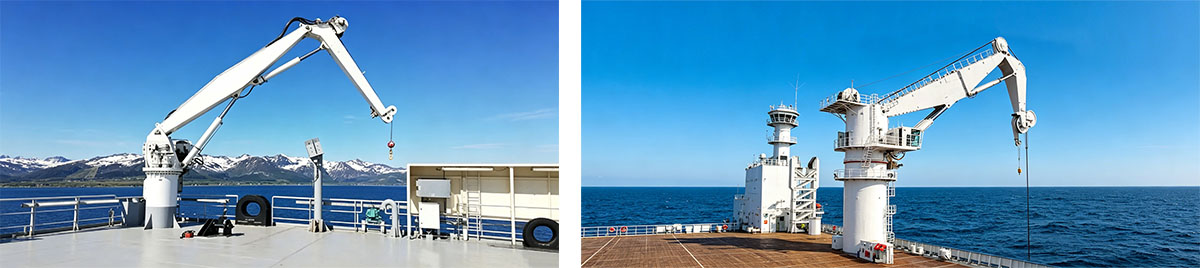
Wind, waves, and vessel motion are common factors that affect offshore lifting operations. Strong winds increase the wind load acting on suspended cargo, while waves and vessel movement can cause the load to swing and generate dynamic loads.
Vessels that regularly operate in rough sea conditions or areas with strong winds require cranes with the appropriate structural strength and stability for the actual operating conditions. During the design process, the effects of dynamic loads on the equipment should also be fully considered to reduce the risk of excessive load and abnormal movement during lifting operations.
Salt spray and high humidity in marine environments can accelerate the corrosion of metal equipment. Corrosion protection is therefore an important factor in ensuring the long-term and stable operation of a marine crane.
The equipment materials should be selected according to the actual marine environment, using suitable grades of steel and other materials. Surface treatments such as shot blasting, anti-corrosion primer, and protective topcoats can also be applied to improve corrosion resistance.
At the same time, key components such as hydraulic piping, electrical control components, and slewing bearings require proper sealing and protection to reduce the risk of seawater, moisture, and salt spray entering the equipment. This helps reduce the likelihood of electrical faults, hydraulic leaks, component jamming, and other problems.
Lifting height and boom length are different selection parameters from the working radius and cannot replace one another. The working radius mainly determines the horizontal coverage of the crane, while the lifting height determines the available vertical lifting space. Together, they affect the crane’s actual working range.
During selection, the maximum lifting height required for the actual operation should first be determined. This height needs to cover the complete vertical travel of the load, whether from the deck to the sea surface or from the deck to the equipment installation position, to avoid situations where insufficient lifting height prevents the load from reaching its intended position.
Boom length affects the coverage of both lifting height and working radius, so the appropriate boom length needs to be selected based on the vessel dimensions, lifting height, and lifting distance. The working angle of the boom should also be considered to ensure that the crane can meet the actual lifting requirements at commonly used operating angles.
In addition, sufficient safety clearance above the deck should be maintained to prevent the load from colliding with deck equipment, cabin structures, or other obstacles during lifting and movement. Adequate operating space should also be left for personnel to assist with load positioning and securing.
The hydraulic and control systems are key power and operating units of a marine crane. They directly affect the stability of crane movements, operating efficiency, and ease of operation. When selecting a crane, there is no need to pursue unnecessarily complex configurations. Instead, the system should be matched to the actual operating frequency and control requirements.
The hydraulic system directly affects crane movements such as lifting, slewing, and boom telescoping. For routine lifting operations with a normal operating frequency, a standard hydraulic configuration can usually meet basic requirements while also making subsequent maintenance easier.
For engineering vessels that require continuous heavy-duty operation or frequent starting and stopping, the hydraulic system should be selected according to the actual operating conditions, with suitable flow rate, pressure, and heat dissipation capacity to support long periods of continuous operation.
A conventional local hydraulic control system has a relatively simple structure and is easy to maintain, making it suitable for routine lifting operations.
Wireless remote control provides greater flexibility, allowing operators to observe the lifting operation from a relatively safe position. It is suitable for complex working environments or applications that require more flexible control. Proportional control allows smooth adjustment of lifting, slewing, and boom movements, helping reduce load swing and improve operating precision.
Users can select the appropriate control method based on the complexity of the lifting tasks, operational safety requirements, and equipment usage preferences, achieving a reasonable balance between required functions and equipment cost.
As an important lifting system installed on vessels, a marine crane requires careful attention to its safety features and relevant certifications during the selection process. These factors are directly related to safe operation and the compliance requirements of the project.
A marine crane should be equipped with appropriate safety protection devices according to its design and actual operating conditions. An overload protection device can provide protection when the load reaches a preset value, reducing the risk of overload operation. An emergency stop device allows the relevant crane movements to be stopped quickly in an abnormal situation.
Travel limit devices and load monitoring systems help control the crane’s operating range and working load. Hydraulic safety valves, slewing protection devices, and other safety components can also provide corresponding protection for the hydraulic system and slewing mechanism.
The specific safety configuration should be determined according to the crane type, operating environment, and applicable design standards, rather than simply applying the same configuration to every crane.
Different navigation areas, vessel types, and project requirements may involve different certification standards. Common classification societies include CCS, ABS, DNV, and BV.
Not every crane needs to obtain all of these certifications. For each project, the applicable certification category and inspection requirements should be confirmed based on the vessel’s classification society, navigation area, as well as customer and project requirements. This ensures compliance while avoiding unnecessary certification costs.
A standard marine crane may not be suitable for every vessel or specific operating condition. Some offshore projects require customized solutions based on the vessel structure and actual application requirements. The focus of marine crane design should be to make the equipment fit the vessel, rather than requiring the vessel to adapt to standard equipment.
The customization range can cover the main parameters of the complete crane and its supporting configurations, including lifting capacity, working radius, boom length, mounting dimensions, and slewing angle. The hydraulic system, control method, surface corrosion protection, and sealing and protection configuration can also be adjusted according to actual requirements.
For special projects, the corresponding classification society certification can also be provided according to project requirements to meet the needs of specific navigation areas and operating conditions. Whether it is a compact crane designed for vessels with limited deck space or a heavy-duty crane intended for operations in challenging sea conditions, targeted design can provide a better match for the actual operating environment.
Therefore, selecting a marine crane should not simply mean choosing from a standard specification table. The crane should be designed based on the vessel layout, operating conditions, and project requirements, helping reduce specification mismatches and equipment compatibility issues from the beginning.
Preparing complete information about the vessel and operating conditions before consultation and ordering can help the manufacturer develop a more accurate equipment solution while reducing repeated confirmation and later modifications. The following key information is generally recommended.
First, clarify the vessel type and its main dimensions so that the manufacturer can understand the application for the equipment. Next, identify the key operating parameters, including the maximum lifting load, commonly used working radius, and required lifting height, and clarify the main lifting tasks that the crane needs to perform.
The deck installation conditions should also be provided, including the available installation space, planned mounting position, and deck structure. The normal operating environment should also be described, such as the operating sea area, sea conditions, wind conditions, and the level of salt spray and corrosion exposure.
Finally, confirm the project’s compliance requirements, including the required classification society certification, vessel power supply parameters, and hydraulic system requirements. The more complete the information provided, the easier it is for the manufacturer to develop a crane solution that matches the actual operating conditions, while also reducing the need for modifications and rework at a later stage.
The key to selecting a marine crane is to determine the equipment configuration based on the actual lifting tasks and vessel operating conditions, rather than simply comparing rated lifting capacities. The selection process should take into account lifting load, working radius, lifting height, available deck installation space, marine environment, and safety certification, while balancing operational requirements with equipment cost and future maintenance.
Haitai Crane specializes in the design, manufacture, and customization of marine cranes. Based on the structural characteristics of different vessels, lifting requirements, and operating environments, Haitai Crane can provide tailored equipment solutions for lifting operations on cargo ships, workboats, engineering vessels, offshore engineering projects, and other applications.