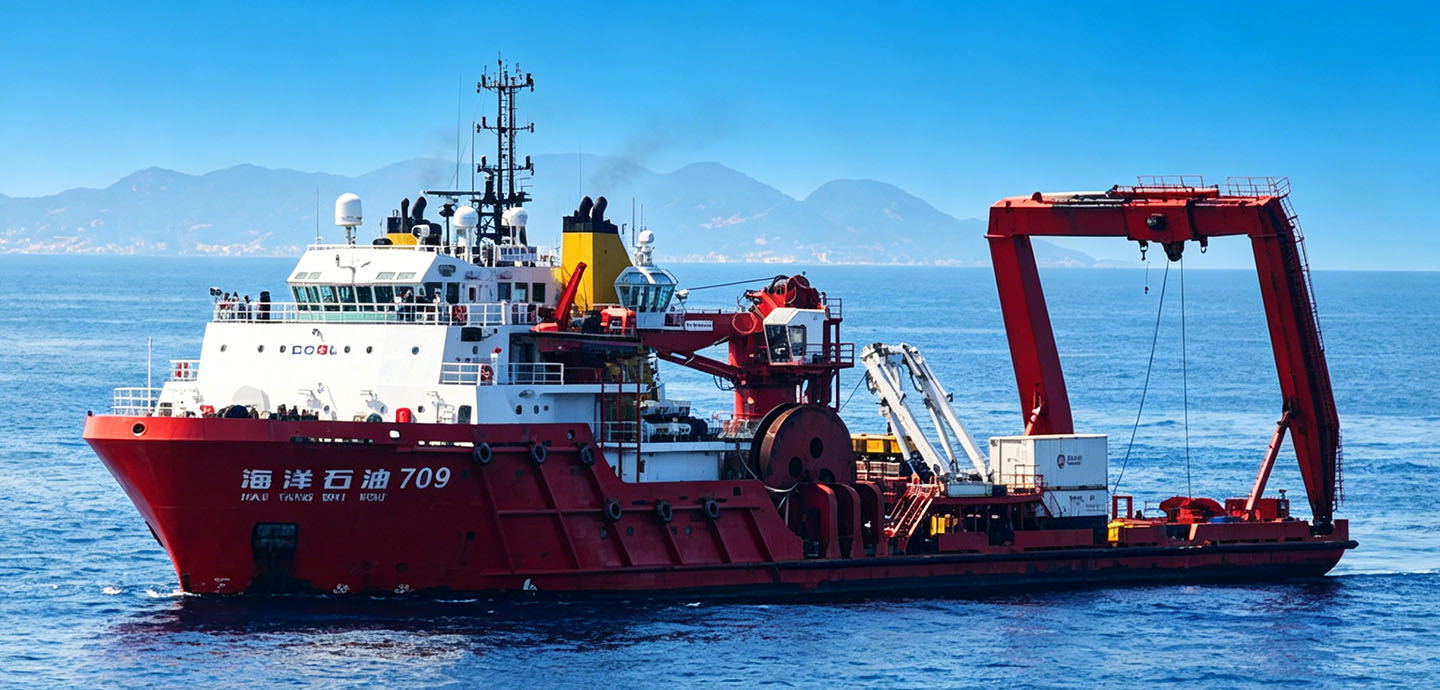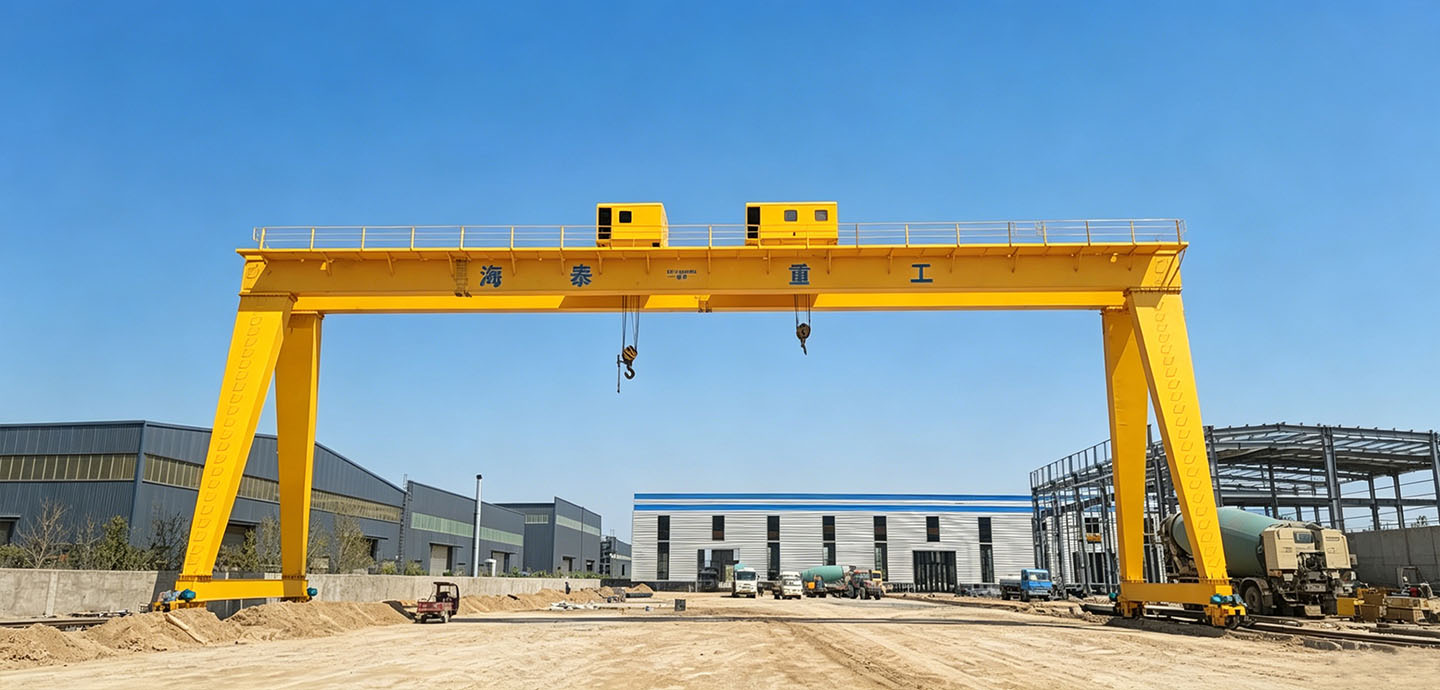
Against the backdrop of deepening global trade, ports, container terminals, and logistics hubs serve as core nodes for cargo transshipment. Their operational efficiency directly impacts the overall flow velocity of supply chains. Industry data indicates that approximately 80% of global trade goods are transported via containers, with container handling often representing the critical bottleneck constraining the throughput capacity of logistics hubs. Traditional handling methods relying on equipment like forklifts and gantry cranes frequently encounter issues such as low space utilization, disjointed operational workflows, and high labor costs, making them ill-suited to meet modern logistics demands.
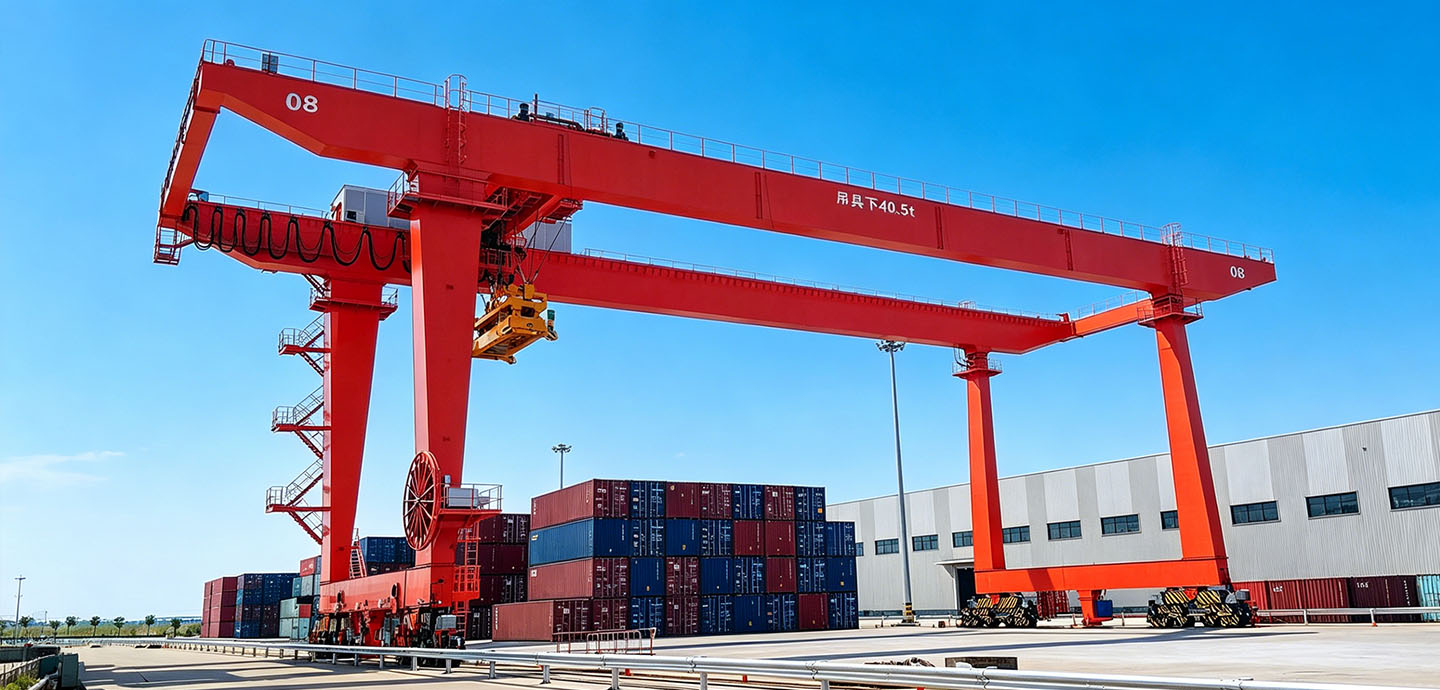
RTG Cranes, specialized engineering machinery designed specifically for container handling, have emerged as the core equipment for addressing container handling efficiency challenges. Their flexible operational modes, high-efficiency transport capabilities, and optimized space utilization solutions make them increasingly indispensable. This article delves into the key features for enhancing container handling efficiency, systematically explains the practical value of RTG Cranes in optimizing workflows and reducing operational costs, and explores future technological trends. It aims to provide logistics hub operators with reference points for equipment selection and efficiency improvement.
RTG Cranes are wheeled engineering machine capable of handling and stacking containers. It employs its own lifting mechanism to load, unload, transport, and stack containers. Its core structure comprises four major modules:
The operational cycle of RTG Cranes revolves around the closed-loop process of “loading/unloading – transporting – stacking.” A typical workflow is as follows:
The entire process requires no reliance on auxiliary equipment for transitions, achieving single positioning for end-to-end handling and significantly reducing operational downtime.
The operational characteristics of RTG Cranes make them suitable for diverse container handling scenarios, with core application environments including:
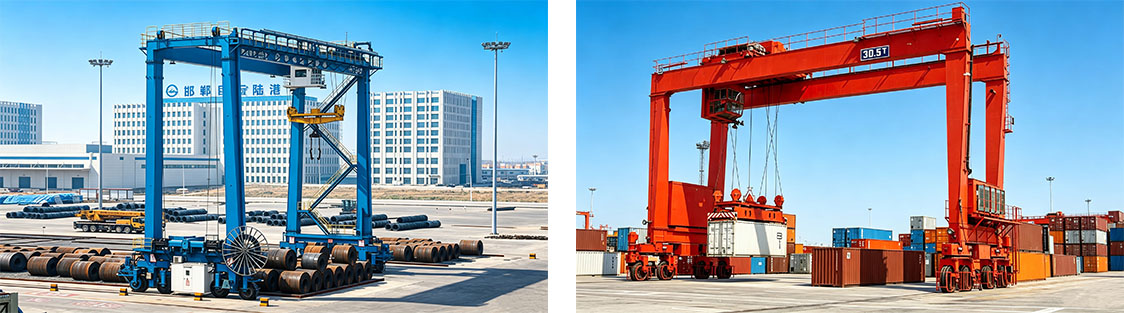
RTG Cranes significantly enhance container handling efficiency through four key features that precisely address traditional method limitations:
Traditional gantry cranes rely on fixed rails with limited coverage, while forklifts are constrained by turning radii and struggle in densely stacked areas. RTG Cranes employ all-wheel steering technology (some models support crab mode), achieving minimum turning radii as low as 5-8 meters. This enables agile navigation within narrow spaces where container spacing is only 1.5-2 meters. For instance, in terminal yards where storage density reaches 1.2 containers per square meter, RTG Cranes maintain unimpeded operations. Compared to conventional equipment, they enhance space utilization by 30%-40%, indirectly boosting terminal throughput capacity.
The lift system employs a hydraulic-electric hybrid drive, completing the sequence from locking the container to full lift position in just 20-30 seconds. A single handling cycle (including container pickup, 100-meter movement, and unloading) can be completed within 1.5-2 minutes. Compared to traditional forklifts, this achieves over 50% higher efficiency per operation. Even compared to small gantry cranes, the continuous operation efficiency of RTG Cranes is 20%-25% higher due to eliminating track alignment wait times. At a coastal terminal, for example, introducing straddle carriers increased the daily container throughput per unit from 80-100 containers with traditional equipment to 150-180 containers, significantly boosting operational efficiency.
Traditional stacking methods, constrained by forklift lifting heights, typically allow only 2-3 layers of container stacking. In contrast, RTG Cranes, leveraging their stable gantry frame structure and high-strength lifting systems, enable 3-5 layers of vertical stacking (with some high-stack models reaching 6 layers). For example, a 10,000-square-meter yard area can accommodate approximately 800 twenty-foot containers using traditional stacking. Switchyard crane high-stacking increases capacity to 1,600-2,000 containers, doubling stacking density. This directly reduces storage space requirements and lowers land use costs for logistics hubs.
With the advancement of industrial and smart logistics, RTG Cranes have evolved from traditional manual operation to automation and intelligence. Current mainstream straddle carriers offer two operational modes:
RTG Cranes enable 24/7 continuous operation, eliminating efficiency losses from operator fatigue and shift handoffs. Operational accuracy (e.g., container positioning precision) reaches ±5 cm, significantly reducing error rates (±15 cm) compared to manual operations while minimizing equipment damage or cargo loss from operational errors.
The core features of RTG Cranes directly impact the entire container handling workflow. By reducing process duration, minimizing operational gaps, and optimizing resource allocation, they enhance overall operational efficiency:
During container arrival, traditional processes involve “unloading from gantry cranes → forklift transfer to storage areas → stacking by gantry cranes.” These three stages require different equipment coordination, with waiting times accounting for 30%-40% of the total duration. RTG Cranes, however, can directly interface with gantry cranes: After the gantry crane unloads containers at the quay front, the RTG Cranes immediately pick up, transports, and stacks the container, achieving seamless unloading-to-stacking integration. This reduces single-container processing time from the traditional 15-20 minutes to just 5-8 minutes.
During container departure, RTG Cranes can pre-retrieve target containers from storage based on truck arrival times. Trucks can then load directly upon arrival, eliminating terminal wait times (traditional processes average 40-minute truck waits, reduced to under 15 minutes with STVs).
Container dwell time is a core metric for measuring terminal efficiency, encompassing two phases: “arrival to storage” and “storage to departure.” In traditional operations, disorganized yard management and inefficient equipment scheduling often resulted in average dwell times exceeding 72 hours. Automated guided vehicles (AGVs) reduce dwell time through two key approaches:
Traditional yard management often suffers from disorganized storage and difficult container retrieval due to limited equipment stacking heights and error-prone manual record-keeping. Statistics show that manual container searches in conventional yards average 15-20 minutes, accounting for 25% of total operation time. RTG Cranes optimize yard management through:
In actual logistics hub operations, container movement requirements are often complex and dynamic—such as temporarily adjusting storage locations to free up space, returning inspected containers to their original positions, or coordinating with different transport vehicles (trucks, rail flatcars) for loading. Traditional equipment, constrained by operational range or mobility, struggles to respond swiftly to these flexible demands.
With its track-free, full-area coverage capability, the RTG Cranes enable direct point-to-point transport: whether moving from storage areas to rail loading zones or from inspection zones to export loading areas, it completes transfers in a single operation without mid-route equipment changes. Furthermore, the crane’s precise positioning capability (±5 cm) meets the high placement accuracy requirements for rail flatcars and specialized trucks, eliminating secondary adjustments caused by misalignment and further boosting operational efficiency.
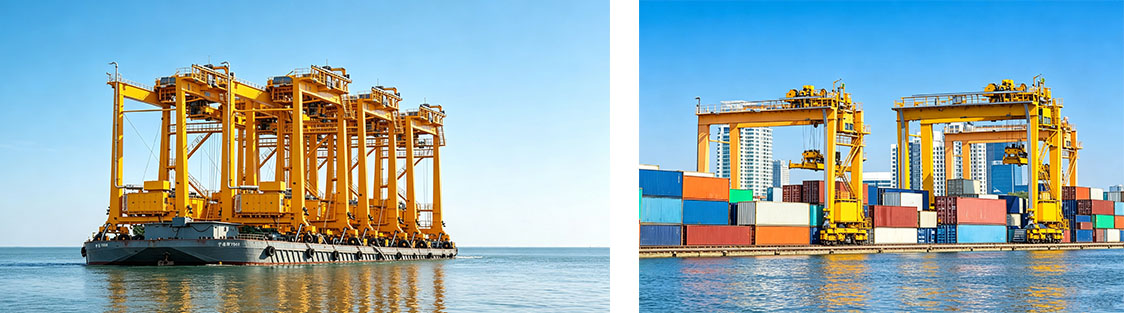
Beyond optimizing workflows, RTG Cranes deliver long-term operational benefits to logistics hubs through three dimensions: cost reduction, loss minimization, and capacity enhancement.
Labor costs constitute a significant portion of logistics hub operational expenses. Traditional container handling methods require extensive staffing (e.g., forklift operators, gantry crane operators, yard supervisors) along with additional costs for training and safety measures. Automating with RTG Cranes significantly reduces staffing needs:
Structural design and technological upgrades endow RTG Cranes with high reliability and low maintenance requirements, directly reducing equipment downtime and maintenance costs:
RTG Cranes directly increase logistics hub throughput and capacity through improved space utilization and optimized operational efficiency:
Increased stacking height boosts spatial capacity — As mentioned earlier, the 3-5 tier stacking capability of RTG Cranes can double yard capacity, effectively expanding the terminal’s operational area without land expansion.
Enhanced throughput via efficient operations — The daily average container handling capacity of a single cross transport vehicle can reach 150-180 boxes, which is 2-3 times that of traditional forklifts.
Driven by carbon reduction targets and environmental policies, green operations at logistics hubs have become an industry trend. RTG Cranes offer significant advantages in energy efficiency and environmental performance:
Electric Drive: Pure electric RTG Cranes produce zero tailpipe emissions during operation and generate noise levels below 70 decibels (compared to approximately 90 decibels for traditional diesel models). This improves terminal working environments and reduces impacts on surrounding residential areas.
Energy Recovery: Some RTG Cranes feature regenerative braking systems that convert kinetic energy into electricity during deceleration or downhill travel, storing it in batteries and boosting energy utilization by 15%-20%.
Lightweight Design: Utilizing lightweight materials like high-strength aluminum alloys and carbon fiber reduces equipment weight and lowers energy consumption during operation. Data indicates lightweight RTG Cranes achieve over 25% lower energy consumption per unit of work compared to conventional models.
From a technological development perspective, future RTG Cranes will undergo further intelligent and eco-friendly upgrades: On one hand, integration of 5G and AI technologies will enable cluster collaborative operations — multiple units will share real-time operational data via digital twin systems, dynamically adjusting paths and task allocation to enhance overall efficiency. On the other hand, technologies like hydrogen fuel cells and wireless charging will address the range limitations of electric RTG Cranes, delivering the dual advantages of zero-carbon emissions and extended operational range.
For port, terminal, and logistics hub operators, introducing RTG Cranes represents not merely equipment renewal but an upgrade to operational models. Against the backdrop of intensifying global trade competition, optimizing container handling processes through RTG Cranes will become a critical measure for enhancing supply chain efficiency, reducing operational costs, and strengthening market competitiveness. Relevant enterprises are advised to select RTG Cranes suited to their specific operational scenarios.